
Paper Dolls, Collectible Toy From Pre-tech Times
Trending
Like everything today, toys are high tech. But not that long ago, it was quite a different story; children played with paper dolls, paper airplanes and simple wooden toys. Collectors still enjoy these playthings.
Paper dollies are especially fun to collect because they take up little space and offer a glimpse of yesteryear. Fashions, hairstyles, events and hobbies of previous generations are illustrated in these fun ephemera.
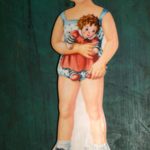
In today's column, I feature a few vintage paper dolls from my own collection. I love dolls and admire the amazing number of paper dolls that have been created over the years to entertain and delight children. My mother, who was an only child and an artist, told me many times about how she created dolls and fashions from nothing but scissors and paper.
Paper dolls have an interesting history, and our idea of the plaything began in the 1700s, in Paris, London and other European fashion hubs. At the time, they were novelties for adults who were entertained by the hand-painted designs.
The mid- to late 1800s saw the popularization of paper dolls as mass production possibilities developed and the simple amusement for fashionable adults became a toy for children. Inexpensive and imaginative, paper dolls were perfect for youngsters to clip out and save. Newspapers used them to hook their audience in the late 1800s.
Today, these very early paper dolls are scarce and mostly found in museums or in the hands of doll, toy or advertising art collectors.
But even vintage paper dolls from the 20th century are collectible and can be found online or in antiques shops and shows. It's the perfect collection for a fan of the decorative arts or retro pop culture.
Advertising companies often used paper dolls to promote their products, and some were printed on the pages of ladies' magazines for youngsters to clip and save. Eventually, the dolls were made in book form with the dolls featured on the cover in cardboard and the clothing items on the inside pages. This came about in the 1920s.
Paper dolls were so cheap that they were able to survive the hard times of the Depression years, and many a youngster back then treasured a paper doll or created their own designs from paper scraps and cardboard. The comic papers got in the act, and paper dolls featuring the funnies came about in the 1940s.
As Hollywood and movie stars became important, paper dolls were created in the likeness of the big stars of the day. Just about every star from Claudette Colbert to Dinah Shore had paper dolls created in their images. Even the Dionne Quintuplets made it into this medium.
This pop culture connection kept paper dolls in the hands of youngsters and increased playtime popularity until they enjoyed their biggest audience in the 1940s.
As television took over, paper dolls reflected this change, too, surviving yet again into the 1950s and 60s. Television shows like "Green Acres," "Dr. Kildare" and even "Laugh-In" had paper dolls.
Of course Barbie, the queen of fashion, can claim years and years of paper doll production, though some think that her popularity also contributed to the decline of simple paper fashion dolls.
Condition is everything with paper collectibles, and paper dolls must be in excellent shape to be desirable to real collectors. Uncut is best! So if you find a book of old paper dolls that never made it near scissors, you have a real treasure. Generally, cut out paper dolls are worth about half as much as uncut, even if they are a complete set and in good shape.
Collectors do save the cut-out dolls and clothes, too, it's just they aren't worth as much.
Big names in paper doll manufacturing include the largest manufacturer of antique paper dolls McLoughlin Brothers (founded in 1828), along with Lowe, Artcraft, Whitman and Saalfield.
For a complete history of paper dolls, visit the website www.opdag.com. Founded in 1984, OPDAG (The Original Paper Doll Artists Guild) is an organization of people who exchange ideas to encourage this sweet hobby. There's an annual conference, clubs and Facebook pages devoted to this hobby.
For comments or suggestions on local treasures to be featured in Antique of the Week, Maureen Zambito can be reached via email at zambitomaureen@hotmail.com or by writing in care of this newspaper.