
Marshall County History Museum Invites Visitors to Take a Step Back in Time
Trending
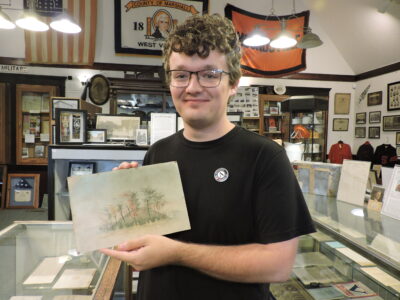
MOUNDSVILLE -- Thousands of artifacts chronicling Marshall County's History, from the county's pioneer days up to the 1980s, are available for visitors to explore at the Marshall County History Museum.
Marshall County residents have helped fill the display cases in the museum, as more than 400 donors have donated artifacts to the museum on 13th Street in Moundsville.
Trent Dayton, an Americorps Member with the Marshall County WV Historical Society, said that while the building is running short on space, the museum makes use of its two floors of space to chronicle the story of Marshall County.
"We have artifacts stored inside of artifacts," Dayton joked. "There are items tucked away literally everywhere in the museum."
The upstairs of the building provides a glimpse into the county's industrial legacy, featuring letterman jackets and yearbooks from local schools. The upstairs also chronicles the footprint left by countless businesses and organizations in the county.
Dayton said one of the upstairs areas that draws the attention of visitors is the Louis Marx Toys display. The Marx Toy Company, founded in 1919, was one of the biggest toy companies in the world. The Marx Toy Glen Dale factory, which was purchased by the company in 1934, was the largest and most productive factory of the company. The Marx display combines toys donated by visitors along with loaned items to fill the display case.
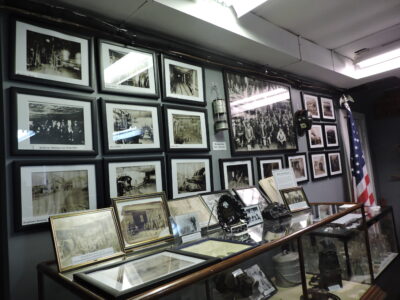
The Marshall County History Museum has a collection of photographs and artifacts from Marshall County mines on display. (Photo by Emma Delk)
"The Marx display shows how we can put displays together through donations," Dayton said. "I came in one day, and there was just a box of Marx Toys on the front doorstep. Sometimes we don't know who donated these items, but we can take them in and find a home for them."
Another popular section of the museum is the collection of Marshall County yearbooks dating from 1910 to the 2020s. A yearbook that is often picked from the shelf is the 1991 John Marshall High School yearbook, a year when country singer and Glen Dale native Brad Paisley attended the school.
"We have a lot of Brad Paisley fans that come into Marshall County," Dayton said. "I have talked to a lot of visitors to the museum about Brad Paisley -- way more than I expected."
One of the newest artifacts on display in the museum, the Tomlinson family organ, is located upstairs in the building. The Tomlinson family is known as one of the founding families of Moundsville, having purchased the organ in 1883. After being passed down through several generations of the Tomlinsons, the organ arrived at the museum still playable.
Another item that draws attention on the first floor is the museum's largest -- the one-horse buggy once owned by Ben McLaughlin of Maggoty Run. Dayton said the buggy was given to the museum in "excellent condition" and had to be taken apart and reassembled to get it into the museum.
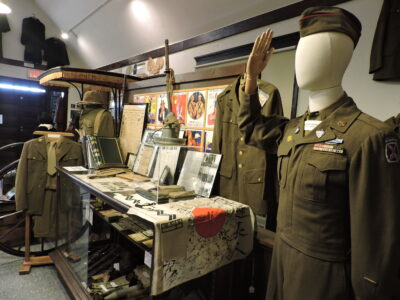
The Marshall County History Museum has various military items on display, with residents donating a variety of uniforms and artifacts from their service. (Photo by Emma Delk)
The downstairs of the museum provides a look into the county's agricultural and coal history. The floor has a dedicated area for farm artifacts and pictures from inside coal mines in the county, in addition to a mine phone from an unnamed Marshall County mine.
The downstairs also shines a spotlight on two beloved locations in the county: the former West Virginia Penitentiary and the Grave Creek Mound. Dayton noted some "unique" items can be spotted in this area, including a wallet made by an inmate at the penitentiary and a Folger Adams key to the former Marshall County jail.
"The Folger Adams key is the same type of key that the penitentiary used to have, but this one is specifically marked as for the jail," Dayton said.
As he processes artifacts and prepares displays at the museum, Dayton said he is often struck by how much history has taken place in the county. He noted there was "so much industry" in the county in its heyday, from Marx Toys to the Fostoria Glass Company.
"It was a hub for industry that you really wouldn't think about today," Dayton said. "Moundsville was right next to the state capitol of Wheeling when West Virginia was formed, so we were kind of lucky on that front because that helped us become well-known, especially for the penitentiary."
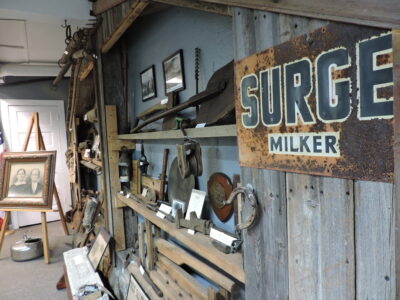
The Marshall County History Museum has a dedicated section for the county's agricultural past, with various farm items on display downstairs in the building. (Photo by Emma Delk)
Visitors can stop by to take a tour of the county's history. The museum is open Wednesday through Friday and the third Saturday of each month from 10 a.m. to 3 p.m.
The museum is also open to visitors by appointment on Monday and Tuesday, and Dayton said visitors can reach out to the museum on the "Marshall County WV Historical Society" Facebook page to schedule their visit.
Dayton also encourages anyone interested in the county's history to volunteer to help maintain the museum. Volunteer work at the museum would include sorting and labelling artifacts.
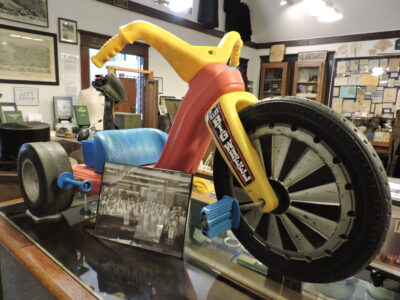
The Louis Marx Toys display contains Marx Toy Company items made in Glen Dale at the Marshall County History Museum. (Photo by Emma Delk)