
Bluegrass Legends Headed to W.Va. Music Hall of Fame
Lonesome Pine Fiddlers Had Deep Roots, Significant Influence in Wheeling
Trending
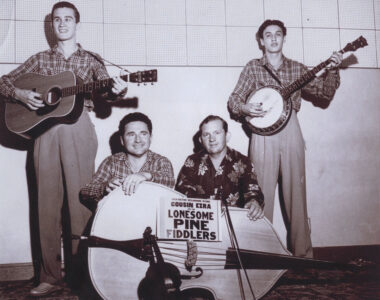
WHEELING -- As John Mayall's Bluesbreakers were to British rock guitar, Muddy Waters was to modern blues, and Miles Davis was to modern jazz, West Virginia's Lonesome Pine Fiddlers were to bluegrass music.
The group was a training ground, a Triple A ball team if you will, for a genre that has grown exponentially since its beginnings in the 1940s. The Lonesome Pine Fiddlers were among the first groups inspired by Bill Monroe's Grand Old Opry spots featuring an exciting new combination of up-tempo folk tunes played with jazzy improvisation on fiddle, banjo and mandolin.
This legendary group, along with an important second-generation bluegrass artist Buddy Griffin, will be inducted into the West Virginia Music Hall of Fame on June 3.
In lieu of charging a price of admission, the Lonesome Fiddlers often sold small boxes of hard candy at their live performances. Leader and front man Ezra Cline was a natural born salesman and a canny businessman looking for any way he could to put food on the table and gas in the tank, and each box of candy that the band members themselves packaged was essentially a raffle ticket, a few of which contained prize winning tickets.
Broadcasting from smaller coal field radio stations, Cline and his younger brothers Ireland, Ray and Charlie mimicked Monroe in more ways than one. Adding upright bass and close harmony singing to music they played at home for their own enjoyment, they set up live performances in area schoolhouses, theaters and even vacant lots which they advertised on their daily broadcasts. Soon they recorded their first 78 rpm discs in the bluegrass style with young sidemen Bobby Osborne and Larry Richardson imitating Monroe's high tenor vocal, and Earl Scruggs' rapid fire three finger banjo rolls. And like Monroe's band, the LPF's became an important training ground for aspiring pickers like Osborne, his younger brother Sonny, Paul Williams and his future boss man Jimmy Martin.
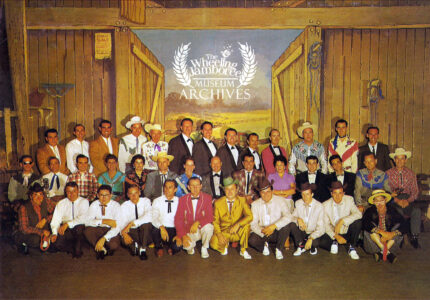
The 1959 WWVA Jamboree cast included, in back from left, Bobby Osborne, Jimmy Brown, Sonny Osborne, Ray Scott, Big Slim, Ace Richman, Burl Strevel, Fred Daniels, Eddie Wallace, John Corrigan, Lee Moore, Mike Harris and Tater Tate. Middle row, from left, are Marion Martin, Abner Doolittle, Monty Blake, Lynn Gibson, Chickie Williams, Doc Williams, Louella Perkins, Hardrock Gunter, Jimmy Blaney, Bonnie Baldwin, Rusty Kershaw, Doug Kershaw, Buddy Durham and Ebb Collins. In front, from left, are Crazy Elmer, Billy Edwards, Norman Blake, Bill Lowe, Melvin Goins, Hylo Brown, Jimm Martin, Paul Williams, J.D. Crowe, Herb Hooven and Zeb Collins. (Photo Courtesy of the
Wheeling Jamboree)
In a 1959 cast picture of Wheeling's WWVA Jamboree you can, in retrospect, see what was happening. There in the front row is the now legendary combo of LPF veterans Martin and Williams with banjo icon J.D. Crowe, to their right is Hi-Lo Brown with future Lonesome Pine Fiddlers members Melvin Goins and Billy Edwards, and in a back row you see future Opry stars the Osborne Brothers. These groups went on to record hit records for major labels and to be inducted into the Bluegrass Hall of Fame as did the Lonesome Pine Fiddlers.
A generation later, young Sutton native Buddy Griffin played with many of these LPF veterans. He became a staff musician at WWVA before making Nashville and later Branson his base of operations. By Buddy's time, bluegrass had split from country radio, positioning itself between country's pop electric form and traditional acoustic folk music.
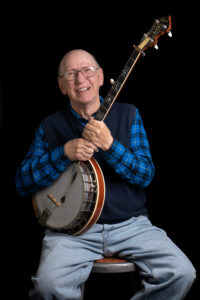
Buddy Griffin
(Photo by Christopher Cosner, Courtesy of the WV Music Hall of Fame)
A circuit of festivals, clubs and college concerts sprang up, promoted by local and national organizations and the burgeoning new network of public radio stations. Griffin grew up in a musical family and after his college graduation, found steady work as fiddler and banjoist with iconic artists like Jim and Jesse, former LPF members the Goins Brothers and Bobby Osborne. Returning to West Virginia in 1971, he founded and directed an innovative four-year curriculum in bluegrass music at his alma mater Glenville State College.
I've looked at that 1959 Wheeling Jamboree cast picture countless times. When it was taken, I was in kindergarten. The next year, I got my first radio, a crystal set that came with a single earphone, and an antenna that attached to the radiator beside my bed. As I listened to it before going to sleep each night, I had no inkling that one day I'd become a musician. But by the time I was 13, I had heard Bill Monroe and Doc Watson, and started attending the Jamboree on Saturday nights.
I learned my first bluegrass guitar licks from Jamboree staff member Roger Bland, and I remember hearing his replacement, Buddy Griffin, on his first performances there. From the cheap balcony seats, I watched bluegrass artists like Jimmy Martin and the McPeak Brothers, not knowing the history of the show or of Bluegrass music. But after playing this music for more than 50 years, I can now see that I'm just following in the footsteps of the various members of the Lonesome Pine Fiddlers.
Today, bluegrass artists like Alison Krauss and Billy Strings fill arenas, but the music started in humble places like Buddy Griffin's living room and Ezra Cline's Bluefield rooming house where he and his sidemen wrote and rehearsed.
The Lonesome Pine Fiddlers and Buddy Griffin, along with founding members of Parliament Funkadelic Fuzzy Haskins and Calvin Simon, classical pianist Barbara Nissman, and R&B keyboard great Winston Walls, will be inducted into the West Virginia Music Hall of Fame on June 3 at the Cultural Center in Charleston.
For more information, visit www.wvmusichalloffame.com.
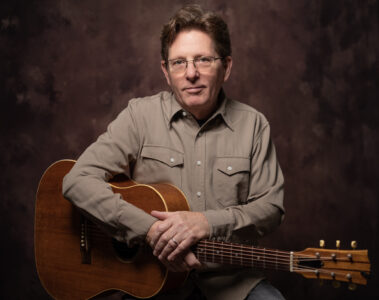
Tim O’Brien
(Grammy winning multi-instrumentalist and singer-songwriter Tim O'Brien grew up in Wheeling. Now residing in Nashville, he serves on the board of the West Virginia Music Hall of fame. He and his wife Jan Fabricius will perform for the Wheeling Jamboree's 90th Anniversary show at the Capitol Music Hall on April 22.)