
Jefferson County Judges: Community Service Valuable Alternative In Rehabilitating Offenders
Trending
Jefferson County judges are making the most of their community service program now that they have a fully staffed probation office.
Judges Lisa Ferguson (Toronto), Michael Bednar (Wintersville) and David Scarpone (Dillonvale) say the community service program is a way for offenders with court costs and fines they can't pay to meet their obligations. It's also a useful sentencing alternative, they say, allowing offenders to pay the price for their misdeeds -- and perhaps learn life skills -- without having to go to jail.
"I think it's important for a number of reasons," Bednar said. "Sometimes we have people in court who may commit a crime that deserves more punishment than just a fine but less than jail. Community service is a good middle ground.
"We also give community service to people as part of their probation. When we have somebody in jail, when they get out, we can have them on probation for a certain period of time. And I think all three of us give it as part of their probationary term, along with drug counseling and mental health counseling. We make it part of their punishment."
Ferguson said with a full complement of probation officers, "(they're) able to actually supervise it, we can send probation officers out to supervise them."
The Jefferson County commissioners also purchased a van for their use, allowing the probation officers to transport those who are in the program who need rides to work sites.
"We're really trying to do a lot of community service projects and be able to help them," Ferguson said.
Scarpone describes the community service program as "a very valuable tool, an integral part of rehabilitation for some lower-level crimes."
"It's nice that it also connects nonviolent, low-level crimes with nonprofit organizations looking for volunteers," he added. "But I think the main reason is it's an outreach to get people ... to learn a little responsibility, to know they have to be somewhere on time and perform some work."
Scarpone said it's also a boon to cash-strapped communities and nonprofits that "don't always have means to pay people to do work."
"If there are community service hours we can give instead of putting people in jail, almost 100 percent of the time we say yes," Scarpone said. "Then there are times people can't pay fines or costs, so we have a 'show-cause' hearing ... to make inquiries as to their financial situation. If it creates a hardship, we can have that person work off their fines and costs. It's a win-win."
Bednar said they've always been "very active" in assigning offenders to community service in the past, "but now we have three new probation officers aggressively promoting the program, a van for transport and more charitable organizations, mayors and township trustees willing to take these community service workers, so I think it's really growing."
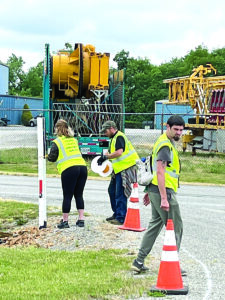
Community service activities run the gamut from cutting weeds and grass to washing windows, picking up trash and debris, cleaning and sanitizing facilities and painting curbs. Participants can even get credit for helping out at food pantries, giving blood and helping clean up cemeteries.
Judges say community service workers also have been assigned to help at special events, like the Ohio River Sweep, Thunder in the Ville, Adena Heritage Days, the Jefferson County Fair and other festivals.
Bednar points out community service candidates are typically first-degree misdemeanors with traffic charges. Some might be working off an assault charge, "but we don't send them to schools or other areas like that. They can go out on a township road and pick trash up."
"It's part of the punishment here," Bednar said. "They know if they violate probation they're going out to work. They know if they don't have an active job, they're going out to work. Instead of sitting in jail taking up space, they're doing something for the betterment of the community."
The county court probation officers -- John Jones, Jay Lowery and Mary Pashke -- say the biggest benefit might be the program's potential to change offenders' attitudes.
"I think it teaches them responsibility and the importance of community," Pashke said. "I think a lot of them just need to belong to something, to realize they are a part of a community because they've never had that, and they need to realize their actions affect their community, not just them."
Ferguson refers to that as the "accountability" factor.
"We're able to hold people accountable because of community service," she said. "If you can't afford to pay the fine, we don't want to put you in jail just because you can't. But at the same time, you need to be held accountable because other people do pay fines and court costs."
And with the county jail bursting at the seams with prisoners, "instead of sitting in jail, costing taxpayers' money, we actually have them out doing community service, completing something."
"It's good for them," Ferguson said. "And it helps people when they have that accountability and we're getting them out doing things, kind of getting them in the mindset of working."
Lowery said their goal "is to make them better citizens."
"That's what the program is for, for us to rehabilitate them and help them," Lowery said, adding a lot of times that involves helping offenders restore their driving privileges.
Lowery said several offenders who worked community service hours in Toronto already have been offered jobs. "(They're) part-time jobs but it's a start."
Jones said in addition to giving offenders work experience, part of their focus is to find the "right fit, the right program, the right treatment facility to put them in so they can get education along with treatment."
Community service hours assigned as well as completed are all tracked, so the judges can keep tabs on how offenders are doing, No-shows don't go unnoticed.
Jones said they "probably have around 200 offenders doing community service ... and the numbers are just getting bigger."
"We're not trying to put people in jail -- we're trying to give them positive reinforcement and motivation," he said. "We're trying to find the right service, the right program, treatment facilities and parenting courses to provide them with the motivational skills, mindsets, and abilities to (stay out of trouble). We're trying to instill good, traditional values and beliefs in defendants that they might not have or might not have been brought up with. We do our best to change the mental attitude of our defendants on probation. If they can do 100, 200 hours in community service rather than 90 days in jail, that's what we want to do -- when they go to jail, it's not going to help anybody."