
Norfolk Southern Defends Vent-And-Burn Decision With Train Derailment
Trending
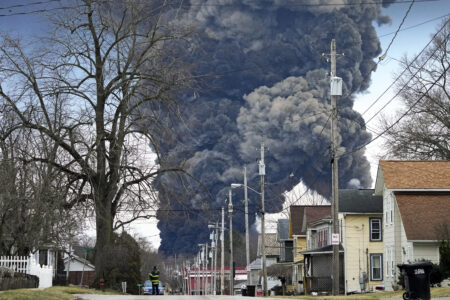
EAST PALESTINE -- Despite the National Transportation Safety Board (NTSB) deeming the vent-and-burn of five tank cars of vinyl chloride "unnecessary" during a public board meeting Tuesday to present its final findings and vote on a probable cause of last year's Norfolk Southern (NS) train derailment, Norfolk Southern stood by its decision to do so.
"After carefully considering all alternatives, Norfolk Southern and its specialist contractors recommended a controlled vent and burn to the Unified Command as the only option to protect the community from a potential catastrophic explosion," the railroad said via a press release. "This recommendation was developed under guidance from two of only three specialized firms in the country certified by the Chlorine Institute to respond to vinyl chloride emergencies."
Norfolk Southern also challenged the NTSB's narrative that the vent-and-burn was performed to clear the tracks as quickly as possible -- a claim bolstered by Norfolk Southern's decision to resume rail traffic two days after the event -- charging that NS contractors kept critical information from Unified Command that indicated a chemical reaction known as polymerization was not occurring and an explosion was not imminent. The NTSB's probe concluded that experts on the scene from OxyVinyls, the manufacturer and shipper of the vinyl chloride, had determined that the tanker temperatures were cooling and not rising. That information was provided to Norfolk Southern, but not to East Palestine Fire Chief Keith Drabick who as the incident commander made the decision to vent and burn the tank cars.
"Norfolk Southern and its expert contractors' only motivation in recommending the vent and burn to the Unified Command was the health and safety of the community and first responders," NS said. "Norfolk Southern does not agree with the conclusion that it 'withheld' OxyVinyls' views from the Unified Command."
NS maintains that OxyVinyls' opinion was not clear and conflicting. It also contradicted previous literature the company had published.
"Norfolk Southern and its contractors received conflicting information from OxyVinyls' personnel as to whether polymerization was or could be occurring," NS said. "And OxyVinyls' safety data sheet was clear that polymerization was possible in the circumstances observed at the derailment."
While NS did not facilitate a direct line of communication between OxyVinyls and Unified Command, the railroad insisted neither the railroad nor its contractors did anything to hamper one.
"OxyVinyls had every opportunity to participate in the Unified Command," NS said. "They were on scene in the building where the Unified Command was operating. There was no obstacle to OxyVinyls making their views known to the ultimate decision-makers."
NS again pointed to a 70-minute violent release from a pressure release valve on one tanker as one of the main factors in advocating for a vent-and burn.
"The pressure relief devices were not working," the press release said. "The behavior of the pressure relief devices on the affected tank cars indicated that dangerous pressure was building inside the tank cars without being properly released."
The release was just one of several factors NS considered, according to the press release. The railroad said it also considered that tank cars had been damaged in the derailment and were exposed to extensive pool fires, that OxyVinyls safety guidance warned that vinyl chloride monomer may polymerize when exposed to the conditions present at the derailment and that rerailing the cars were not possible and dangerous due to damage sustained in the derailment.
"The vent and burn effectively avoided a potential uncontrolled explosion," NS said. "There was no loss of life and contractors took steps to manage environmental impact."
While Norfolk Southern doubled down on the decision to conduct the vent-and-burn, the railroad announced on Friday that it will "convene a Vent and Burn Workgroup to integrate key learnings for the betterment of any future scenario where a vent and burn may be necessary."
Norfolk Southern said the workshop is as part of the agreement reached between the Department of Justice, the Environmental Protection Agency, the Department of Interior and Norfolk Southern and establishes a formal process by which Norfolk Southern may obtain input from key stakeholders on ways to improve coordination in any future Unified Command response to a derailment.