This Week in West Virginia History
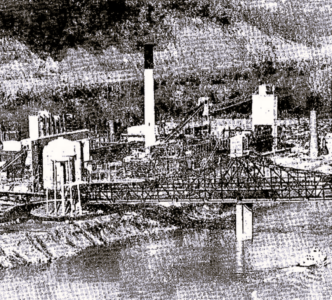
WEIRTON STEEL COKE PLANT EXPLOSION ON BROWN’S ISLAND KILLS 19, INJURES 10 MORE — DEC. 15, 1972
The following events happened on these dates in West Virginia history. To read more, go to e-WV: The West Virginia Encyclopedia at www.wvencyclopedia.org.
Dec. 14, 1910: The accidental death of a Chesapeake & Ohio Railway engineer near St. Albans led to the popular train song “Billy Richardson’s Last Ride.”
Dec. 14, 1857: Coal operator Justus Collins was born. He owned mines at Glen Jean and Whipple, and the octagonal Whipple company store survives today as a local landmark.
Dec. 15, 1879: Roman Catholic Bishop John Joseph Swint was born in Pickens. He was responsible for building many religious institutions in the Diocese of Wheeling (now the Diocese of Wheeling-Charleston).
Dec. 15, 1967: The Silver Bridge at Point Pleasant collapsed, killing 46 people. The Silver Bridge was opened to traffic on May 19, 1928. The accident led to the passage of legislation for a national bridge inspection and safety program.
Dec. 15, 1972: An explosion at a Weirton Steel coke plant on Browns Island killed 19 men and injured 10 others. It was the worst industrial accident in Weirton’s history.
Dec. 16, 1893: Alexander Martin died at the age of 71 in Greencastle, Indiana. Martin was the first president of the Agricultural College of West Virginia, which was renamed West Virginia University at his recommendation in 1868.
Dec. 16, 1897: The last public hanging in West Virginia occurred in Ripley. John F. Morgan had been convicted of murdering Chloe Greene and two of her three children in the Grass Lick area of Jackson County.
Dec. 17, 1957: The J.L. Stifel & Sons calico plant at Wheeling closed. For most of its history, Stifel & Sons produced indigo-dyed prints and drills for clothing manufacturers. At its peak, the plant produced 3.5 million yards of cloth per month.
Dec. 18, 1842: U.S. Senator Nathan B. Scott was born. By 1900, Scott had become one of West Virginia’s four richest and most powerful men.
Dec. 18, 1864: General Harry Hill Bandholtz was born in Michigan. Bandholtz was commander of the federal troops that intervened to end the West Virginia Mine Wars in 1921.
Dec. 19, 1794: A 40-acre tract of George Clendenin’s land was selected as the site of Charlestown, later renamed Charleston. Clendenin, born in Augusta County, Virginia, in 1746, was one of the first settlers in the Kanawha Valley. Through Clendenin’s influence the Virginia Assembly authorized the formation of Kanawha County from parts of Greenbrier and Montgomery counties in 1789.
Dec. 20, 1943: During World War II, German fighter pilot Franz Stigler protected the heavily damaged B-17 bomber flown by Charlie Brown, originally from Weston, as it made its way from enemy territory back to England. The two war veterans met in 1990 and remained friends until their deaths.
Dec. 20, 2002: Grote Reber died. In 1937, Reber built the world’s first parabolic radio telescope in his backyard. The Reber Telescope was moved to the National Radio Observatory at Green Bank in the 1960s and was designated a National Historic Landmark in 1989.
Community
National Weather Service Predicting 5-8 Inches of Snow for the Ohio Valley by Early Sunday
WHEELING — Those who feel they had enough winter weather following the several inches of snow that blanketed the ...
This Week in West Virginia History
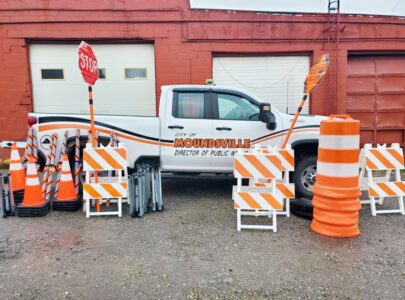
Moundsville Awarded $3,500 Work Zone Sign Package
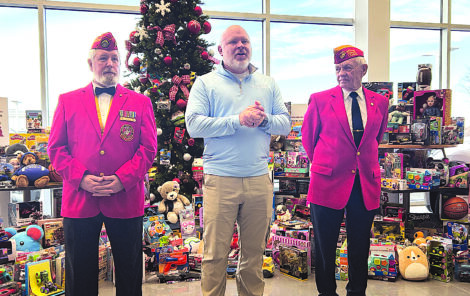
Straub Automotive Kicks Toy Drive Into Next Gear
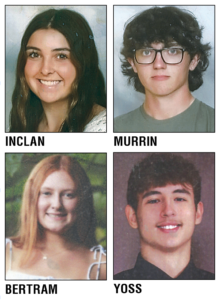
Wheeling Elks Lodge 28 Names October and November Students of the Month