
Federal SNAP changes force Belmont County to shelve school clothes program
Trending
ST. CLAIRSVILLE -- As children prepare to return to school, some Belmont County families will have to make other plans after the Belmont County Department of Job and Family Services announced it will not offer its annual School Clothes for Kids Program this year.
Director Jeff Felton said the decision stems from anticipated federal funding cuts, staffing shortages and increased administrative demands related to changes in the Supplemental Nutrition Assistance Program.
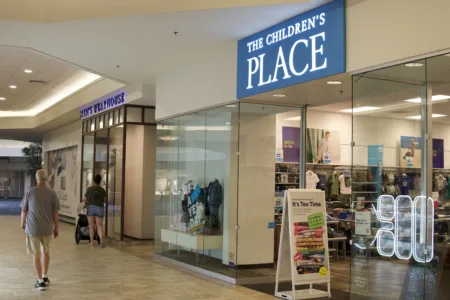
“I think in terms of a single event for the merchants in the mall it’s huge. It’s $700,000 worth of clothes being purchased from all of the merchants,” Felton said. “It’s a huge hit and we’ve stayed away from tax-free holidays when it came to our programs so that the county could get some sales tax revenue as well. So it’s a big deal that we find ourselves in this position that we just can’t do it and continue the basic work of our agency.”
Felton said the issue extends beyond Belmont County.
“While we know this program has benefited many local families over the years, our responsibility is to ensure we continue delivering critical services and meeting federal performance requirements,” Felton said. “We appreciate the community’s understanding as we focus our limited resources on serving Belmont County residents through our core programs.”
He said provisions in the One Big Beautiful Bill Act place greater emphasis on states’ SNAP payment error rates.
According to the U.S. Department of Agriculture, a state’s payment error rate measures the accuracy of its eligibility and benefit determinations, while the national payment error rate represents the weighted average of all state error rates. Payment errors include both underpayments and overpayments.
If a state’s error rate exceeds 6%, the state must repay 5% of its total SNAP benefit issuance to the federal government.
Ohio’s payment error rate is 6.67%, which Felton said would require the state to repay about $161 million.
“So we do about $3.2 to $3.4 billion in SNAP every year as a state. So 5% of $3.2 billion is about $160 million,” Felton said.
Felton said his department also is operating under a hiring freeze while officials determine how implementation of the federal legislation will affect county agencies.
He said the legislation also reduces funding for the Temporary Assistance for Needy Families program.
According to Felton, counties across Ohio also must return about $43 million in unspent TANF money to the state, prompting many counties to spend those remaining funds.
“So we don’t have the resources, both from a financial perspective as well as just a manpower perspective, to process all those applications because if somebody sends an application, we do it through our prevention, retention and contingency plan. So they send in their household members’ ages, household income and we try to then verify eligibility. But if the information they give us is different from their current SNAP, let’s say they report $1,000 a month in income and when we first did a SNAP application they reported $500, then we have to go back into the SNAP case and make those necessary changes,” Felton said. “It’s not simply a matter of checking and verifying TANF eligibility; it creates a lot more work from that. I think the primary driver is twofold. One is reduction in federal funding upcoming in the One Big Beautiful Bill Act and then related to that is the amount of money that the state would be on the hook for with SNAP.”
Felton said the decision was especially difficult because of how many local families depend on the program.
“This is just a one-year decision. Hopefully the funding will straighten out and we’ll be able to do it in future years,” Felton said. “I just can’t in good conscience do it this year. And I feel really crappy about it because we have lots of kids and lots of families in the program.”
Ohio Valley Mall Marketing Director Candi Noble-Greathouse said the mall is disappointed the program will not take place this year.
“But we look forward to serving Harrison and Monroe counties with their clothing voucher programs in the next few weeks,” Noble-Greathouse said.
Felton said the department remains committed to providing essential services and will continue evaluating opportunities to restore the School Clothes for Kids Program when resources allow.