
Elder Law Can Be Tricky
Kiwanis hears lessons on protecting assets, planning for long-term care
Trending
STEUBENVILLE -- Proper legal planning is an essential part of the aging process and could help people save money and avoid concerns down the road.
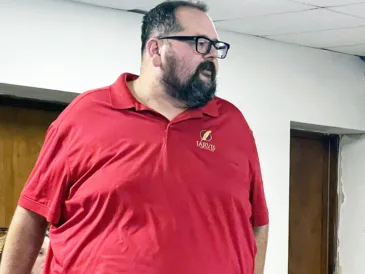
That was the message Jon Corra of the Jarvis Law Office shared with members of the Steubenville Kiwanis Club during Tuesday's meeting at the Sycamore Center.
Corra, the marketing manager for the law firm with offices in St. Clairsville, Lancaster and Dublin, and Leslie Shultz, the firm's care navigator, discussed basic concepts of elder law, which Corra noted is different from estate planning.
Having the proper documents in place could help people avoid penalties and capital gains taxes and keep their loved ones from having to go through the probate process after their death.
Corra said his advice on navigating elder law issues comes from personal experience.
"I always thought a will was the only thing you needed when you passed away," he said. "I worked for a law firm that wasn’t an elder law firm for about eight years, and they focused on VA and Social Security disability. I knew none of this stuff before I started working at Jarvis."
Corra said his father died when he was 15 and his mother died in her mid-50s when he was 35.
"One of the biggest things I learned from that was I had no idea what to do when my loved one needed long-term care. My mother passed, and we made a lot of mistakes," he said.
Knowing how to navigate the legal process is important, Corra said.
"Some of this stuff gets people into trouble when it comes to the law and estate planning," he said. "One of the biggest things is that there are a lot of predators out there when it comes to your financial security. One of the first predators is just not knowing the law. We think we know, but we have no idea."
Among the documents everyone should have, Corra said, are a power of attorney, health care power of attorney, HIPAA documents, a living will and a will.
One mistake many people make is downloading legal documents from a website, he said. Such documents might not be adequate for their individual circumstances.
If properly prepared, a power of attorney authorizes someone to make financial decisions on another person's behalf. A health care power of attorney names someone who can make medical decisions on a person's behalf, while documentation related to the Health Insurance Portability and Accountability Act makes it easier to obtain medical information.
Living wills can include instructions concerning everything from ventilators to CPR, Corra said.
Everyone should have a will, he said, while remembering that even a will can leave survivors with additional issues.
"A will is just a legal document, which is a very good legal document, don’t get me wrong," Corra said. "I highly suggest everyone has one, but a will is really just a set of instructions. One of the biggest downfalls with a will is that it must go through probate."
Probate can last as long as 12 months and could cost a family between 5% and 7% of an estate after fees are paid, Corra said.
Those costs can sometimes be avoided through transfer-on-death and payable-on-death documents.
Protecting assets from another potential threat -- the government -- also can be complicated, Corra said. Without proper legal planning, attempts to work around Medicaid requirements and look-back provisions may not produce the desired results.
For example, putting a home in a child's name to avoid having it used to pay long-term care costs might sound like a good strategy but could expose the property to legal problems involving the person who now owns it.
Those problems could include an accident involving the child or a divorce, Corra said. A trust could provide a better option.
A Medicaid Asset Protection Trust, he added, could allow a person to gift assets to family members while addressing Medicaid's look-back period.
Care navigators also can help people find long-term care facilities that are an appropriate fit for their needs, Corra said.