
Moundsville To Seek Funding To Raze Blighted Houses, Trees
Trending
MOUNDSVILLE — Moundsville leaders are preparing for another round of demolitions to blighted houses across the city.
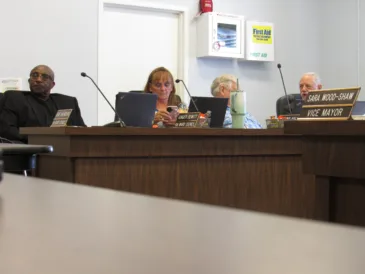
During a recent City Council meeting, City Manager Rick Healy said another list of dilapidated properties is being prepared for future razing.
“All city and grant-funded demolitions are now complete,” Healy informed council.
Healy added city officials met with Bel-O-Mar Regional Council to discuss a new application for the new West Virginia Department of Environmental Protection’s Dilapidated Properties Program funding round, which is coming this fall.
“We currently have about (21) properties listed on our demolition list,” Healy said. “So, we’re currently ranking those in priority and then we will submit those in our DLAP grant from worst to best, if you will.”
Houses that were demolished during the 2024-26 grant DLAP cycle included 328 Sycamore Avenue, 126 Sycamore Avenue, 80 Compton Avenue, 329 Rear Thorn Avenue, 1811 Second Street, 1010 Sixth Street, 201 Parriott Avenue, 215 Parriott Avenue, 1810 Fourth Street garage apartment, and 607 11th Street. Rebuilding American Infrastructure with Sustainability and Equity, aka RAISE, grant-funded properties included 911 Seventh Street, 803 Second Street, 110 Baker Avenue and 114 Baker Avenue. CDBG-funded demolitions were at 1315 Diamond Street, 302 Poplar Avenue garage apartment, 211 Olive Avenue, 12 Elm Avenue garage apartment, 412 Myrtle Avenue , 1405 Fourth Street, and 49 Linden Avenue. Additional city-funded demolitions included 401 Clinton Avenue, 1008 Second Street (fire demolition) 37 Walnut Avenue (fire demolition), 21 N. Highland Avenue, 217 Cedar Avenue, 907 Seventh Street, 1518 Third Street and 106 Tomlinson Avenue.
Danielle Harmon, who serves as the city’s director of Land Reuse Agency Development, as a building inspector administrative tech and manager of the Rental Property Registration Program, on Wednesday said there have also been 31 privately funded demolitions since 2024.
Regarding upcoming properties for razing, Harmon said those on the list have been eyesores for years.
“All the properties have been on-going concerns across multiple years of attempting to garner compliance with not only Moundsville City Codes, but the International Property Maintenance Code which the State of West Virginia has adopted as its building code,” she said.
“Property owners are given every opportunity to bring their property into compliance before demolition is ever considered, unless there is a catastrophic event that causes public safety concerns that require an emergency demolition, which still requires a declaration in writing to the Building Enforcement Agency.
“Inclusion on the initial list does not necessarily mean that a property will ultimately be demolished; each property must go through the required review and approval process.
“That process begins with the city of Moundsville Building Enforcement Agency. Properties selected to move forward are then subject to further review through the West Virginia Department of Environmental Protection's Dilapidated Properties Program (WVDEP/DLAP), as well as review by the State Historic Preservation Office (SHPO) when the property involves a historic structure.”
Harmon added that before demolition can begin, there are additional requirements.
“These include asbestos testing and, when necessary, abatement; rodent and insect extermination when deemed necessary by the city; formal competitive bidding for demolition contracts; and all applicable permitting and documentation requirements,” she said.
Harmon added that it is important for the city to take on these tasks.
“Addressing vacant, abandoned, and dilapidated properties on an ongoing basis is important because their impact extends well beyond the individual property,” she said. “Structures that have deteriorated beyond the point of reasonable rehabilitation can create public health and safety hazards, negatively affect surrounding property values, and contribute to neighborhood blight.
“By undertaking this work each year, the city can systematically address the properties presenting the greatest concerns rather than allowing the problem to accumulate. Removing structures that can no longer reasonably be saved also creates opportunities for those properties to be returned to productive use, including redevelopment, new housing, green space, or other uses that benefit the surrounding neighborhood.
“Whenever possible, the city utilizes available state and federal funding programs to accomplish this work while reducing the financial burden on local taxpayers. The goal is not simply to demolish buildings; it is to remove genuine hazards and create opportunities for healthier, safer, and more stable neighborhoods.”
Meanwhile, Healy said the city is also looking into grant funding with help from Bel-O-Mar to help take down dead or dying trees.
“A representative from the forest service is coming up in October and we’re going to take a look at a couple areas,” he said. “We did find out through this grant we could apply for funding to take down some trees on city property that need to come down as long as we replace them one-to-one.
“So, we’re going to look at Riverfront Park and East End and Valley Fork; that’s three areas where we may add some trees. And some of the trees we’ve had difficulties with in our rights of way or city property that need to come down, we will.”
Healy added during the past three to four years the city has spent at least $3,000 to $4,000 annually cutting down trees that belonged to the city.
“They were planted many years ago with good intentions but at this point they’re becoming issues,” he said. “With this grant we may be able to take some of those down at no cost to the city and replace them with trees in a better location.”
Healy added Bel-O-Mar is also anticipated to the help the city apply for another Land and Water Conservation grant for work on ballfield dugouts and restrooms at Valley Fork park.