
Justice: W.Va. Growing Stronger Every Day
Trending
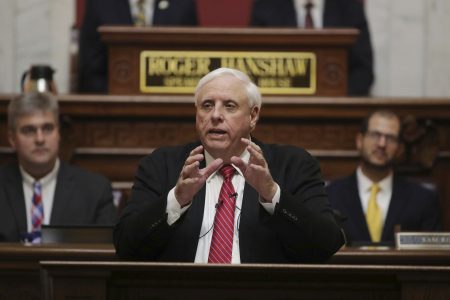
CHARLESTON -- Gov. Jim Justice took the podium in the House of Delegates chamber Wednesday night to give his fourth State of the State address before facing a primary election in May.
Justice took time Wednesday to compare the state in 2020 to what he inherited in 2017. The state was facing a $500 million budget hole in 2017, state teachers were some of the lowest paid in the nation, and roads were severely underfunded.
Since then, the state saw two years of budget surpluses, including $511 million in general revenue growth for fiscal year 2019, breaking state records. Voters passed the Roads to Prosperity amendment, giving the state millions in funding for major road construction projects. Another $104.2 million was allocated for secondary road maintenance last year. And teachers and school services personnel received 10 percent pay raises over two years.
"When I walked in the door, things were pretty tough," Justice said. "I would say as profoundly as I know how to say: ladies and gentlemen, the state of our state is strong and it's growing stronger every single day."
Justice presented the Legislature with a budget proposal for fiscal year 2021 of $4.585 billion, a 2.31 percent decrease from the fiscal year 2020 budget that went into effect in July.
The bulk of the decreased revenue estimate comes from the severance tax line item of $235 million, which is 29.54 percent below the estimated revenue for the current fiscal year.
The 2021 budget takes into account the volatile energy market due to decreased demand for steam coal for power generation, a drop in metallurgical coal exports, an oversupply of cheap natural gas, and the stalled construction of natural gas pipeline projects.
Justice said his goal was to keep tax revenue estimates conservative, hold the line on new expenditures, and keep the bond rating agencies pleased.
"Tonight you're going to see that the budget that I propose to you is very, very conservative," Justice said. "Where we are today with our budget we're OK, but we're not knocking it out of the park."
Justice's budget proposal includes elimination of the intellectual and developmental disability waiver waiting list at a cost of $19.7 million. Another $26.4 million would be split among the Children's Health Insurance Program, Child Protective Services and social services to help manage the growing foster care crisis in the state.
Justice would also allocate $150 million for a Medicaid Families First Reserve Fund.
"I want to lock away those dollars to be sure that we will always have vital services for those that are the most exposed and need the most help," Justice said.
Additionally, $2 million would go to the Backpack program that gives school children backpacks and fills them with food to take home; and $1 million would be directed toward the state's food banks.
All of the additional funding, except for the Medicaid Families First Reserve Fund, is built into the base of the budget.
The funding for these programs is coming from savings captured from efficiencies found in state agencies and savings from Medicaid due to a decrease in enrollment and an increase in the federal Medicaid match rate. Officials with the Department of Revenue tried to maintain the proposed budget as close to this year's budget as possible, and asked agencies to prioritize improvement requests.
Justice endorsed the elimination of the business and inventory tax for manufacturing machinery and equipment. The tax brings in $100 million annually, mostly for county governments and school systems. A legislative proposal would phase out the tax by 2024, but it requires a two-thirds vote to pass the Legislature and would also require a vote of the people in a special election.
"The business inventory and machinery tax is holding us back in some areas," Justice said. "We need to try to find a solution to where we can either get on a glide path or quickly get on a better glide path to eliminate that tax...but we have to be careful of where we are with our general overall finances."
Other proposals include $1.9 million for a Narcotics Intelligence Unit to work within the state Fusion Center to stop the traffic of illegal drugs into the state; the expansion of the West Virginia National Guard's ChalleNGe Academy to the former WVU Tech campus in Montgomery; and funding for senior nutrition programs and the veterans nursing home in Clarksburg, as well as transportation to help veterans get to health appointments.
Senate President Mitch Carmichael, R-Jackson, and House Speaker Roger Hanshaw, R-Clay, both praised the governor's budget and proposals.
"The governor offered a variety of ideas that are designed to move West Virginia forward, and he couched it with the proper caution that comes with being fiscally responsible," Carmichael said. "I look forward to working with the governor and the executive branch as the session gets under way to advance the common goals of prosperity and improving the quality of life for all West Virginians."
"I thank Governor Justice for sharing his optimistic vision for the state of West Virginia," Hanshaw said. "We're ready to work together over the next 59 days to pass initiatives that continue to spur job growth, drive business investment and improve the quality of life for everyone in our state."