
West Virginia Division of Highways Hires Professional Crews to Clean Up Former Homeless Camps
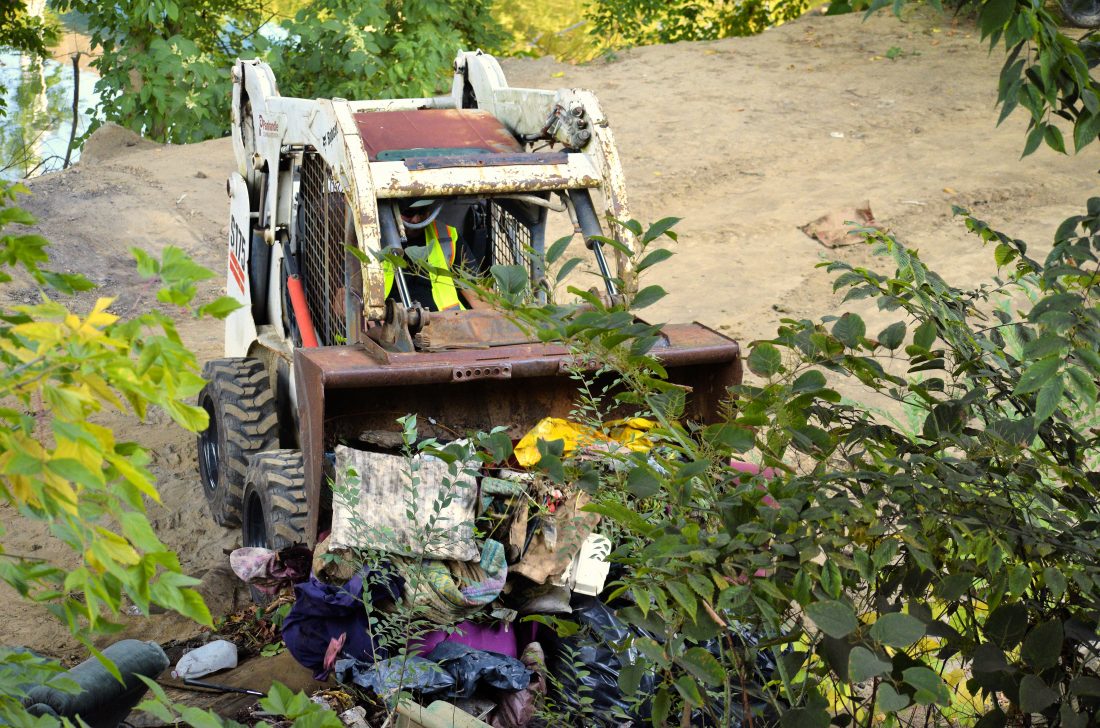
Crews from Panhandle Cleaning and Restoration and the West Virginia Division of Highways clean one of the former homeless encampments along Wheeling Creek, recently ordered vacated because of criminal activity linked to the sites. Mounds of trash and debris were left behind at the abandoned camps, including this one near 20th Street beneath the W.Va. 2 ramps. Some individuals from the cleanup crews wore hazmat-style protective gear while working at the site, where they encountered everything from human feces to cockroach-covered bedding, hypodermic needles and other unsanitary conditions, officials said. (Photo by Scott McCloskey)
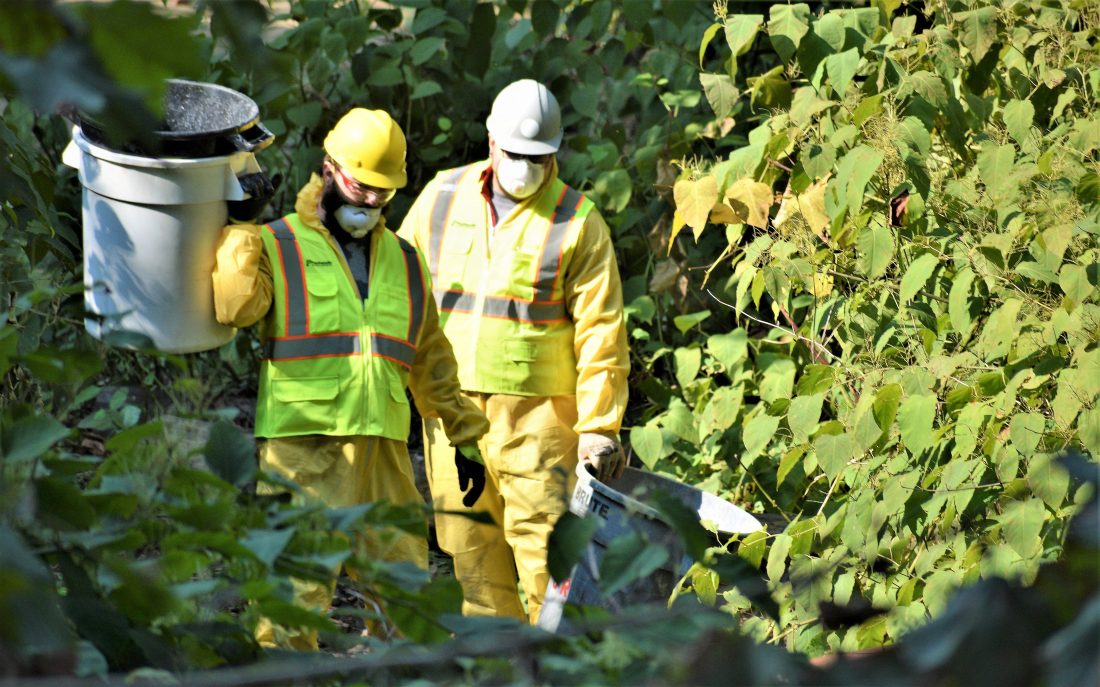
Crews from Panhandle Cleaning and Restoration and the West Virginia Division of Highways wear safety gear while cleaning up extremely unsanitary debris conditions with debris piles left behind at former homeless encampments on state property beneath bridges along Wheeling Creek. (Photo by Scott McCloskey)
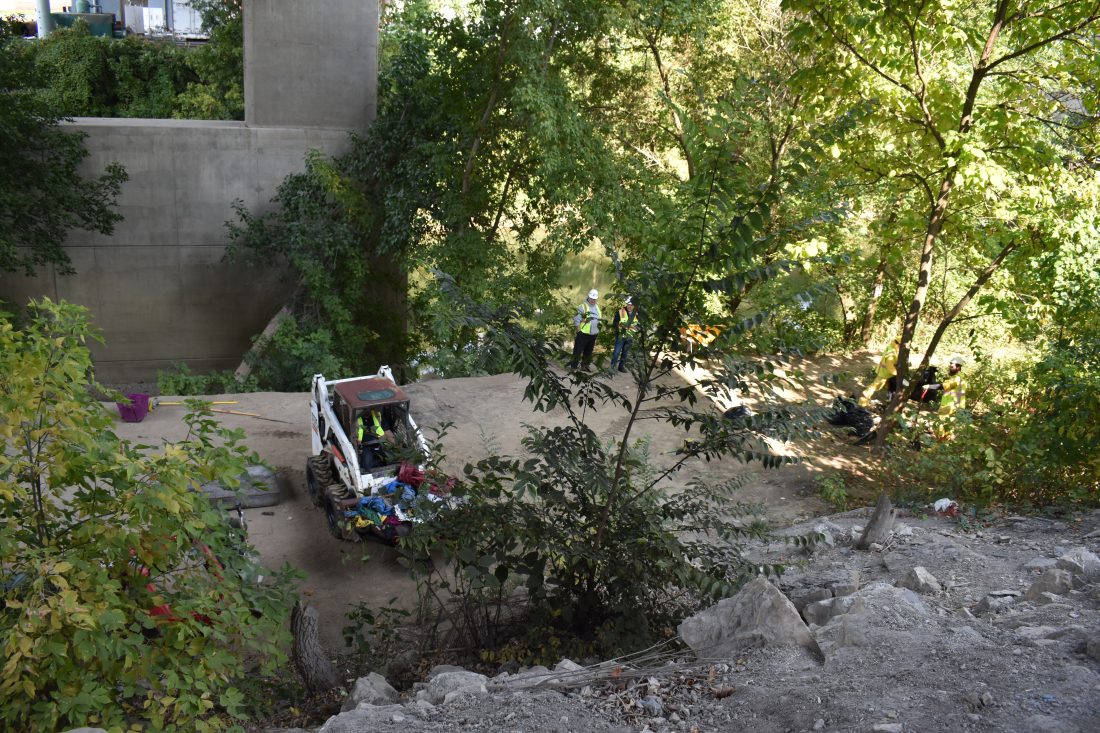
Crews from Panhandle Cleaning and Restoration assisted the West Virginia Division of Highways with cleanup of former homeless encampments along Wheeling Creek. This site beneath the W.Va. 2 ramp required several crew members in hazmat suits and heavy equipment to clear debris and hazardous waste left behind. (Photo by Eric Ayres)
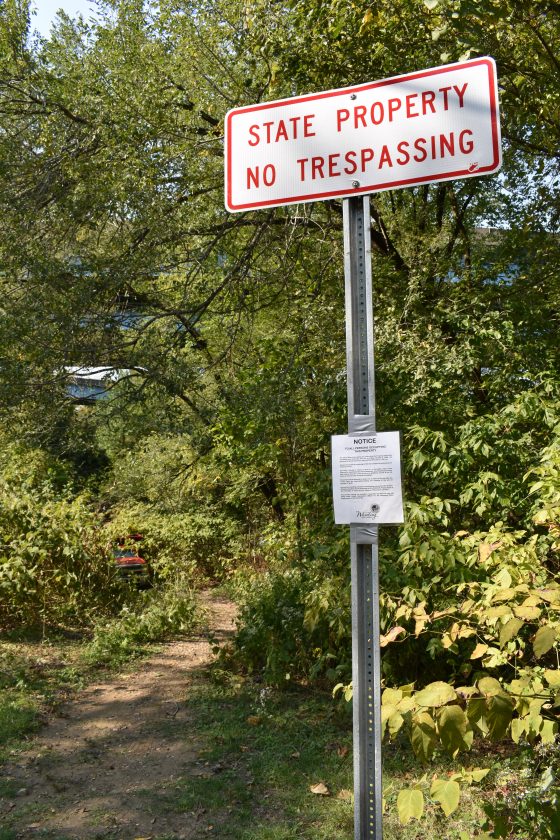
No trespassing signs were posted at every entrance and trail leading to sites formerly occupied by homeless encampments under bridges along Wheeling Creek in the downtown area. West Virginia Division of Highways officials are clearing the sites, which are expected to be better secured and not as easily accessible in the future. (Photo by Eric Ayres)
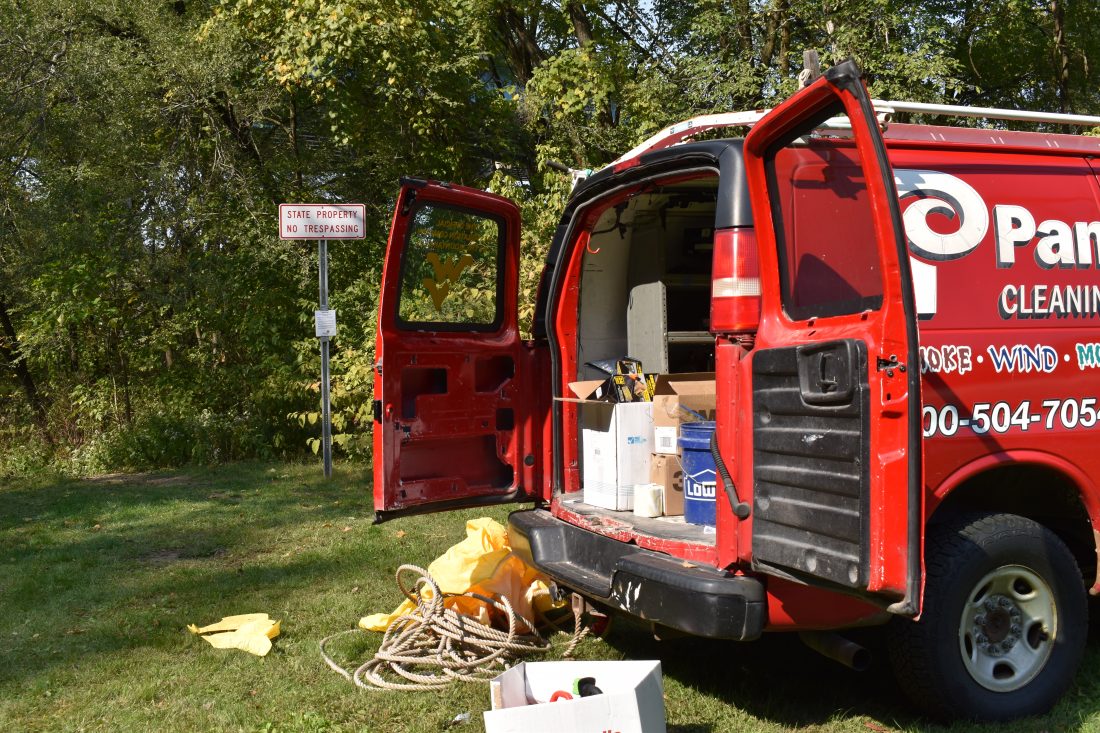
The West Virginia Division of Highways hired Panhandle Cleaning and Restoration to help with the cleanup of unsanitary and potentially hazardous sites where former homeless encampments were located below bridges along Wheeling Creek. Human feces, used hypodermic needles, cockroach-covered bedding, garbage and other unsanitary conditions were found left behind at the sites. (Photo by Eric Ayres)
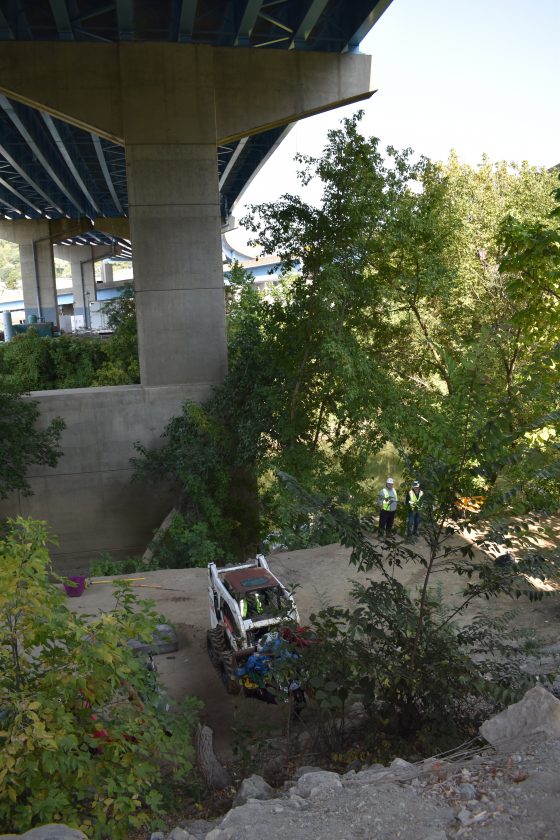
Crews from Panhandle Cleaning and Restoration assisted the West Virginia Division of Highways with cleanup of former homeless encampments along Wheeling Creek. This site beneath the W.Va. 2 ramp required several crew members in hazmat suits and heavy equipment to clear debris and hazardous waste left behind. (Photo by Eric Ayres)
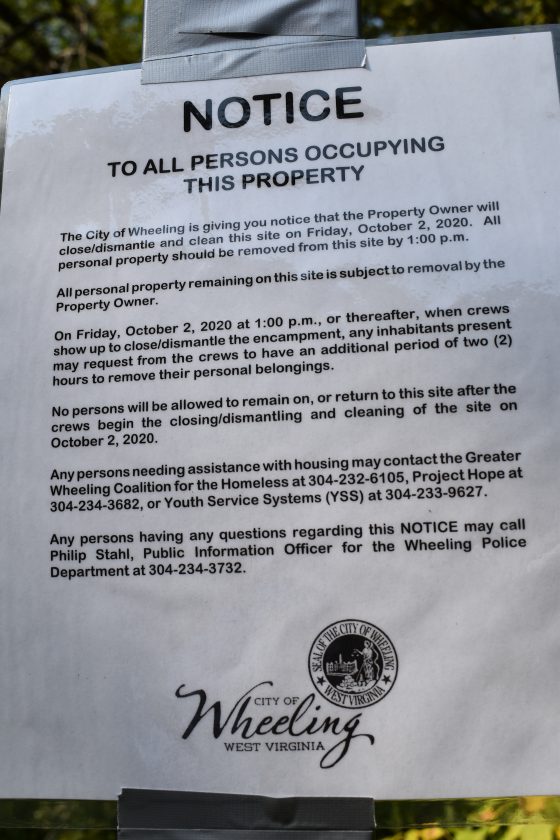
Following a court order after an attempt was made to stop the city of Wheeling from clearing homeless encampments, officials gave a required two-week notice via posts made throughout entrances to homeless encampments that were cleared. The sites, located beneath bridges along Wheeling Creek, will be cleared and secured, with no trespassing signs posted. (Photo by Eric Ayres)
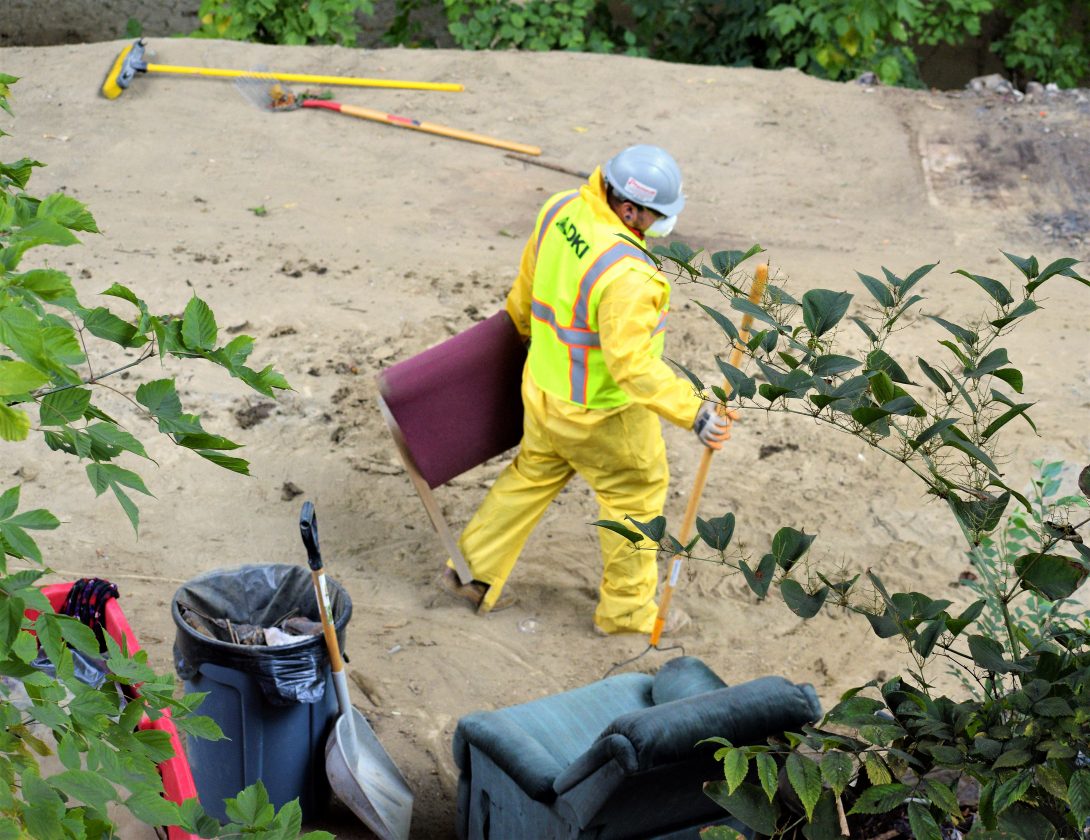
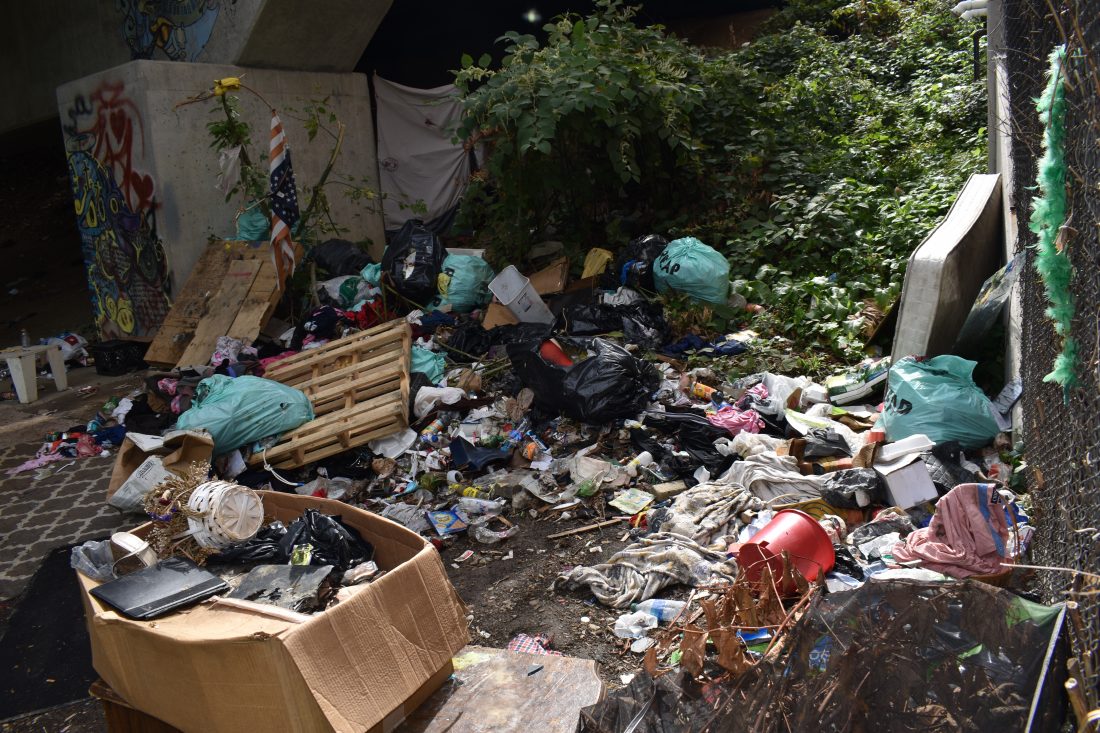
Furniture and garbage is left behind at the site of a former homeless encampment along Wheeling Creek that was recently cleared because of ongoing criminal activity linked to the camps. Crews from Panhandle Cleaning and Restoration were hired by the West Virginia Division of Highways to assist in the cleanup. (Photo by Scott McCloskey)
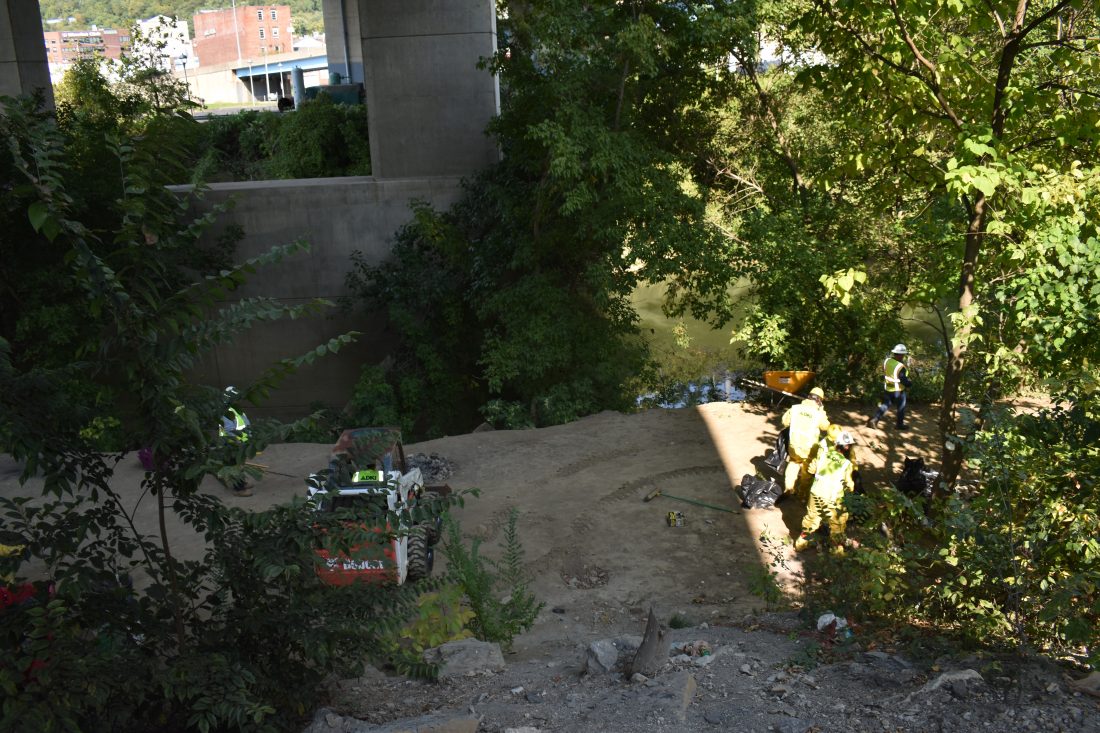
Crews from Panhandle Cleaning and Restoration assisted the West Virginia Division of Highways with cleanup of former homeless encampments along Wheeling Creek. This site beneath the W.Va. 2 ramp required several crew members in hazmat suits and heavy equipment to clear debris and hazardous waste left behind. (Photo by Eric Ayres)
Crews from Panhandle Cleaning and Restoration and the West Virginia Division of Highways clean one of the former homeless encampments along Wheeling Creek, recently ordered vacated because of criminal activity linked to the sites. Mounds of trash and debris were left behind at the abandoned camps, including this one near 20th Street beneath the W.Va. 2 ramps. Some individuals from the cleanup crews wore hazmat-style protective gear while working at the site, where they encountered everything from human feces to cockroach-covered bedding, hypodermic needles and other unsanitary conditions, officials said. (Photo by Scott McCloskey)
Crews from Panhandle Cleaning and Restoration and the West Virginia Division of Highways wear safety gear while cleaning up extremely unsanitary debris conditions with debris piles left behind at former homeless encampments on state property beneath bridges along Wheeling Creek. (Photo by Scott McCloskey)
Crews from Panhandle Cleaning and Restoration assisted the West Virginia Division of Highways with cleanup of former homeless encampments along Wheeling Creek. This site beneath the W.Va. 2 ramp required several crew members in hazmat suits and heavy equipment to clear debris and hazardous waste left behind. (Photo by Eric Ayres)
No trespassing signs were posted at every entrance and trail leading to sites formerly occupied by homeless encampments under bridges along Wheeling Creek in the downtown area. West Virginia Division of Highways officials are clearing the sites, which are expected to be better secured and not as easily accessible in the future. (Photo by Eric Ayres)
The West Virginia Division of Highways hired Panhandle Cleaning and Restoration to help with the cleanup of unsanitary and potentially hazardous sites where former homeless encampments were located below bridges along Wheeling Creek. Human feces, used hypodermic needles, cockroach-covered bedding, garbage and other unsanitary conditions were found left behind at the sites. (Photo by Eric Ayres)
Crews from Panhandle Cleaning and Restoration assisted the West Virginia Division of Highways with cleanup of former homeless encampments along Wheeling Creek. This site beneath the W.Va. 2 ramp required several crew members in hazmat suits and heavy equipment to clear debris and hazardous waste left behind. (Photo by Eric Ayres)
Following a court order after an attempt was made to stop the city of Wheeling from clearing homeless encampments, officials gave a required two-week notice via posts made throughout entrances to homeless encampments that were cleared. The sites, located beneath bridges along Wheeling Creek, will be cleared and secured, with no trespassing signs posted. (Photo by Eric Ayres)
Furniture and garbage is left behind at the site of a former homeless encampment along Wheeling Creek that was recently cleared because of ongoing criminal activity linked to the camps. Crews from Panhandle Cleaning and Restoration were hired by the West Virginia Division of Highways to assist in the cleanup. (Photo by Scott McCloskey)
Crews from Panhandle Cleaning and Restoration assisted the West Virginia Division of Highways with cleanup of former homeless encampments along Wheeling Creek. This site beneath the W.Va. 2 ramp required several crew members in hazmat suits and heavy equipment to clear debris and hazardous waste left behind. (Photo by Eric Ayres)
Trending
WHEELING -- The West Virginia Division of Highways hired a professional cleaning service to handle the heaps of trash and debris left behind at former homeless encampments in Wheeling.
Officials indicated the sites were found to be very unsanitary and strewn with garbage, cockroach-covered bedding, used hypodermic needles, human feces and other hazardous debris. Four homeless encampments were ordered to be vacated by last Friday after Wheeling police in recent months received hundreds of calls to service related to criminal activity that had been linked to the sites, which are located under bridges along Wheeling Creek near the city's downtown area.
According to officials from both the WVDOH -- representing the state of West Virginia, which owns the property under the bridges and along the creek's banks -- and the Wheeling Police Department, all of the sites where notices were posted had been vacated before crews arrived to begin the process of clearing the properties.
"To my knowledge, I don't believe any of the individuals had to be removed," WVDOH District 6 Engineer Tony Clark said Friday. "When crews showed up today, there were no people present, and there was no evidence there were still people living there. Notices had been posted for weeks, and I think they understood that they had to find somewhere else to live."
Wheeling Police Chief Shawn Schwertfeger said officers accompanied WVDOH crews to the sites on Tuesday as a precautionary measure.
"We did go down with them today just to make sure in case there was anyone there, and there was no one there," Schwertfeger said.
Local officials -- including representatives of local homeless coalitions -- noted it is not clear where the people who had been living in the affected homeless encampments relocated. There are several homeless encampments throughout the city, many of which were not ordered vacated by the recent action.
On Tuesday, crews from Panhandle Cleaning and Restoration arrived to help WVDOH clean up the mess that was left behind.
Several trucks from Panhandle Cleaning and Restoration were on the scene Tuesday at a former camp near 20th Street, along with front-loading tractors and other equipment. Some crew members from Panhandle were dressed in full hazmat suits.
According to Clark, WVDOH crews typically would handle this kind of situation themselves, but in light of the COVID-19 pandemic and with extremely unsanitary and hazardous conditions at the sites, the state opted to have a professional service handle the cleanup at the former homeless encampments.
"It was a decision that was made because Panhandle is used to dealing with this type of work," Clark said. "There are used needles and all kinds of unknown, hazardous debris down there, and they are more familiar with dealing with that. We don't want to put our employees at risk, so for peace of mind -- especially in light of COVID -- we thought Panhandle should be doing it."
Clark said the cleanup is a slow process that likely will take several days to complete.
Over the past couple of weeks since the notices to vacate the state-owned properties were posted, WVDOH crews erected numerous "No Trespassing" signs at the entrances to every pathway that leads to a former encampment.
"We want to get them cleaned up and more secured," Clark said. "Access to the sites should be for bridge inspectors, and we want these areas to be secured so there's no damage done. Ideally, we would like to keep from having to do this again and get ahead of it so it doesn't have to come to this. Based on my conversations with Chief Schwertfeger, with the signs posted and the sites cleared, the police will be able to further enforce against trespassing violations in the future."