
Top Stories of 2020: Wheeling Homeless Encampments In the Spotlight After Complaints
Trending
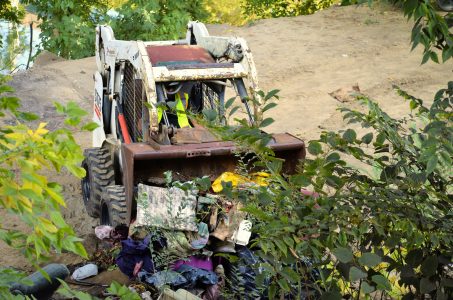
WHEELING -- Springtime was a tumultuous time for the Ohio Valley, as the worst effects of the first wave of the COVID-19 pandemic set in, alongside the start of what would be a several-month struggle concerning Wheeling's homeless population.
In mid-April, the city had begun setting out to dismantle several encampments around Tunnel Green, which city manager Robert Herron had said was in response to several complaints to the city about crimes -- reports of vandalism and theft, sometimes to the equipment of construction crews who were working on Interstate 70.
Herron was backed by Police Chief Shawn Schwertfeger, who said they had responded to a "significant break-in" of equipment, and stolen property was retrieved from one of the encampments.
"We're always going for assaults and disorderlies. We had reports of a significant break-in to vehicles and equipment, the detective responded right away, and found the property right in one of the camps, including a set of keys to the vehicle," Schwertfeger said in April.
He also said he had mentioned the idea of dismantling the camps to Herron some time prior, due to the need for police presence.
"Would anyone allow an encampment of the property that allowed repeated criminal activity? Why would the city be any different?" Schwertfeger had asked. "I'm very mindful that some citizens have fallen on hard times, if they want to live peacefully without committing crimes. ... We actually went down to one of the camps the other day. They were very receptive."
At the time of the dispersal, Lisa Badia, Executive Director of the Greater Wheeling Coalition for the Homeless, expressed concerns for dispersal as a probable vector for the spread of the coronavirus, but was not against the dismantling of the encampments on the basis of public safety.
The American Civil Liberties Union of West Virginia disagreed. By the start of the next week, the ACLU had directed a letter to the city challenging the municipal decision to dismantle the camps, demanding an immediate stop to the destruction of the camps around Tunnel Green. In response, the city acknowledged the receipt of the letter, and the matter paused a week after it began while the city weighed their options.
The matter simmered over the summer, with the city waiting on a definitive course of action from the police and fire departments. City council member Rosemary Ketchum, who took office in June, brought up the encampments as a priority. Ketchum had both experienced homelessness and continues to work with programs to assist the homeless.
Toward the end of summer, action against the encampments resumed. In early September, Wheeling again mobilized to dismantle the camps, this time centered along Big Wheeling Creek, and again, the ACLU intervened, this time filing a lawsuit in federal court to prevent the city from proceeding. U.S. District Court Judge John Preston Bailey, the Wheeling Police Department and West Virginia Division of Highways were not appropriate defendants in the civil action; the State of West Virginia was substituted as a defendant in the matter.
The city had placed notices informing residents of the camps that they had until the end of the Friday, Sept. 4, to leave the area, along with resources for local homeless coalitions. The civil suit, however, pushed back the deadline to evacuate by about a month, as Bailey ruled Sept. 16 that the city could proceed with the removal, but it had to give two weeks notice to those residents and coordinate with area agencies to offer support with the relocation. By that time in September, it was estimated that around 80 homeless people were living within Wheeling, but an unknown number of those were living in the affected camps.
With the legal avenues addressed, the State of West Virginia was cleared to begin dismantling the camps, which were deemed a state issue, rather than a municipal one. Wheeling police were made available to assist the state if their presence was requested, but Wheeling's civil servants did not participate in the active dismantling of the camps. By the following weekend, no requests for law enforcement had been made. However, "No Trespassing" signs had been erected at several locations, and police were tasked, going forward, with enforcing that limitation.
As winter set in, the city extended aid to the homeless population by allocating part of the now-vacant Ohio Valley Medical Center to Youth Services Systems' Winter Freeze Shelter, which offers warm shelter to the homeless for three months during the winter. The former Hillcrest facility was offered to YSS, offering around 20 beds to the program, a great boon to YSS.
"In light of our increasing numbers in recent years coupled with the ongoing pandemic, we realized our current facility would likely prove woefully inadequate," YSS CEO John Moses said after the decision was made in November.
"We approached the city about the space at the former Hillcrest and determined it is large enough to allow us to operate in accordance with COVID-era guidelines for homeless shelters set forth by the Centers for Disease Control.
"We're grateful for this partnership, which is the latest example of the good working relationship YSS and the city have enjoyed for more than four decades. It shows the city's dedication to helping us serve the community's most vulnerable."