
Bluefield State College President, Marshall County Native Robin Capehart: Higher Ed Must Heed Economy
Trending
CHARLESTON -- If public colleges and universities in West Virginia plan to survive, especially after COVID-19 has wrecked enrollment numbers, they need to meet workforce needs and demands.
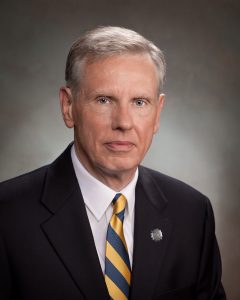
It's that lesson that Marshall County native Robin Capehart is taking to heart as he helms Bluefield State College on the southern end of the state.
One of two remaining Historically Black Colleges and Universities in West Virginia along with West Virginia State University in Kanawha County, Bluefield State College used to be one of the colleges you would hear about when talk of decreasing the number of state-supported colleges and universities would come up.
Now, BSC is financially sound, its enrollment is holding steady as other public colleges and universities are seeing declines during the COVID-19 era, on-campus housing is being built for the first time in decades, coaches are being hired for long-shuttered athletic programs, and the school is developing a program in Capehart's former backyard in Wheeling.
Capehart said in his two years at BSC, first as interim president and now as president, treating BSC as a business and catering to the employment needs of the market has helped the college turn a corner.
"If there's a lesson to be learned at what we've done here is that there's business principles, there's the laws of supply and demand that you can't revoke," Capehart said. "If there's one lesson that I say to the people on campus, it's do the math."
It's the law of supply and demand that brought Capehart and BSC to Wheeling.
The historic school entered into a memorandum of understanding with the city for use of part of the old Ohio Valley Medical Center to meet a demand for engineering professionals in the Northern Panhandle.
BSC plans to offer mechanical, electrical, and civil engineering technology programs in the Ohio Valley. The programs are accredited through the Accrediting Board for Engineering Technology and are programs not already available in the area. Once appropriate buildings are identified on the former OVMC property for classrooms, BSC would also look for buildings for students housing, food, and parking.
"You've got to use business principles and incentives," Capehart said. "I think it's really important that colleges and universities stop and look at what is being demanded, not by the students necessarily, but by the economy."
Originally founded as Bluefield Colored Institute in 1895, the school specializes in teaching, engineering, and nursing. Capehart became the 16th president of BSC in 2019 and was officially inaugurated in October. The former secretary for tax and revenue under former governor Cecil Underwood in the late 1990s and a former chairman of the West Virginia Republican Party, Capehart is a former professor at Marshall University, a Fulbright scholar, and the former president of West Liberty University.
In his inaugural address in October, Capehart said colleges and universities need to do a better job at preparing graduates for the jobs that are in high demand. In a time when COVID-19 is causing students to withdraw from colleges, institutions must present students a better value and degrees that can be useful.
"The 'learned' believe that success of higher education is measured solely in the number of degrees that are awarded and have no relationship to the preparedness of its graduates," Capehart said in his speech. "Yes, the learned in higher education today truly live in a world that no longer exists.
"Every day, colleges and universities across American are being acquired, merged, or closed," Capehart continued. "Parents and students are questioning more and more the promise of a college degree -- the promise of a well-paid job in a respectable profession that will fulfill their passion -- a promise that they've heard about for generations: a promise that appears to be rapidly fading."
Speaking in January from behind his desk on the BSC campus one week after announcing his agreement to expand into Wheeling, Capehart said now is a golden opportunity for colleges and universities – as well as the state's Higher Education Policy Commission – to re-tool and tailor themselves to help train students for the jobs needed in West Virginia today.
"The HEPC is supposed to work with the colleges to develop the public policy agenda, so what they're doing in higher education is looking at things they know, like retention rates, and graduation rates," Capehart said. "They're not looking at the real economic needs of the state."
One of those needs, Capehart said, is nurses. BSC has two cohorts in its nursing program in Bluefield and in Beckley. With West Virginia's health issues, its aging population, and COVID-19 placing strain on healthcare across the state, nurses are now needed more than ever. Capehart said focusing on economic needs and building degree programs around those needs can help colleges stay relevant and help keep young adults in the state.
"What we need overwhelmingly is healthcare providers," Capehart said. "What about if the state would support healthcare providers? First of all, you're going to keep your smart kids in the state. They're going to be high-paying jobs. Of the students who walk across the stage, 95 percent of them we give a diploma to and they walk out with a job that averages about $65,000 per year."
Capehart said the West Virginia Legislature should consider these factors when developing public policy in regard to colleges and universities. Whether it's a performance-based funding model briefly considered by the Legislature a few years ago or simply requiring colleges and universities to focus more on workforce needs, Capehart said public colleges and universities should be accountable to taxpayers.
"If there is one lesson to be learned, demand results," Capehart said. "You're not going to get support from people if people are paying taxes and they're not seeing results. 'Why am I paying taxes to all these colleges if I can't get enough nurses? Why am I doing this and I can't get enough surgical tech persons?'"
Even though he's just two years into his job as BSC president, Capehart is proud of what the school has done the last 24 months and he's looking forward to helming the school as it continues to grow.
"We've done some things and we brought in a good team," Capehart said. "I think we're headed in the right direction."