
Wheeling-Ohio County Health Department Administrator Howard Gamble Questions Need for Needle Exchange Bill
Trending
WHEELING -- With the bill working its way through the West Virginia Legislature adding more regulations to local needle exchange programs, an Ohio County health official said the regulation may complicate local efforts, but there could be more to develop out of it.
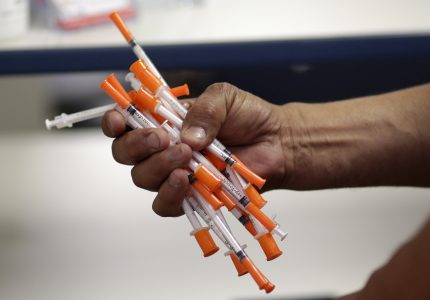
On Tuesday, the West Virginia Senate passed Senate Bill 334, which introduces a slew of new regulations onto local needle exchange programs, including requiring licensing, adding a mechanism to revoke that license, and requiring one-to-one needle exchanges. The bill passed 22-11 and has moved on to the House of Delegates.
The Wheeling-Ohio County Health Department has maintained a one-to-one needle exchange program for some time, implemented simultaneously with Kanhawa and Cabell counties. Administrator Howard Gamble said the decision was made years ago to not register the program with the state, which at that point was not required, and none of the health department's other programs needed to be registered.
"We didn't have a license and registration, we were just doing a public health service, and it was a service we chose to do. We don't get a reimbursement for it, and it's not built into a funding source," he said. "There was no need to register it because it was just a service that we did for the citizens, and having a license or registration, they have the ability for someone to say, 'We don't like how you're doing this,' whether it's the state health department or someone else, and it can be turned on and off. That's a little concerning."
SB 334 allows the director of the Office for Health Facility Licensure and Certification to revoke or limit the needle exchange program in the event that local operations submit knowingly false or misleading information, violate the law, fail to cooperate during the investigation of a complaint, or if a majority of county commissioners in that county approve a letter asking for the revocation of that license.
Gamble said his main concern with the bill was that it introduces oversight into a county project which was introduced to combat diseases locally, without providing funding for the program the bill allows the state to end.
"Now, it seems that we're doing this based on someone wants to know what you're doing, and you get to the point where it's managed or controlled so much, are you actually making an impact on the health of the citizens?" Gamble said. "If you're going to do this, and you have this limitation and control, it would be nice if there were certain funding provided to them directly — 'Here's an additional part of your state aid for needle exchange; here's the needles, supplies, whatever else purchases you need to make.' We just don't have that. These supplies come out of our general fund."
Gamble said the county's program is not particularly large, and arose out of a need among the community. The Ohio County exchange program, in addition to offering a maximum of 20 needles per person, offers HIV/AIDS education, testing and counseling, distributes condoms to prevent STD transmission, offers substance abuse treatment and other medical services, distributes alcohol swabs, vaccinations and offers testing for tuberculosis, hepatitis A, B and C, and other infections.
Local health departments offer such programs, Gamble said, until another agency picks it up in their stead, such as distribution of child safety seats, which he said was previously a health department program but has since been adopted by local law enforcement.
"You can sort these programs until they're taken over and run effectively by another entity; needle exchange fit into disease management," Gamble said. "They're done by county health departments because we saw the need. … Now that they're more regulated, it would be nice if all counties got the funds to do it, so now all counties should be able to do needle exchange."
Such funding was discussed on the senate floor during the passage of the bill. Senate Minority Leader Stephen Baldwin asked what resources county health departments would have to comply with the requirements. Senator Mike Maroney, R-Marshall, said there were no additional funding provisions in the bill, and that communities unwilling or unable to eat the cost of the additional fees from licensing could simply opt out and discontinue the programs.