
Forget ‘Normal’ — Wheeling Businesses Say The Comeback from COVID-19 Can Be Even Better
Trending
WHEELING -- In the dark COVID days when Centre Market was a ghost town, the owners of one store made an interesting business decision. Antiques on the Market expanded. And, according to one member of the store's four-owner team, it is preparing to expand again.
What's going on?
Voices ranging from economists to retailers to an attorney keeping an eye on area bankruptcies share today how they are teasing apart what is actually happening on the ground from fear of what could have been. Taken together, they paint a picture of an Ohio Valley business sector that is bouncing back in a way that may eventually be better than the "old normal."
Here's what they're saying:
THE SMALL RETAILER
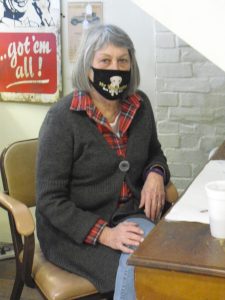
"We had a bunch of furniture that we had to put somewhere and we had plenty of time," said Wendy Polack, who with her husband and another couple has operated Antiques on the Market for 36 years. "It got kind of boring sitting at home."
So, during the state's two-month shutdown for non-essential businesses last spring, the four decided to do something other than hunker down.
"We did the third floor," Polack said of deciding to expand. "It had been used before, so we just put on a fresh coat of paint."
Soon after, they were hauling up stuff such as a settee from the Jane Austen era and staging vignettes.
When the governor allowed the business -- which houses the wares of 19 vendors -- to reopen in mid-May, the new furniture gallery opened with it.
And, that is not all.
The other half of the third floor remains enticingly empty - a literal room with a view.
Stout picture wires are already dangling here and there. Pedestals and vintage theater seats have been moved into place. It will soon be an art gallery featuring contemporary local and out-of-area works, Polack said.
"We were starting to think about it before COVID," she added, noting it was the open time sparked by the pandemic that allowed them to move at speed.
Not that it's all freewheeling at this point. The pandemic isn't over. "We are waiting until we can have a grand opening for the art, but that will be a while with the COVID."
That said, Polack said business is already steadily increasing.
"The two months that we were closed, it was pretty bad," she said, noting much of the store's sales come from those who travel in from outside Wheeling. "But, it's perking up pretty well ... Being in business for so long, we have a lot of repeat customers. Now, people are starting to buy stuff for spring."
THE LARGE RETAILER
While Polack and her co-owners are thinking about three floors in their Victorian-era building, some retailers are thinking about square miles of space during the COVID bounceback.
Cafaro Company, which operates Ohio Valley Mall and pretty much all the commercial space south of I-70 in St. Clairsville, also owns another dozen or so enclosed malls and about 40 strip-style malls elsewhere.
Joe Bell, Cafaro spokesman, said the COVID shutdowns were brutal, but the overall outlook is not as bad as some might assume. At the Ohio Valley Mall, for example, there has actually been a net gain of tenants during COVID.
The only store to close since March 2020 — among more than 100 businesses in the mall area — was The Children's Place. That shuttered as part of a national bankruptcy, Bell said. (He noted that Macy's closed in January 2020 as part of restructuring to more of an online presence rather than because of COVID.)
Offsetting that loss, Ferguson's House of Furniture, Chick-fil-A and a Five Below store have moved into the commercial space in recent months. Bell said a Hampton Inn & Suites is additionally in the works.
He noted that adding businesses and keeping the existing ones going wasn't exactly easy, however. Cafaro Company asked tenants to take hygiene and signage precautions that were above state mandates, Bell said.
"All that is still in play," he added. "But, at the same time, people are feeling much more comfortable ... It is legal to open your doors. It's OK to bring customers in."
While sales are still below normal overall, Bell said Cafaro Company is also helping store owners stay afloat by working with leases. A lot.
"Our goal is to keep them in business," he said. "We've been very diligent about working with them to make ... lease agreements doable, flexible and custom made."
There's also a deliberate pointing of the eyes toward the future much like what is happening with Antiques on the Market.
"Places like the Ohio Valley Mall are a lot different than when they opened. It's not just a place to buy a dress or a pair of shoes," Bell said of building a downtown-style future that includes hospitality, food, entertainment and even medical care. "It will be a place where people will take care of multiple needs, not just merchandise."
That said, he's hoping there will be a merchandising boom as vaccines take hold and stimulus checks start to burn in people's wallets. A recovery by late 2021 is the goal.
THE ECONOMIST
Such a goal is feasible, according to Brian Lego, a research assistant professor with West Virginia University's Bureau of Business and Economic Research in Morgantown. He discussed how Wheeling's Metropolitian Statistical Area — which includes areas extending out as far as Ohio Valley Mall — is doing.
As of this January, he said the area is between two-thirds and three-quarters back in terms of quantifiable factors such as employment. Given the number of people who have been vaccinated against COVID since then - and are venturing out to buy everything from socks to houses - the situation is likely even better, he noted.
But, that's a qualified statement.
For one thing, he said, recovery data is still so raw that the numbers are less crunchable than they are estimations. The lack of a model as to how a modern economy bounces back from a recession caused by non-economic forces and countered by massive government assistance is another issue.
"The loss of jobs was so rapid (with COVID)," Lego explained of how the pandemic recession defies earlier models that are generally shaped like a sharp "V." That model involves a steady decline, a narrow bottom and a steady recovery.
COVID's recession is different, he said.
The area's unemployment rate (which looks at people actively seeking jobs in the last four weeks and doesn't include those such as moms who left the workforce to care for children in remote schooling) was around 6 percent before COVID. It reached a high of 17% in April 2020 - "like a snapping of the fingers" — just weeks after the shutdown began.
"With the Great Depression, it took a couple of years to reach bottom," Lego said of the contrast.
Even the Great Recession of 2008 was a rolling model, in spite of an appearance of suddenness to some, he said. More than a year before banks began to collapse in the fall of 2008, gas prices hit a spike in the summer of 2007. That rolled into a business decline, which revealed a housing market that was based partly on fantasy and down things spiraled.
The other unknowable factor in the COVID recession/recovery is government assistance, he added. Trillions of dollars have and will be going out in grants to cover payrolls and other operating expenses, stimulus checks sent directly to citizens of every age, loans and other forms of assistance.
"(The fallout) wasn't nearly as bad as it could have been," Lego said of what has resulted.
In fact, some numbers suggest Wheeling's economy is "not a bad place to be."
The local unemployment rate - as of January - had already dropped to 6.8%, Lego said. That is slightly above a statewide average of 6.5% and national average of 6.2%, a difference he attributes to the role coal and natural gas play in local employment.
So, in spite of how dire the bottom looked in the middle of 2020, the recovery side of the "V" is looking steep in a good way, Lego explained.
Retailers are more flexible, many having greatly expanded their online venues. A fresh round of government-funded stimulus money — $1,400 per person - is being distributed.
Lego suspects spending will ensue, even if some of the money is temporarily stashed.
"Most people don't save just for the sake of saving ... I think that money's going to get deployed. It's a question of how fast."
If it's fast, Wheeling and other areas may be back to pre-pandemic levels of revenue and employment by the second half of 2021, Lego said. If it's somewhat slower, the area's economy will still probably recover by early 2022.
"It's not going to be an even improvement across the county," Lego cautioned of hills and dips here and there. "(But), I think there's going to be a rising tide that's going to help just about everybody."
That suggests the government assistance has basically worked, as imperfect as it has been, Lego said. "It at least prevented a major cascade of bankruptcies."
THE LAWYER
That is something attorney Ryan Johnson, clerk for the Northern West Virginia District of the U.S. Bankruptcy Court in Wheeling, is also seeing.
"Our bankruptcy filings have precipitously declined," Johnson said of COVID months. A snapshot: Filings in January and February of 2021 are down 40% from the same months of 2020.
While that dramatic trend is a national one, it is one marker of the current health of the local economy given the types of bankruptcies the Wheeling court handles, he said.
While large corporations are often filing such last-ditch efforts in Delaware or New York, the district court sees more locally rooted businesses and individuals.
And, they just aren't filing. That doesn't mean they aren't hurting financially, Johnson cautioned, noting government assistance programs will eventually come to an end. It could also reflect a lack of hope in the immediate future.
Bankruptcy is a court of last resort, he explained. Given limits on such filings, businesses and individuals tend to file when things are so bad they can't continue but they see a brighter future in which they might be able to continue if they can get debt relief.
Will a tsunami of COVID bankruptcies come when government aid dries up? No one really knows, Johnson said. This is particularly true because all manner of private debt restructuring and business negotiations may be going on to avoid court action.
THE HELPER
The government certainly doesn't want to see such a tsunami, according to Karen Friel, West Virginia district director of the U.S. Small Business Administration. Friel said aid is still flowing and encourages business owners who are continuing to struggle from COVID's unprecedented toll to contact her agency sooner rather than later.
Noting that small businesses create two out of every three American jobs, Friel said the new American Rescue Plan has, "immediate relief for hard-hit small businesses and their workers, including those in the leisure and hospitality and restaurant industries."
Both grants and loans are in play in this round of assistance, which has expanded to include certain non-profits and online-only organizations, Friel said.
Information regarding all the programs and services offered by the SBA is located at www.sba.gov. The West Virginia District Office also offers regular trainings, with a schedule located at www.sba.gov/wv. Entrepreneurs can also sign up to receive updates at www.sba.gov/updates.