
Seeing Homelessness Through a Local Lens: Wheeling Photographer Rebecca Kiger Chronicles Crisis for Time Magazine
Trending
WHEELING -- Rebecca Kiger listened to the numbers she was being told -- the number of homeless people who have died in the Wheeling area during the COVID-19 pandemic -- and they stunned her. Through the pandemic, 22 among Wheeling's homeless had been lost.
Kiger, a Wheeling-based documentary photographer, felt that story needed told, she needed to help tell it and she wanted it amplified by as large of an outlet as she could find. She ended up partnering with one of the biggest.
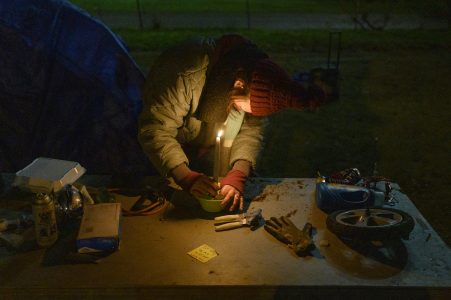
Kiger's work documenting the crisis among Wheeling's homeless can be found in this month's Time magazine, accompanying a story written by Time editor at large for special projects Paul Moakley.
The piece provides a window into a pressing issue, chronicling the people living through it and those trying to help.
The idea germinated, Kiger said, after a National Geographic contract editor had approached her looking for a project it could run during the Christmas holidays. She wanted to pitch the idea of what it looks like to help vulnerable people during the pandemic. She talked with Youth Shelter Services CEO John Moses and others, and learned that so many homeless people in the area had died.
National Geographic ultimately passed on the pitch, but Kiger strongly believed people needed to know about the situation.
"As soon as I started, I knew that I was invested in the project," Kiger said, "and I felt that it was really important."
Local social workers told Time that, in a bad year, two to four homeless people in the area die each year. That 22 had died during the pandemic showed how dire the situation was for those without homes in the Wheeling area.

John Moses, CEO of Youth Services System Inc. -- an organization that lists assisting the homeless among its many missions -- listens to dozens of voicemails from people requesting help before the holidays this past December. This photo was one of many from Wheeling-based documentary photographer Rebecca Kiger that was featured in a recent Time magazine project about how the COVID pandemic has affected the local homeless community. (Photo by Rebecca Kiger)
Crystal Bauer, the director of staff development and a registered nurse at Peterson Rehabilitation Center, also is the director of Project HOPE Street Medicine, which provides medical services for the local homeless population and helps them link up with services like Wheeling Health Right. She is among those photographed and featured in the Time.com version of the story.
Much of the culprit in the precipitous rise in deaths, Bauer said, was not just the physical toll of the pandemic within the homeless community, but the mental and emotional toll. The lockdowns and the distancing were tough enough for those who are housed. For the homeless, that despair jumps exponentially.
Those without homes depend on services not only for warm places and food to eat, but for a sense of community, fellowship and camaraderie. Soup kitchens closed, but still provided food to go. Yet they couldn't provide the opportunity for people to congregate, talk to each other and not feel as alone.
"That part of it, for me, is the part that I think people don't realize," Bauer said. "We're talking about a population of people that people don't see.
"I really feel that's what contributed to the increase in number, aside from the fact that we have people who have addiction issues, we have people who struggle to maintain being clean and sober," she continued. "How do you cope with not having someone to talk to? We can't hug people anymore. When we rounded, we had people who said, 'I just want a hug.' We would do toe touches and it was hard for us not to be able to meet those needs for our unsheltered friends."
After National Geographic passed, Kiger took the project to the New York Times. When the Times passed, she went to National Public Radio and then to Moakley at Time. In making her pitch to Moakley, she did something normally considered a no-no. With most pitches, photographers send about 20 pictures. She sent Moakley 150.
Yet that showed Moakley Kiger's dedication, the depth with which she already had been chronicling the story, and that there was a major story there.
"I was really moved by the pictures, to be quite honest," Moakley said during a virtual talk this past week with Staten Island Arts. "I think the story really clicked through a conversation with Rebecca. We sat down ... and went through the work. She told me what it was all about.
"So we started to think about how this story reflected the rest of the country," he added, "and we started to try and figure out why this is happening."
Through Kiger's lens and the reporting of Moakley and fellow Time reporter Julia Zorthian, they were able to unravel the issues the Wheeling homeless community was facing and the work that groups like YSS and Project HOPE were doing to address that community's needs.
This was no short-term project for Kiger, and that's something she feels helped her gain the trust of the subjects of her photos. She took the time to talk to them and learn their stories. She wasn't some out-of-towner who swooped in for a couple of days. She is a Wheeling resident who returned day after day to continue her work.
In the end, she was happy to provide a window into her subjects' lives and give those unaware of their struggles an idea of what they go through. And she also was happy to show the important help so many local organizations provide.
"The people that I met doing the service work are doing harm reduction work," Kiger said. "What I would want to emphasize from what I've learned is that the people on the ground are doing harm reduction. I hope that our policies and our larger institutions catch up with that."