
West Virginia Leaders: Biden Climate Goal Is Hot Air
Trending
CHARLESTON -- President Joe Biden's goal of cutting greenhouse emissions in the U.S. in half by the end of the decade might have overtones of President John F. Kennedy's moon-landing goal, but West Virginia leaders believe the ambitious plan harms the state's coal and natural gas industries.
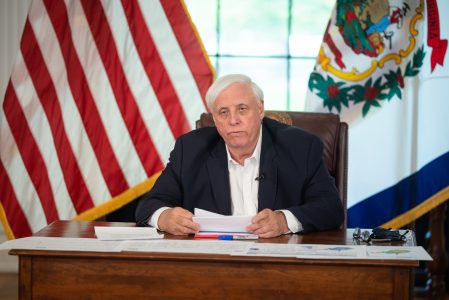
"It's not the news we want or need in West Virginia," said Gov. Jim Justice during his COVID-19 briefing Friday at the State Capitol Building. "It is not the course that this nation should take."
Biden announced his greenhouse emissions goal Thursday at a virtual summit with world leaders on the changing global climate. Biden wants to cut U.S. greenhouse gas emissions by between 50% and 52% of 2005 levels by 2030.
Biden told world leaders that the goal is for the U.S. to be carbon-neutral by 2035. As of now, the U.S. represents 15% of the world's greenhouse gas emissions, having already reduced greenhouse gas emissions 12% over a 14-year period between 2005 and 2019 according to the Environment Protection Agency.
"There is no way on this Earth that we can do today without coal and gas," Justice said. "This nation over the last few years became energy independent, and this nation became strong from the energy standpoint … If we don't watch out, this country will absolutely fall right back into the same situation we were in years ago."
Speaking shortly after Justice's briefing Friday, Attorney General Patrick Morrisey said he would fight any executive orders, rules, and regulations from the Biden administration in federal court. In a 2016 decision, the U.S. Supreme Court blocked the EPA's Clean Power Plan under former president Barack Obama that set to cut greenhouse gas emissions by 32 percent by 2030. Morrisey led a 22-state coalition to fight the Clean Power Plan in court.
"This is the Clean Power Plan on steroids and a whole lot more," Morrisey said. "Fortunately, under our Constitution, these types of transformational and highly controversial changes are not dictated by the whims of one man, let alone a president. ... We have been down this road before and it looks like we will go down there again."
The two largest contributors to greenhouse gas emissions are transportation and electric power. Transportation accounts for 29% of U.S. greenhouse gas emissions, followed by electric power with 28% of emissions, primarily carbon dioxide.
Coal-fired electric power plants are the primary drivers of carbon emissions in the U.S. According to the U.S. Energy Information Administration, coal accounted for 952 million metric tons of carbon dioxide emissions in 2019. Emissions from clean-burning natural gas-fired power plants accounted for 560 million metric tons of carbon dioxide emissions - a 41% decrease from coal-fired power plants.
West Virginia's coal industry has already suffered from the closure of coal-fired power plants and the transition to natural gas-fired plants. According to West Virginia University's Bureau of Business and Economic Research, coal production was hurt by a year-over-year reduction in electric power production of 20% caused in part by the COVID-19 pandemic.
In 2019, coal production in West Virginia decreased by 3% from 95 million tons to 93 million tons. Coal production during the first quarter of 2020 dropped by 24% from 24 million tons to more than 18 million tons.
Another concern, the report stated, was the fall in capacity factors in out-of-state coal plants supplied by West Virginia mines, dropping from 41% in 2018 to 36% in 2019.
According to the EIA, 95 gigawatts of coal capacity was closed or switched to another fuel between 2011 and the middle of 2020, with another 25 gigawatts slated to shut down by 2025. According to a study by the University of Maryland's Center for Global Sustainability, all coal-fired power plants would have to close by 2030 to meet Biden's emissions goal.
With both West Virginia's coal and natural gas industries expected to be negatively affected by Biden's emissions goal, the Biden administration announced $109.5 million for projects through the Department of Energy to create new jobs in communities reliant on the fossil fuel industry for employment.
The White House created the Interagency Working Group on Coal and Power Plant Communities and Economic Revitalization within the Department of Energy. In a report released Friday, the working group identified $38 billion in existing funding to help areas with coal and natural gas production transition. Projects include extracting rare earth minerals - used to manufacture electronics and batteries - from coal and coal waste, geothermal energy research at WVU, and more than $75 million for carbon capture projects.
"For generations, our coal miners have sacrificed their health and safety to mine the coal that forged the steel and provided the power that made the United States the greatest nation in the world," said U.S Sen. Joe Manchin, D-W.Va. "I am encouraged to see President Biden acknowledge these contributions and start to allocate the resources that will be required to reinvest in these communities who have suffered huge job losses."
Other congressional lawmakers were also appreciative of the focus but still concerned about the negative effects Biden's pledge could have on coal and natural gas communities.
"Both Republicans and Democrats agree that we need to reduce carbon emissions. But we believe it should be done in a way that's not harmful to the American people," said 1st District Congressman David McKinley, R-W.Va. "Through investments in innovative technology, like carbon capture, we can make our energy resources cleaner while retaining American jobs."
The new agency will be headed by Brian Anderson, the director of the National Energy Technology Laboratory and former director of WVU's Energy Institute.