
Wheeling Councilwoman Rosemary Ketchum: ‘Political Calculation’ Likely Behind Caitlyn Jenner’s Stance on Transgender Athlete Bans
Trending
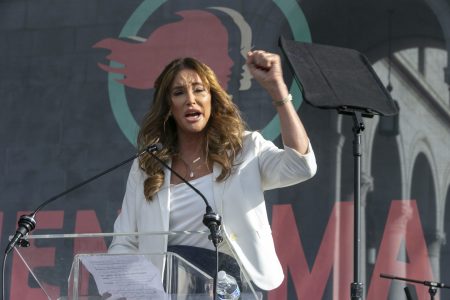
WHEELING -- Discussion over transgender athletes continued this past week after Caitlyn Jenner was criticized by many in the LGBTQ community for speaking out against transgender girls competing in girls sports, a stance that Wheeling Councilwoman Rosemary Ketchum viewed as politically motivated.
A former Olympic champion and high-profile transgender celebrity, Jenner brushed off a backlash last week in the wake of comments she made revealing her belief that it is unfair for biological males to go up against biological females in competitive girls' or women's sports.
Two weeks ago, Jenner announced her bid to run for governor of California as a Republican candidate. In recent interviews since the announcement, she has publicly championed conservative views on a number of polarizing issues, showing support for security on the Mexican border, calling for the end of COVID-related restrictions and voicing opposition to efforts to defund police agencies.
Last week Ketchum -- who has emerged as a national voice on LGBTQ-related political issues after becoming West Virginia's first transgender elected official -- appeared on MSNBC and criticized the state's legislature and W.Va. Gov. Jim Justice for adopting a bill to ban transgender athletes from competing in girls sports in the state's middle schools, high schools and colleges.
Jenner, who rose to fame after winning a gold medal in the men's decathlon during the 1976 Olympics, provided a prominent national voice to the trans athlete issue -- hoisting an opposing view to Ketchum's on the matter soon afterward.
"Caitlyn Jenner is a complex figure, and I can't help but acknowledge that this statement -- that she has not made in the past -- is coming in alignment with her candidacy for governor of California," Ketchum said last week when asked about the recent controversy. "So it is interesting to see. I think there is some political calculation there, but I can leave that to her."
Ketchum noted that many in the LGBTQ community strongly disagree with Jenner's stance.
"It is a complex issue, because she is such an available and clear trans figure," Ketchum said of Jenner. "Not many transgender folks or allies agree with her take on that issue. And from what I've read, I don't think she's gone into particular reasons why she thinks that's wrong. My -- somewhat -- belief is that this is a political play on her part."
While Jenner obviously can speak from personal experience of being both a transgender woman and a world-class athlete and Olympian, Ketchum raised questions as to whether or not Jenner is in tune with current research and movements on transgender athletes that have been taking place among everyone from college athletic officials to international Olympic committees.
"It is interesting, because she has a long history in the Olympics, and the Olympics have come out in full force and have said that trans folks are playing in the Olympics, and it doesn't present any issues and problems," Ketchum said. "So while she does have Olympic experience, I wouldn't necessarily consider her an expert in this field."
Ketchum had described West Virginia's trans athlete bill as an "unhealthy" measure that sends the wrong message about the state in terms of inclusivity and being welcoming to all. She indicated that similar dialogue on a national level can be equally harmful.
"I would be more cautious having those conversations without having the facts," Ketchum said of Jenner's voice on this issue. "I don't know if she's spoken to the Olympics or the NCAA, but they actually have data and a system here. It isn't that they say 'take a full-grown man and throw him on the field with a bunch of 13-year-old girls.'
"That might be the perception, but the Olympics and the NCAA require extensive hormone analysis to assure that there will be a fair game played. I don't know if Caitlyn Jenner knows that, but I hope she, again, does her research."
The outcry that followed Jenner's statement led some to dismiss Jenner as a spokesperson or a leading voice in the LGBTQ community. "Caitlyn Jenner is no friend to the LGBTQ community. Don't call her an activist. She's a menace," tweeted celebrity George Takai, "Star Trek" actor and vocal gay rights activist.
"This isn't the first time -- there have been attempts to cancel Caitlyn Jenner in the past," Ketchum said of the oftentimes controversial celebrity. "I think she has an absolute right to state her opinion, and as a candidate, she is able to share this information. I don't think it's helpful or productive, particularly in regards to the trans community.
"I think she should understand that her voice is powerful -- she probably does understand that -- but powerful in so much that the folks that look up to her potentially are now being victimized by that belief, particularly people who are vulnerable and who don't have the same agency as her and I, being public figures or having a platform."
And to be clear, Ketchum added, "I've never spoken to her -- I don't know her."
While Jenner clearly does not represent everyone in the LGBTQ community, Ketchum took some public criticism last week. During Tuesday's Wheeling City Council meeting, a resident came forward to speak and asserted that -- despite often having a national platform to express her views -- Ketchum herself does not represent the views of everyone in the Friendly City or the Mountain State.
"One council member was on national television, a news station, saying they represented Wheeling and West Virginia, which we absolutely say you do not," city resident Carlee Dittmar told members of council.
Dittmar cited Ketchum's MSNBC interview in which the councilwoman pointed out that recent Census figures show that West Virginia's population is declining, noting that the last thing the state needs is for the governor to support legislation that paints West Virginia as unwelcoming.
"You're in one ward, and you're in one neighborhood stating the reasons why people are leaving the city," Dittmar told Ketchum. "The reason that people are leaving the city -- or maybe not coming in -- is because since you have been here, we've been called Nazis, a racial city, that Trump supporters are cronies -- which is me, and you tread lightly there -- and we are unfriendly if we don't support a lot of the 'woke' issues."
Following the meeting, Ketchum approached Dittmar and engaged in a lengthy, civil conversation, offering to exchange phone numbers and to have open dialogue in the future on issues in which they may differ.
The issue of transgender athletes continues to make waves across the country as a number of states are eying legislation similar to the measure recently passed in West Virginia. Last week, Ohio became the latest state to officially take on the debate, as Republican lawmakers introduced two bills addressing the trans athlete issue in what is known as the Save Women's Sports Act.