
West Liberty University Professor: Stress May Be at Heart of Recent Violent Crimes
Trending
WHEELING -- A tumultuous second half of September marks what could be considered a sharp increase in violence in the Ohio Valley, and a West Liberty University professor is looking at it in context.
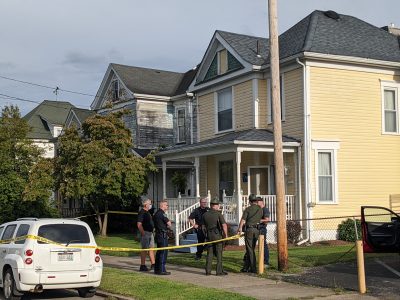
The final weeks of that month saw a litany of bloody days, beginning with a murder in Mozart on Sept. 16. The next week opened with the shooting of a man on Wheeling's 29th Street. The day after, while that man was hospitalized, Belmont County deputies announced a double homicide in Belmont, Ohio. Then, at the end of that same week, a Moundsville man murdered his housemate with a machete, before taking his own life.
Keith Bell, program coordinator of criminal justice and criminology at WLU who holds a Ph.D in criminology from Indiana University of Pennsylvania, thinks the several violent crimes may be a symptom of domestic tension, the combination of several factors over the course of the COVID-19 pandemic. These problems range from spending increased time with family -- which may cause stress and strife if living conditions are difficult -- to increased drug and alcohol use, possibly linked to unemployment.
"If we're going to put a theory to it, it would be strain theory," Bell said Wednesday. "Everybody is under an increased amount of strain right now. ... Unemployment, lack of income, that's huge -- that puts stress on all family members, whether that's kids, marriage, you name it."
"The one in Moundsville, we haven't heard all the facts yet, but it's just been announced as a 'domestic incident.' It could have been over money, it could have been over a relationship, it could have been over (someone being) kicked out of the house because of drugs," he added.
"… It could have been a slew of things, but that would be strain theory. Especially if someone isn't used to that kind of pressure in their lives."
The death of Anorah Schostag in Mozart saw WIlliam Ross Carman charged with first-degree murder after Schostag was found with "a large, deep wound to her neck and a large wound to her chest" at her Frazier Run Road residence. Daniel Isaac Wines was charged with attempted murder after allegedly telling police that he shot a man in the back "in self defense" on Sept. 20.
Belmont couple Thomas and Angela Strussion died Sept. 21 in what was ruled a double homicide by Belmont County Sheriff David Lucas. No arrests have been made as of Friday in connection to their deaths, though Anthony Michael Dibacco and Maylyn Smith were arrested on charges of extortion, accused of blackmailing Thomas Strussion.
On Sept. 25, police say Nicholas White attacked 71-year-old Thomas McKeever with a machete while McKeever was in the shower, before shooting himself. Both men died as a result.
Too Close for Comfort?
Bell said that due to the smaller towns of the Ohio Valley leading to more people knowing one another, in addition to increased time spent in proximity with others, he speculates that many of these violent episodes may ultimately be tied to issues at home.
"This isn't some random dude jumping off the highway and killing someone he doesn't know," he said. "There is a relationship there; in Wheeling, in small towns like this, that's statistically what we see. ... Usually a large percentage of the murders that happen here, the victim and offender are going to know each other."
Bell said that the COVID-19 pandemic has given his family significantly more time to spend together, even while his wife, a nurse, is spending longer hours on the job for more days in a week. While Bell said his family dynamic is a healthy one and that his family cherishes the time they spend together, other families may not have the same dynamic, leading to problems as weeks wear on.
"If you're going to be around each other more, you're going to have more issues. That's the nature of the beast," he said. "… There's increased family time, which is a good thing — if your family structure is solid. (If a family is dysfunctional), it's going to lead to increased dysfunctional time.
"If I was tying this all together, I'd say the increased stress of unemployment due to COVID is going to lead to increased alcoholism and drug abuse, and those going to lead to increased domestic situations. ... Is there a possibility that there's going to be an increased risk of domestic assaults? Absolutely, yes. Are they going to go as far as murder? I would speculate no."
an Anomaly, not a Trend
Bell said that crime, in general, has been on a noticeable decline in recent years, though violent crimes have remained somewhat steady. The Ohio Valley's baseline rate of crimes such as murder, he said, are very low, so any increase above the norm represents a large jump in percentage.
"If you look at the crimes that are happening right now, compared to issues we've had in the past, the past crimes were more things like drugs. If you go back and statistically look at our crime, ... in Wheeling, 2018, 2019, we've had a steady decrease in crime. The only crimes that go up are assaults, and there are drug offenses, but a lot of our crimes have decreased."
Bell also commented that, in his opinion, the Wheeling Police Department has been highly proactive in preventing crime, which he said was at odds with a trend toward more crime on a general level.
"I think this emphasis on crime prevention deters much of this crime and is why our communities are relatively safe. Further, I think we have a lot of resources available to people who are suffering in violent relationships, and these resources support this same mission," he said. "Many communities nationwide have not been as proactive as the Ohio Valley in deterring personal and property crime. That is why this appears as a statistical anomaly at the time and not a trend, in my opinion."
A Generation Uncertain
Bell's fears for the future, he said, are the long-term effects of the COVID pandemic on children, who may not be socialized in the same way their peers had been.
"Think of the kid who had to stay home for two semesters of grade school, but is not getting proper nutrition, not getting proper medical care, hasn't seen a doctor in 16 months, has been abused. What's going on with them if they're in that environment?" he said.
"We're talking about the murders going on lately, but what really scares me is, how is this going to affect fourth, fifth, sixth graders 10 years down the line? What issues are they going to face? ... That's what scares me the most about the lockdown stuff isn't necessarily the crimes and things that are happening now. It scares me what's going to happen ten years from now, and the effect on the kids."