
Franciscan University of Steubenville Hosting Ukrainian Refugees at Its Austria Campus
Trending
STEUBENVILLE -- Tom Wolter figures the past couple of weeks may have been one of the greatest life lessons students at Kartause Maria Thronus Iesu, the Franciscan University of Steubenville's campus in Austria, could have experienced.
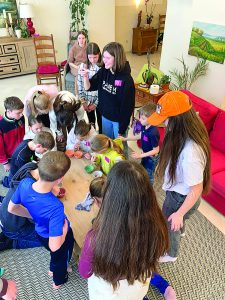
They're playing host to Ukrainian women and children fleeing Russia's invasion of their homeland. Tom Wolter, campus director, said they currently have 52 refugees on campus, all but 20 of them children.
"It's the human experience," he said. "It doesn't matter what nation you come from, we're all in this together. Suffering is suffering, joy is joy, and when our student body is interacting with women and child fleeing that situation ... the greatest impact our student body can have is engaging in (creating) a welcoming place where kids can be at peace, to bring a smile to them even though they've been removed from their home environment.
"That allows us to escape any kind of borders or cultural backgrounds, (knowing) that we're all in this together. That is one of the greatest things they can experience."
Helping the Ukrainian is a natural extension of the college's mission, he said.
"One of the first needs (we saw) was bringing in supplies to Ukraine," Wolter said. "We have our own vehicles, our own supplies. We went to a place outside Vienna, grabbed some supplies and drove to the border. As we were dropping off those supplies, the biggest thing that impacted me was it was almost midnight and there was this big group of women and children waiting to get processed so they could cross the border.
"At that point, I realized we could provide a helping hand for those in need -- we're talking about the most vulnerable," he added. "If we have that possibility, we should be able to do it. What was fantastic was the willingness and the openness and the assurance from the university that this was the right thing to do."
Wolter said the experience "has made it very real, not just something that is happening (somewhere else.) People were really fleeing from the area. One family brought kids with them (whose) parents decided to stay behind."
"Mothers had to say goodbye to their husbands, their fathers; children had to say goodbye to their fathers -- we've all seen the pictures. They have no idea what they're going back to when they're going return to when they go back to Ukraine. They have all that, the hardship, the uncertainty, the worry about leaving their country and not knowing where they're going (to end up)," he said.
He said most refugees stand in lines to go to processing centers where they wait to be dispersed. But the refugees headed to Kartause boarded a bus and were met by students who had flowers for the mothers, and candy, cookies and brownies for the kids.
"Students carried their bags off the bus, had their beds made and meals ready," he said. "The idea was, we know you've experienced a horrible situation but you're in a place of peace. To be honest, they didn't know what to do when they got (here), they stayed on the bus."
A refugee who was fluent in English and Ukrainian boarded the bus and told them it was OK.
"As they started coming off, they're getting flowers and the students are carrying their bags -- they were in tears. I have to say I think it's a moment people will treasure the rest of their lives."
They've had icebreakers to get the mothers and children comfortable with their surroundings, he said. The next step is a psychologist who will be coming to the campus to help them deal with the horrors they've experienced "so when (they) go back, (it will be) in a good state of mind."
Wolter said there are currently 72 students on campus. They typically have up to 200 on campus in the fall, and 180 for spring semester. He said they can accommodate the refugees at least until June, when they have "obligations for the use of the spaces" currently housing the Ukrainians.
"Then the question is, once those obligations cease, how can we provide additional support -- that's a very fluid kind of situation right now," he said, pointing out that in a normal year those rooms would have been filled with students.
"Maybe this is what God was doing, we have a much smaller student body this semester because of COVID restrictions," Wolter said. "But because we had that smaller group, we were in position to provide that kind of direct support and it's brought new life to the Kartause and brought new life to the city of Gaming, because it doesn't just impact our student body. The amount of support that's coming from the city is phenomenal.
Franciscan has had a campus at the 14th century monastery since 1991.