
Wheeling City Leaders Discuss Need for Low-Barrier Homeless Shelter
 Eric Ayres
Trending
WHEELING - City officials are working to put together a comprehensive plan -- one that will almost certainly need a facility, a trained staff and significant funding -- to tackle the growing issue of homelessness in the city.
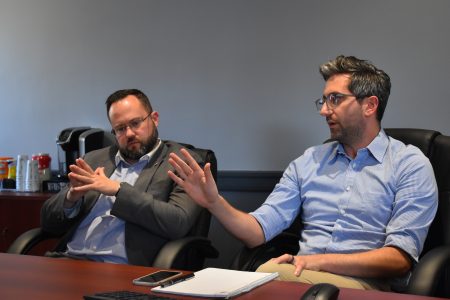
Members of the Health and Recreation Committee of Wheeling City Council met late Friday afternoon with the city’s new homeless liaison, Melissa Adams, as well as Mark Phillips, chief operating officer of Catholic Charities of West Virginia, and Crystal Bauer of Project HOPE. The purpose of the meeting was to begin official discussions about creating a low-barrier homeless shelter in Wheeling.
"We have various shelters in the city of Wheeling for our homeless community, but each one from what I understand has different guidelines and parameters and exceptions that need to be made for folks to qualify or be eligible to use those shelters," Councilwoman Rosemary Ketchum, chair of the Health and Recreation Committee, said. "As I understand it, there is not currently a low-barrier shelter in the city of Wheeling where somebody who may have a criminal background or may be using substances or may have no IDs can be."
Officials explained that people with no form of identification are among those who fall through the cracks and end up living on the streets instead of being served by any of the various social service organizations that offer shelter, but do so within required guidelines. Many times, federal funding and grant money is only made available to agencies that require clients to produce some form of identification. Beyond that, organizations also must adhere to their own bylaws, guidelines and mission statements - and some only serve men or only serve women and children, cannot serve people with criminal records, can only serve people who did not become homeless in a different state, or have other exclusionary regulations.
"There’s not a way for a no-barrier or low-barrier shelter to generate any revenue or break even," Phillips said. "So you need some other kinds of programs, and you do need some type of funding to support people who do have IDs. But right now, there’s not an organization that has the location and the revenue streams that would support doing what we would think about as an emergency shelter."
Youth Services System Inc. operates the Winter Freeze Shelter during the cold weather months of the year, and it does provide a low-barrier shelter to people in need of a warm place to sleep. But that service is only offered seasonally as a "Band-Aid" to get out of the cold. A year-round low barrier shelter that provides needed services to people is something that is lacking in the area, and it is contributing to the growing trend of people living on the streets or in tents and homeless encampments.
"Low-barrier doesn’t have to mean that there aren’t rules," Adams said. "For an effective low-barrier shelter, there has to be an education component. There has to be a mental health and substance abuse component. A low-barrier shelter that was open full time would lead to us - meaning us, who work with the homeless population - being able to have a platform to be able to help them grow as individuals and to change.
"Our number one goal would be to eliminate the enabling."
Not everyone would take advantage of such a program and would rather opt to sleep outside, officials agreed. But if given an opportunity to stay in a shelter instead of being turned away because of certain regulations or guidelines for admittance, officials said, many homeless individuals would do it -- and would accept the kind of help and services they need.
"Statistically, given the opportunity to learn, grow and make positive change, it has effectively and radically changed communities on homelessness," Adams said.
Since taking the position as homeless liaison for the city of Wheeling in November, Adams said she has been working on a plan to develop a Life Hub to include a facility and funding mechanism through grants and possibly other means. The Life Hub would include medical facility and addiction services, partnerships with other local social service agencies and a dorm-style, low-barrier shelter for men and women. Agencies would maintain their own identities, but spaces would be provided for them to offer their unique services. Mental health services, life skill counseling and job skill training would also be key elements to the facility.
Officials noted that there will be people who choose to live in tents outside of a shelter. Councilman Ben Seidler, a member of the committee, said that with that in mind, it would be ideal if one central, properly managed location for an encampment was maintained while other random encampments scattered throughout the city - particularly along Heritage Trail and near public parks - would be forbidden.
"Homelessness is a difficult and traumatic experience," Phillips said. "Even for those people who have been doing it for a number of years, it remains hard. When you continue to live outside, you have an inability to see a future that’s better for you. So even a few nights inside can totally change somebody’s demeanor. Having that access to someone when they’ve gotten a shower, when they’re fed, when they feel safe and when they feel like they’re somewhere they’re allowed to be - it helps them envision a future for themselves, and it gives us an ‘in.’"
One major factor contributing to a rise in the homeless population is actually children who are aging out of foster care and end up living on the streets, officials said.
"The common denominator in all homelessness is mental health," said Bauer, who noted that services are vital. "We have people in this community, unfortunately, who are so mentally ill that they don’t know how sick they are. Those individuals in particular are very difficult to get into shelters or into a congregate space because of their behaviors. You’ll never get rid of it."
Bauer said five people who have been living at the Wheeling Inn who are senior citizens who have lived there for years are currently being relocated. City officials said they cannot comment on any issues pertaining to homeless individuals living at the Wheeling Inn because of a pending ordinance to declare the downtown hotel a public nuisance because of criminal activity outlined in a report from the city manager and police chief.
Officials are looking to create an option for a year-round, interim emergency shelter in the city while long-term plans for a Life Hub continue to develop. Adams said the effort is still a work in progress as she continues to develop the plan, seek funding through grants and benefactors and work with other social service agencies. A pilot program will likely be proposed to help get the effort off the ground.
Discussions on a plan for the project are expected to be brought back to the table before the committee in late May or early June, officials said.