
Appalachian Power, Wheeling Power Make Rate Increase Case
Opponents Say Companies Should Absorb The Costs
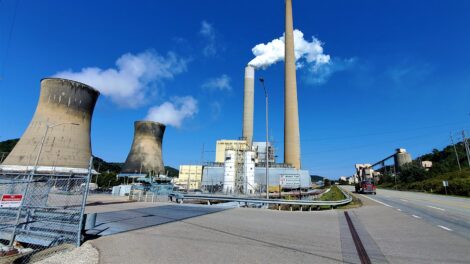 File photo by Scott McCloskey
 Trending
CHARLESTON -- Two West Virginia-based power companies hope the Public Service Commission will grant their request to recoup costs by raising rates on electric customers, while opponents believe the companies should foot the cost.
Representatives of Appalachian Power and Wheeling Power went before the Public Service Commission on Tuesday for the first day of evidentiary hearings so commissioners can weigh all the evidence for or against granting the power companies a $297 million request for an annual adjustment to electric rates.
The rate increase would add $18.41 to the monthly bills of Appalachian Power/Wheeling Power companies, according to documents filed by the companies with the Public Service Commission in April, a 12% increase in rates. According to the companies, customers already pay an average of $155.56 per month assuming customers use 1,000 kilowatt hours of electricity per month.
In their filings, the companies claim the rate increases are necessary to recoup expenses due to limited coal supplies because of the increases in prices per ton for steam coal used in coal-fired power plants. These prices have also increased the costs of purchasing power through its contracts with other power companies.
"To allow this under-recovery to grow to a higher and higher level, it is a financial harm to the companies and we think it sends the wrong signals to customers," said Randall Short, director of regulatory services in West Virginia for Appalachian Power/Wheeling Power, during testimony Tuesday. "This is the price we have paid for energy, this is the price we have paid for fuel and we're trying to get those costs in line with revenues."
The rate increase request is opposed by the Consumer Advocate Division of the PSC and the West Virginia Energy Users Group, an organization representing large industries in the state. Multiple county and city governments have also filed letters of protest opposing the rate increase request.
According to Appalachian Power/Wheeling Power's own filings, electric rates in West Virginia have increased by 160% over a 15-year period. During testimony, Short said the $297 million is on top of other rate increases granted by the PSC since the beginning of 2022.
In March, the companies received a $31.4 million rate increase, followed by a $93 million rate increase in May. In September of 2021, the companies received a $6.3 million rate increase - a combined $131 million approved rate increase requests in a 12-month period.
If the PSC approves Appalachian Power/Wheeling Power's new rate increase by Nov. 1, it would amount to nearly $428 million in rate increases since September 2021. Short said the $297 million still would not cover the companies' energy costs.
"That reflected our under-recovery balance at that time, at the end of the review period of $213 million and a projected period increase over possibly $84 million, that was to 297 million," Short said. "However, our under-recovery balance has continued to grow. It was approximately just south of $400 million at the end of April."
"The under-recovery balance plus the projected period is still an excess of the $297 million. We have kept our request at $297 million in an attempt to address the need to increase rates to match our projected costs and to help reduce the under-recovery balance," Short continued.
Derek Williamson, an attorney representing the West Virginia Energy Users Group, said that industrial power users would bear 24% of the burden if the PSC approves the $297 million rate increase. William said all of the rate increases combined amounted to a 20% increase to the monthly bills of residential power consumers, hurting seniors, low-income families, and hurting everyone dealing with inflation.
"If you get what you ask for, residential customers would see an increase of almost 20% in calendar year 2022, correct?" Williamson asked.
"What we have asked for is an alignment of our costs with the cost we've incurred to serve these customers," Short answered. "Once again, it's not just a request for the number that is not supported, but that will be the impact on customers if they paid for the electricity and the cost that we've incurred to serve them."
During questioning by Williamson, Short confirmed that AEP, the parent company of Appalachian Power and Wheeling Power, had a $49 billion market value as of July - a 500% increase in market value in 13 years. The company reported more than $2 billion in profits in 2021, which was a 13% increase between 2020 and 2021. The company reported $1.234 billion in earnings for the first six months of the year.
"You got a company with multi-billion-dollar profits, a couple of billion dollars of profits last year that failed to moderate and request in this case," Williamson said. "You've acknowledged that the poor people of West Virginia, senior citizens, and those at or near the poverty line are going to suffer as a result of the revenue increase you've requested."
"I think you've characterized my answers with your additional words," Short said. "The profit level of AEP is not what's an issue in this case. The issue, the case, is what are the costs we've incurred? We have made a request, but if people have a suggestion or the Commission has a way to spread that over a longer period of time, the companies are open to other suggestions."