
House Committee Passes Armed Teacher Bill
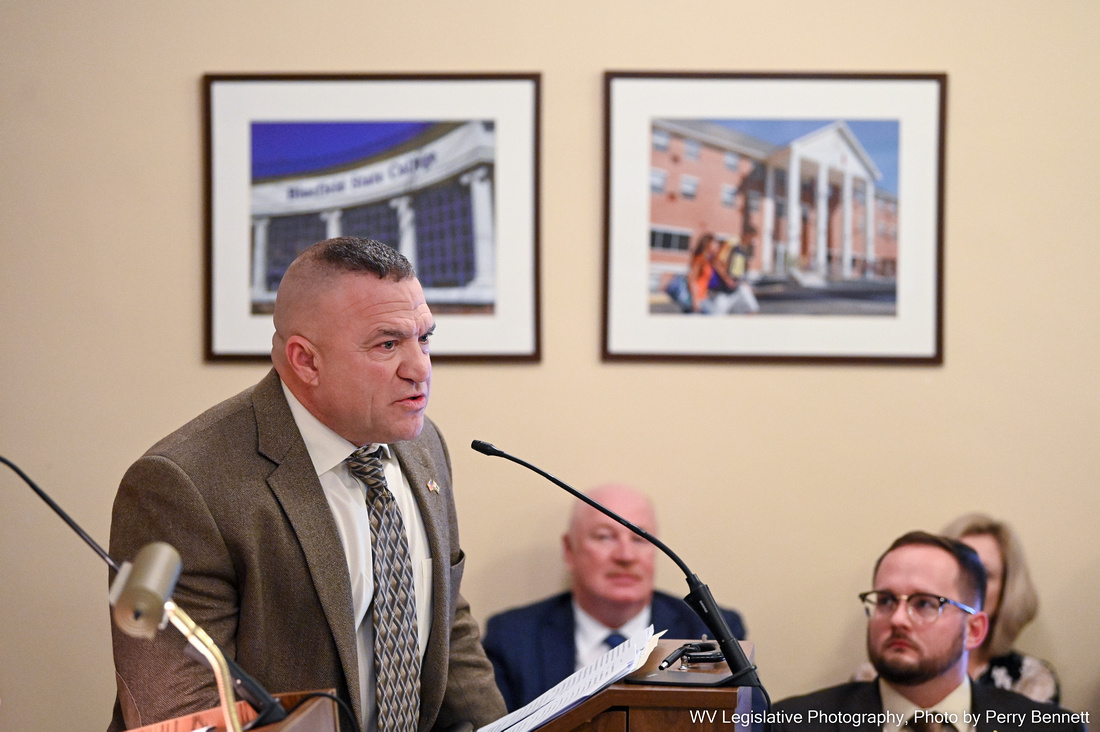
Ron Arthur, safe schools administrator for the Department of Homeland Security, lays out some of the issues with arming teachers in classrooms to lawmakers Wednesday.
Photo courtesy of WV Legislative Photography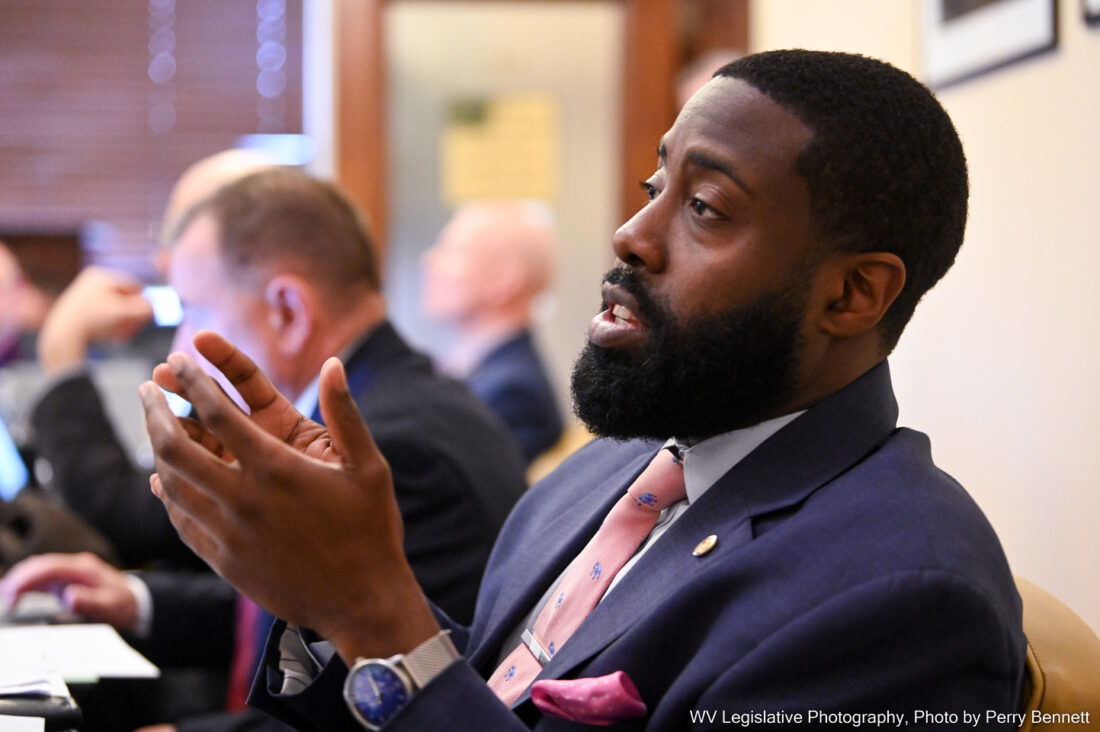
Del. Sean Hornbuckle, D-Cabell, said he wanted to hear from teachers and students about a bill that would allow educators to be armed.
Photo courtesy of WV Legislative Photography
Ron Arthur, safe schools administrator for the Department of Homeland Security, lays out some of the issues with arming teachers in classrooms to lawmakers Wednesday.
Photo courtesy of WV Legislative Photography
Del. Sean Hornbuckle, D-Cabell, said he wanted to hear from teachers and students about a bill that would allow educators to be armed.
Photo courtesy of WV Legislative PhotographyCHARLESTON - A West Virginia House of Delegates committee approved two bills Wednesday, one that would allow teachers and staff to be armed in the classroom, and one that would change how disciplinary matters in the classroom are handled.
The House Education Committee recommended House Bill 2890, modifying student discipline in the classroom, and House Bill 2549, allowing public school teachers to carry concealed weapons at school. HB 2890 heads to the full House for consideration, while HB 2549 heads to the House Judiciary Committee.
HB 2549 would allow school districts to designate one or more elementary, middle, or high school teachers, administrators, or school service personnel as school protection officers. Those teachers and administrators would be authorized to carry concealed firearms or taser and stun guns.
The teacher or administrator would need to request to be a school protection officer in writing and already have a valid concealed carry permit. School protection officers would need to take part in a security protection officer training program through the Department of Homeland Security which would develop a training curriculum. The applicant would also need to take a behavioral evaluation.
It also requires a public hearing before a school board approves a teacher or administrator as a school protection officer. School boards can also rescind approval for a school protection officer designation with the ability for the individual to appeal.
According to the National Conference of State Legislatures, 30 states allow firearms in schools with various limitations, while only nine states allow teachers and administrators to carry firearms with a valid concealed carry permit in public schools. But according to a review of 2018 federal survey data by the New York Times, only 2.6% of schools have armed teachers, administrators, or staff.
“The protection of others is something that I take seriously,” said Del. Doug Smith, R-Mercer, a retired colonel in the U.S. Army and a former military police officer. “This is a voluntary program that puts … one more tool in the toolbox that can be utilized to protect the lives of our children out there. Does it have to be used? No, but it is a tool that is available.”
The committee heard testimony from Ron Arthur, safe schools administrator for the Department of Homeland Security, and Dale Lee, president of the West Virginia Education Association.
“If you look at the shootings across the nation, teachers have protected their kids. That’s what they do,” Lee said. “Teachers put themselves in harm’s way to make sure if I can protect one child, if I can save one child, I’m going to do it … if they’re going to take that step to carry and put yourself in a situation where you might have to shoot a former student or anything like that, or are you going to take other measures to protect your kids. I know for myself, I wouldn’t want to carry, but other educators may.”
“I would not want to ask that out of a teacher, out of nothing but love and respect for every teacher that I know,” Arthur said. “These teachers are going to protect them to an extent, but a lot of times people have not been in a situation and things happen. You hear gunshots and your hearing changes; you get a bitter taste in the back of your mouth and you know you might die. Most people will run the other way, and other people have the urge to get there so bad and be in front of it. You can’t explain it.”
House Education Committee Minority Chairman Sean Hornbuckle, D-Cabell, said he could not fully support the bill given that the committee did not hear testimony from teachers or students.
“I just think that while the intent is very good and I agree with the intent, I just think there is a better way to do this that also listens to the concerns of parents, students, and fellow teachers,” Hornbuckle said.
HB 2890 requires teachers who send students to the principal for disorderly conduct to file an electronic report with the West Virginia Education Information System. The bill requires county boards of education to develop a tiered system with teacher input to develop a framework for student behaviors and punishments. It also protects the teacher from punishment as long as their actions fall within the law and the new tiered system for student behavior and punishment.
Any instance when a student is removed from the classroom for disruptive behavior, that student would not be able to return to the classroom the remainder of the day and count as an in-school suspension. If the student has to be removed from class three times in a one-month period, the student must receive an out-of-school suspension. The bill also empowers principals to move students to different classrooms if that might help alleviate disruptive behavior.
According to a report on school disciplinary actions released last July by the state Department of Education covering a five-year period between the 2017-2018 and 2021-2022 school years, there were 173,455 disciplinary referrals last school year. That number includes 32,613 in-school suspensions making up 19.16% of all actions and interventions, and 30,011 out-of-school suspensions (17.63%).
There has been concern over the last several years about racial disparities when it comes to student discipline. According the Department of Education report, 9.4% of in-school suspensions were Black students during the 2021-2022 school year, while 9.8% of out-of-school suspensions were Black students.