
Legislative Session Begins With A Bang
Several Bills Passed Including PEIA Fix
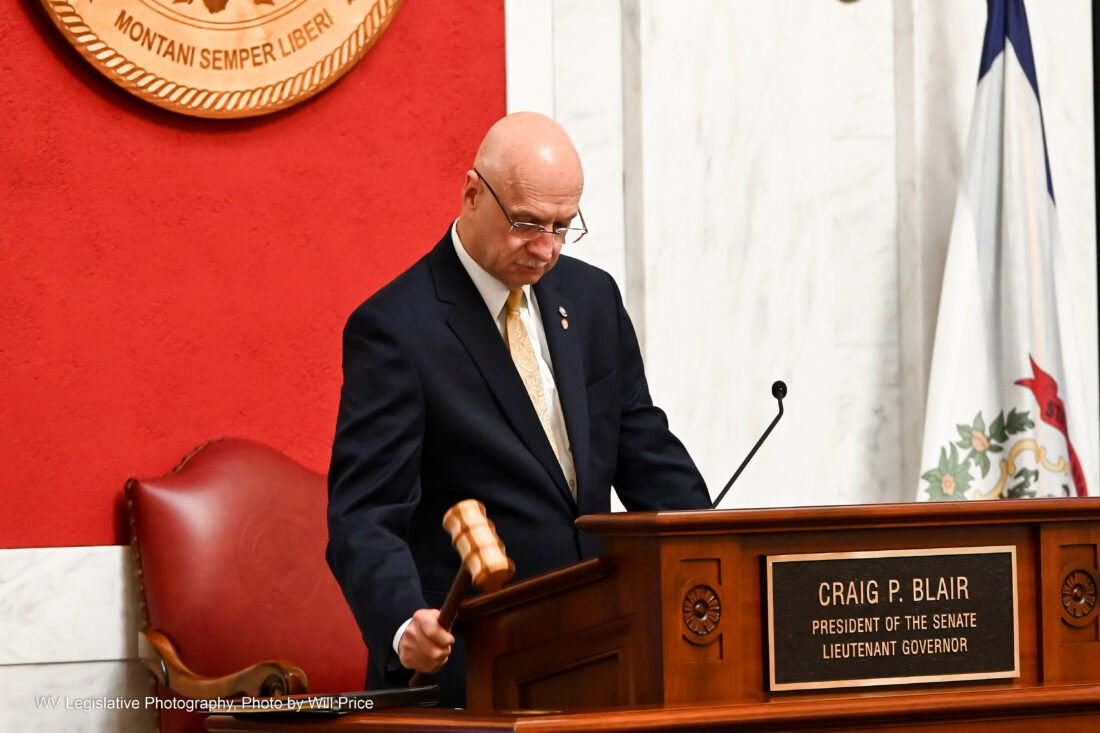
State Senate President Craig Blair, R-Berkeley, gavels in the start of the Senate's 2023 legislative session. Among the bills the Senate passed on the first day was one that would fix PEIA reimbursement rates.
Photo courtesy of WV Legislative Photography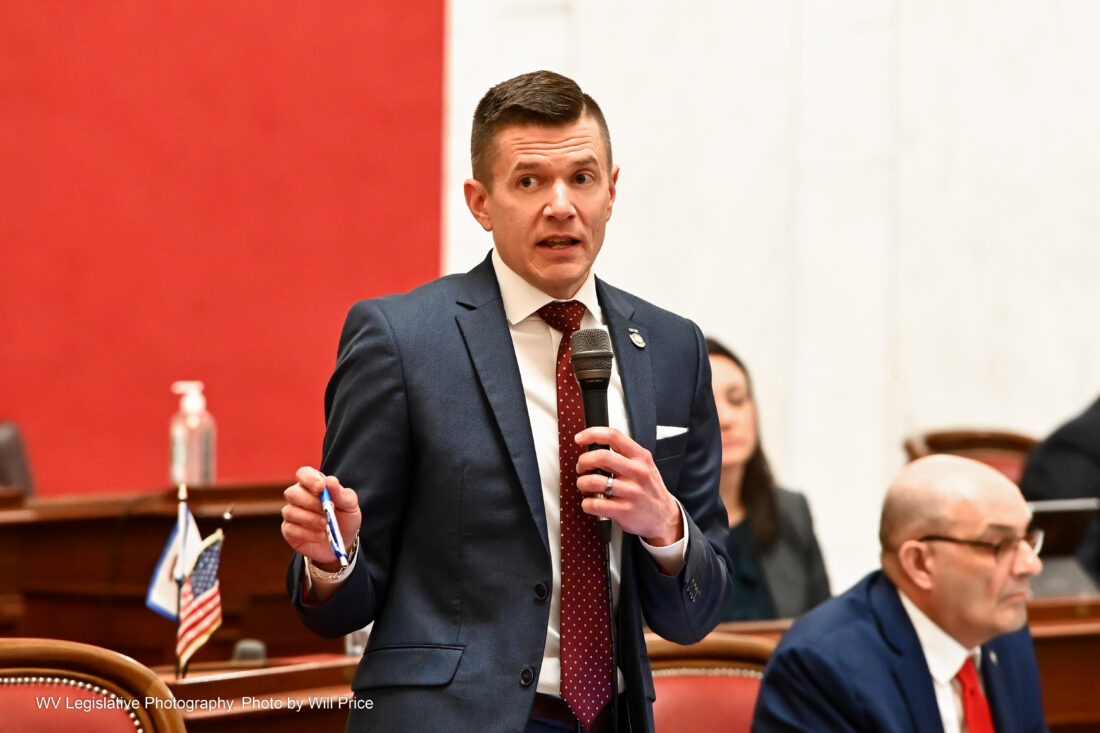
Senate Majority Whip Ryan Weld, R-Brooke, said the PEIA reimbursement fix bill passed Wednesday was necessary due to the inaction of PEIA managers to fix the problem on their own.
Photo courtesy of WV Legislative Photography
State Senate President Craig Blair, R-Berkeley, gavels in the start of the Senate's 2023 legislative session. Among the bills the Senate passed on the first day was one that would fix PEIA reimbursement rates.
Photo courtesy of WV Legislative Photography
Senate Majority Whip Ryan Weld, R-Brooke, said the PEIA reimbursement fix bill passed Wednesday was necessary due to the inaction of PEIA managers to fix the problem on their own.
Photo courtesy of WV Legislative PhotographyTrending
CHARLESTON - The West Virginia Senate wasted no time after it gaveled in to start the 2023 legislative session, passing several bills and sending them to the House of Delegates. Among them was a PEIA reimbursement fix the Senate hoped would keep WVU Medicine Wheeling Hospital from its plan to stop accepting PEIA patients in July.
As soon as Sentate President Craig Blair was sworn in and took the gavel, the Senate began suspending constitutional rules requiring bills be read on three separate days, quickly passing bills and sending them to the House.
Many of the bills were pieces of legislation that passed the Senate last year either unanimously or by large margins and were never passed by the House. Among those was Senate Bill 227,which would require reimbursement for any hospital and emergency medical services for beneficiaries of the Public Employees Insurance Agency at a rate of 110% of similar services offered by Medicare. The bill is similar to Senate Bill 574 that passed the Senate last year but died in the House.
The bill is aimed at addressing the issue where Wheeling Hospital announced last week that it would stop accepting PEIA in July due to being reimbursed at lower rates than out-of-state hospitals. WVU Medicine officials said Wheeling Hospital chose that move because, with its location in the state, it is most adversely affected by those rate discrepancies. The hospital also has lost $56 million over the last three years.
“More needs to be done, but this will be a good start,” said Senate Health Committee Chairman Mike Maroney, R-Marshall. “We’re going to avoid a bigger problem. Wheeling is the first hospital. There are other hospitals discussing this right now and there will be more. They’re waiting to see what happens this session.”
“What we have in front of us is the consequence of inaction, because those who manage PEIA and in charge of PEIA - who are in charge of the health care of more than 200,000 citizens of this state - have done nothing,” said Senate Majority Whip Ryan Weld, R-Brooke. “The Senate has shown today that it is not afraid to take action and take responsibility for something that is a massive problem in this state that affects all of our districts.”
Senate Bill 226 would split the state Department of Health and Human Resources into three separate departments: a Department of Health, a Department of Human Services, and a Department of Health Facilities to manage state-owned hospitals. The bill passed 33-0. Gov. Jim Justice vetoed a similar bill last year to split DHHR into two departments.
“Having reviewed this in the last several days and weeks, I do believe this is a good, incremental step,” said state Sen. Robert Plymale, D-Wayne. “I think the way this is done in an incremental step, particularly the dates that have been selected, allow you to do it in a rational and methodical way.”
Senate bills 228 and 229 would limit the Governor’s powers. SB 228 would limit states of emergencies to 60 days (90 days if in conjunction with a state of preparedness) without notifying the Senate President and House Speaker. SB 229 would limit the Governor to only spending up to $10 million of federal funds in a single fiscal year without seeking legislative approval. The Legislature passed a bill two years ago limiting the Governor to $150 million without seeking legislative approval.
“As those funds come through, we want to make sure that we don’t go through and have the Governor spending money outside the rules and strings of that federal money and have clawbacks that are multiples of $50 million,” said Senate Finance Committee Chairman Eric Tarr, R-Putnam. “This does not restrict the speed with which the Governor can go in and react to a state of emergency with those unanticipated federal funds.”
Senate Bill 230 brings back the Anti-Racism Act. The bill also would prohibit the teaching and discussion of specific racial and non-discrimination topics often categorized under the name critical race theory, or CRT. Schools and county board of education officials would be prohibited from compelling students and staff to adopt any belief or concept that one race, sex, ethnicity, religion, or national origin is inherently superior or inferior to another. The bill passed 30-3 along party lines.
“Are our kids tough enough to learn about racism? To learn about segregation and slavery? Are we handcuffing teachers with this bill,” asked Senate Minority Leader Michael Woelfel, D-Cabell.
“I don’t think this ties the hands of teachers at all,” said Senate Education Committee Chairwoman Amy Grady, R-Mason. “We want to make sure (students) have that context and history. We do need to discuss racism. That’s why this is the Anti-Racism Act.”
In the House, 486 bills were introduced on the first day, with 126 bills being introduced in the Senate on top of the 23 bills the Senate passed on day one.
Both Blair, R-Berkeley, and Hanshaw, R-Clay, were selected by their Republican caucuses in December to continue to wield their gavels. Blair has served as Senate President since 2021, having first been elected to the Senate in 2013 after serving in the House.
The Senate Republican majority grew to 30 out of 34 seats after November. State Sen. Glenn Jeffries switched parties from Democrat to Republican in December, taking the Republican senate majority to 31 seats and leaving Democrats with just three members.
Hanshaw was selected by the House in 2018 to succeed former Speaker Tim Armstead, R-Kanawha, who was appointed by Justice to the West Virginia Supreme Court of Appeals. Hanshaw was elected to full two-year terms as House Speaker in 2019 and 2021. He was first elected to the House in 2014.
The 2022 election in November saw the Republican majority in the 100-member House grow from 78 members to 88 members, leaving just 12 Democrats. The House Democratic caucus nominated House Minority Leader Doug Skaff, D-Kanawha, as House Speaker but helped escort Hanshaw to the podium after his re-election to Speaker.