
ORSANCO Chief: Chemicals Found In River Well Below Concerning Levels
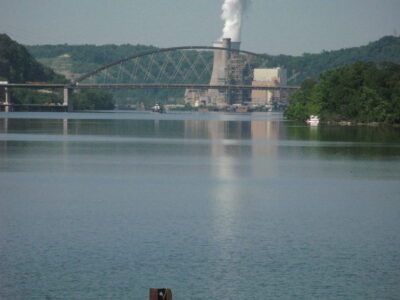 Photo by Warren Scott
Trending
WHEELING — The head of the interstate commission tasked with improving the quality of the water in the Ohio River and its tributaries said Wednesday that the chemicals that reached the river from the train derailment in East Palestine, Ohio, are well below levels that would be considered a health concern.
Richard Harrison, executive director and chief engineer of the Ohio River Valley Water Sanitation Commission, said that through the organization's detection system, it is finding levels as low as two parts per billion.
"That's very, very low," Harrison said, adding that the risk guidance number from the Agency for Toxic Substances and Disease registry was 560 parts per billion. "We've been tracking it from the time we've reached the Ohio River and we've been working with dozens of utilities and states. We're happy to say we've found this, even at the highest levels, at relatively low levels, well below what's considered a health concern."
About 50 Norfolk Southern railroad cars, 10 of them carrying hazardous chemicals, derailed in East Palestine on Feb. 3. Later, a chemical plume started making its way down the Ohio River.
ORSANCO started monitoring that plume as soon as it reached the river, Harrison said. The organization represents eight states and the federal government. Member states include Illinois, Indiana, Kentucky, New York, Ohio, Pennsylvania, Virginia and West Virginia.
Along with improving water quality, ORSANCO also coordinates emergency response activities for spills or accidental discharges to the river. It maintains 16 pieces of sophisticated equipment along the Ohio River, located primarily at water utilities, Harrison said. That equipment routinely screens for a number of chemicals.
For chemicals that don't fit in the normal screening group, Harrison said ORSANCO can program that equipment using a sample of that new chemical to more accurately detect it.
"We're tracking it every day and we're seeing it diminish significantly as it travels downstream," Harrison said. "These chemicals volatilize and go into the atmosphere. Also the river gets bigger."
Harrison said that, as of Wednesday afternoon, the chemical plume in the river was still a couple of days from Huntington, West Virginia. ORSANCO has been working with Huntington for about a week on a response. It's also working with several Kentucky communities like Louisville and Paducah.
ORSANCO is currently detecting the chemicals at very low levels and those levels should continue to shrink, he said.
"Now we're getting to a point that any day we're not going to be able to detect it with our equipment," Harrison said. "But we're still going to keep with it until we reach that point."
He lauded the response and teamwork he has seen from the many entities that have worked to address the spill.
"I think the state response, federal response and utility response for this has been remarkable," he said. "It's something we do on a regular basis. It's something we're prepared for and it's worked smoothly. I think it's gone remarkably well."