Board Opts To Keep Ohio County Schools Excess Levy at 95.5%
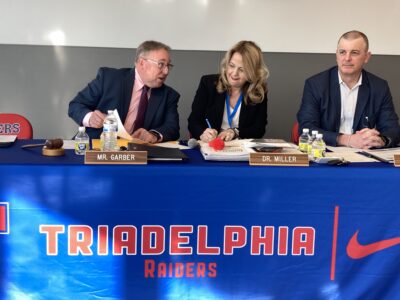
photo by: Photo by Joselyn King
Ohio County Board of Education President Andy Garber, left, Superintendent Kim Miller and Assistant Superintendent Rick Jones discuss matters during this week's board meeting.
WHEELING – Property values are back up again in Ohio County, which could mean an additional $6 million in levy dollars to Ohio County Schools next year at the current levy rate.
Board of education members are opting to keep its excess levy rate at 95.5% as new state law will require them to have second educators available in elementary classrooms, and they would like these to be trained teachers.
Figures provided by the Ohio County Assessor’s Office to Ohio County Schools report the county’s collective property values at $3,349,354,002 – about $400 million over last year, explained Steven Bieniek, business manager for Ohio County Schools.
This increase would represent an increase in the combined total tax collections for Ohio County Schools coming to Ohio County through its excess levy and its operations levy, he told board of education members this week. That total increase would be equal to about $6,247,670.
But the figure is somewhat misleading, according to Bieniek. As a district’s revenue increases, the less it receives in state funding.
He estimates Ohio County Schools will lose about $3.2 million in state funding, or more than half of the expected increase from tax levies.
Based on expected employment costs, Bieniek recommended to the board that they keep the excess levy at 95.5% of the maximum rate it can charge taxpayers.
A change in the rate by one percentage point either way is equal to about $251,558 in revenue annually, he informed the board.
Board member David Croft noted that about seven to nine positions in the school district presently being funded through grants will expire after the 2023-2024 school year. These include reading interventionists currently in classrooms as well as a counselor at Steenrod Elementary, who were initially hired through COVID relief funding.
He asked Bieniek to research and find out what the cost would be to retain those positions.
Croft also made reference to House Bill 3035, “The Student Success Act,” passed into law by the West Virginia Legislature this year. The measure requires that additional educators be placed in elementary classrooms based on class size, and provides some financial support for their employment.
The extra educator will be needed in first-grade classrooms beginning with the 2023-24 school year; in second-grade rooms in 2024-25 and in third-grade classes in 2025-26.
“But the support is based on hiring service personnel or an aide rather than a teacher,” he continued. “But could we hire a teacher, and use those funds to offset the cost?”
Bieniek said the school district would be spending more money because “the mandate is not 100% funded.” He agreed the money from HB 3035 could be used to retain the reading interventionists already in the classrooms.
“So there would be some funding from the state – albeit, not as much as we would like,” Croft said.
As required by West Virginia law, the board recessed the levy discussion and will reconvene for a special meeting at 8 a.m. on April 18 at the board office to officially approve the levy rate.
Top Headlines

Department Of Homeland Security Conducts Investigation In Ohio County

Federal regulators back Trump’s plan to speed power to energy-hungry AI data centers

NAMI In W.Va. Named Top Affiliate By National Organization
Millions For Northern Panhandle Waterline Projects Included In Federal Appropriations Bill

W.Va. Lawmakers Named As Targets In UFC White House Attack Plot