
House Finance Panel Advances PEIA Bill
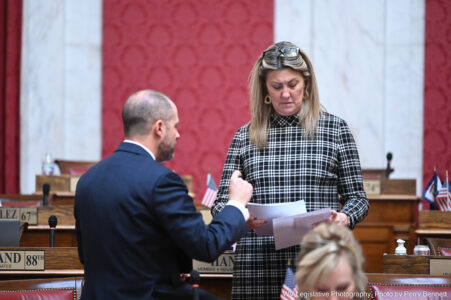 Photo courtesy of WV Legislative Photography
 Trending
CHARLESTON - With the Crossover Day deadline now in the rearview mirror, focus has turned to a bill that would make West Virginia’s public worker health insurance program solvent but also raise premiums for state employees and local governments that participate in the program.
The House Finance Committee recommended an amended version of Senate Bill 268 Thursday, relating to the Public Employees Insurance Agency, sending the bill to the full House of Delegates for consideration.
SB 268 sets the reimbursement rate for all healthcare providers at a minimum level of 110% of what Medicare reimburses providers, sets numerous requirements for members of the PEIA Finance Board, requires a five-year analysis of potential future costs to the program and an actuarial study of the plans offered by PEIA.
The bill also requires PEIA to return to an 80/20 employer-employee match beginning in July, though the employee/employer match would go to 70/30 for out-of-state medical care. An amendment from Del. Erikka Storch, R-Ohio, would make it so the employee/employer match remains 80/20 for health care in out-of-state counties contiguous to West Virginia counties.
The bill would change the price of the plan for spouses of PEIA plan participants who have access to health insurance coverage to the actuarial value of the PEIA plan, which could cost plan participants an additional $147 per month.
A committee amendment from the House Finance Committee added a definition for “actuarial value,” meaning the value as recommended by the health care actuaries hired by the PEIA Finance Board. The actuaries would need to submit the spouse actuarial value by Oct. 15 of each year to the PEIA Finance Board.
According to figures from the Senate Finance Committee, SB 268 would provide $76 million in savings in year one and more than $500 million in savings by 2027. The bill itself is a response to state hospitals complaining about PEIA’s in-state reimbursement rates. Wheeling Hospital announced late last year that it would stop accepting PEIA after July 1 because of the reimbursement rate issue.
“It stinks to have the increases, but at the end of the day if we want PEIA to be solvent and we want PEIA to be available to be a benefit for our employees, I think we need to make the tough decisions because it is a benefit provided to our employees,” Storch said. “I want to have a plan … and we want the plan to be around for a long time.”
According to the most recent fiscal note available from PEIA, the bill would cost $27.7 million when fully implemented. If the state returns to a 80-20 match beginning in July, premiums could increase by 26% for employees and 25% for employers after July.
The bill would mark the first time premiums have increased in more than a decade. With premiums frozen in place for years, the plan is closer to an 83-17 employer-employee match. PEIA insures more than 230,000 state employees, local government employees and retirees including more than 31,000 non-state employees, such as municipal employees.
The state Senate passed SB 268 last Saturday in a 29-4 vote, losing state Senators Mike Stuart, R-Kanawha, and Laura Wakim Chapman, R-Ohio, along with Senate Minority Leader Mike Woelfel, D-Cabell, and state Sen. Mike Caputo, D-Marion.
Speaking on the bill last week, Senate Finance Committee Chairman Eric Tarr, R-Putnam, said the bill was the result of discussions between the House and Gov. Jim Justice. The governor has been a vocal supporter of keeping PEIA premiums frozen. When asked about SB 268 on his virtual administrative briefing Thursday, Justice praised lawmakers for coming up with a plan for PEIA.
“We’ve got to find a way to be able to quit kicking the can down the road and fix PEIA forever,” Justice said. “From the standpoint of the Senate and the House, they now have a way, a methodology … It’s a good day’s work by a lot of folks and all the branches deserve a whole lot of credit for that. At the end of the day, it’s not perfect - nothing is ever perfect - but from where I’m at, I kept my promise.”
According to a PEIA five-year forecast, medical costs are expected to increase by 7% by fiscal year 2027 with prescription drug costs expected to jump by 14%. By fiscal year 2027, the program will face a $376.5 million hole unless the state puts more money into PEIA or premiums increase.
“We know with the medical costs escalating all the time we can’t forever more just turn our back and say forever more we’re going to be able to stay at a certain level,” Justice said. “That’s not going to work and we know that.”
The state put $105 million into a PEIA Rainy Day fund in 2019, and has already taken $31 million to cover a $93 million shortfall at the end of fiscal year 2022 in June. The program will need another $74 million from the reserve fund by the end of this fiscal year, leaving a $40 million shortfall.
Justice proposed putting another $100 million into the PEIA rainy day fund during his State of the State address on the first day of the 2023 legislative session Jan. 11. His general revenue budget for the next fiscal year also includes $40 million to cover the cost of increasing in-state reimbursement rates.
According to Justice, state employees with less than $133,000 of annual income will see no premium increases in conjunction with the tax reform plan in House Bill 2526 and public employee pay raises within the Senate’s version of the budget bill in Senate Bill 150 and Senate Bill 423 which includes the pay raises for teachers, school service personnel, and West Virginia State Police troopers and staff.
In Senate bills 150 and 423, state employees paid out of the general revenue budget would receive a $2,300 increase in their base pay instead of the 5% average pay raise that Justice originally proposed. HB 2526 would cut personal income tax rates by 21.25%. It also includes a 100% rebate on vehicle tangible personal property taxes in the form of a personal income tax refund, a 50% rebate for small businesses on their machinery/equipment and inventory tangible personal property taxes, and a 100% homestead exemption for disabled veterans.
“What we’ve done is we tried to cover that as best we possibly can … Everybody that is less than that is getting some form of pay raise and getting covered on PEIA and being able to go to bed tonight and know that as the future goes forward, PEIA will go with them and exist,” Justice said. “It’s not too bad of trade off in my book.”
A coalition of unions representing several categories of public employees will have a press conference today in front of the House of Delegates chamber, raising concerns about the changes and how they affect public employees and retirees.
“Without providing solid numbers or clear answers, the Senate is bundling a pay raise bill with what appears to be very painful insurance increases in the hopes that it will lessen the blow to public employees,” said Josh Sword, president of the West Virginia AFL-CIO, in a statement last week. “I have some very serious concerns that some of the lowest-paid and most vulnerable plan participants, including retirees, will indeed suffer greatly.”
SB 268 was opposed by Democratic members of the House Finance Committee, calling the bill and the plan combined with tax cuts and pay raises a “shell game.”
“This comes out to be voodoo tax cuts and a shell game,” said Del. Larry Rowe, D-Kanawha. “I am strongly opposed … I think it’s wrong, it’s wrongheaded. I don’t think it solves any of our problems. It just kicks the can down the road.”