
Simulation Shows Struggles Of Those Reentering Society After Incarceration
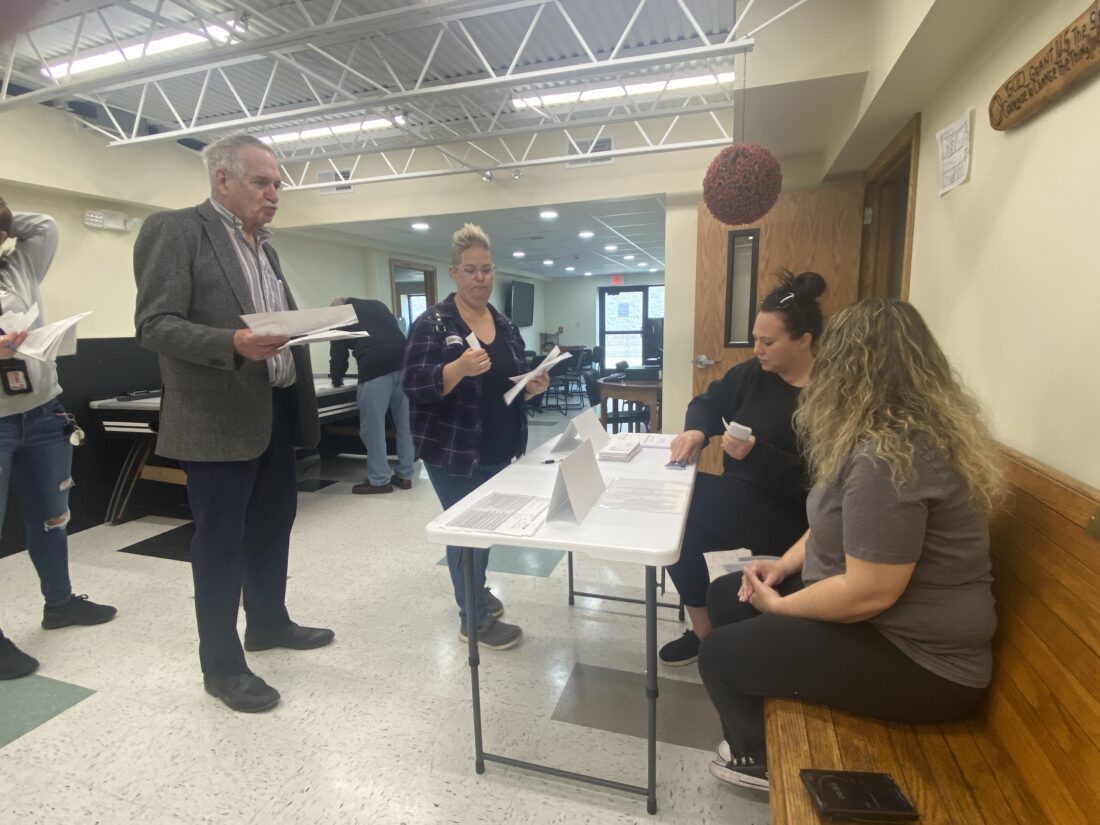
Attorney Tim Cogan, left, and Kayla Straight of NAMI, second from left, attempt to procure a state ID from Shannalee Kuri of the YWCA Wheeling and Heather Clark of Uplift WV during a reentry simulation held Wednesday.
Photo by Derek Redd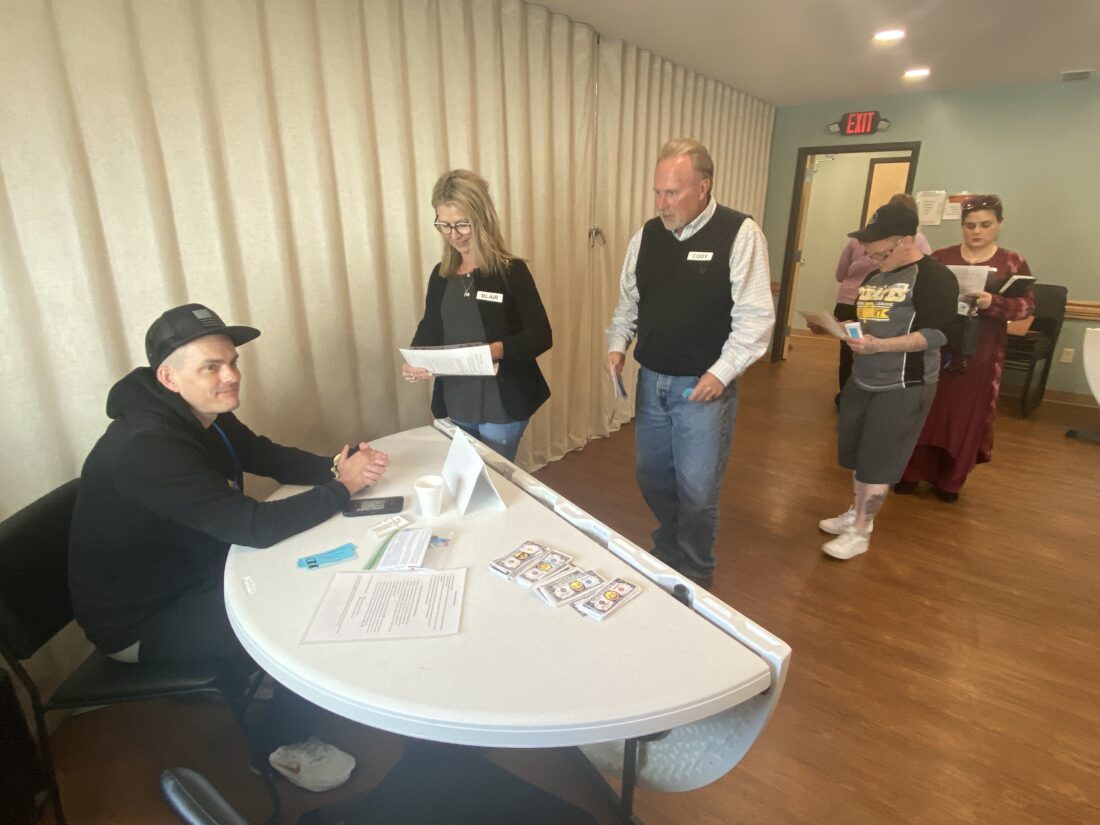
Theresa Kowcheck, EDGE Director at Wheeling Country Day School, second from left, talks with Ryan Adams of Uplift WV, far left, during a reentry simulation held Wednesday at the Ohio Valley Recovery Unity Center.
Photo by Derek Redd
Attorney Tim Cogan, left, and Kayla Straight of NAMI, second from left, attempt to procure a state ID from Shannalee Kuri of the YWCA Wheeling and Heather Clark of Uplift WV during a reentry simulation held Wednesday.
Photo by Derek Redd
Theresa Kowcheck, EDGE Director at Wheeling Country Day School, second from left, talks with Ryan Adams of Uplift WV, far left, during a reentry simulation held Wednesday at the Ohio Valley Recovery Unity Center.
Photo by Derek ReddTrending
Cora Gurley sat in a meeting space on one side of the Ohio Valley Recovery Unity Center in Benwood. For the purposes of the exercise in which she was participating, Gurley was in jail.
Gurley was one of more than a dozen at the Unity Center taking part in a reentry simulation sponsored by the area nonprofit REACH and the U.S. Attorney's Office. The exercise showed participants what the day-to-day struggles are like for those reentering society after being incarcerated.
Gurley was standing in a line to receive food stamps when she was approached by someone needing a bus token and offered a $100 laptop in return.
"I felt bad for them and traded with them," she said.
Gurley then took the computer to the pawn shop to trade - and was arrested for receiving and trying to sell stolen property.
Gurley's experience was a simulation. According to Betsy Jividen - a Wheeling resident who is the former U.S. Attorney for the Northern District of West Virginia and Commissioner of the West Virginia Division of Corrections and Rehabilitation - that scenario came from real life.
In fact, every scenario the participants experienced during Wednesday afternoon's exercise came from a real-life instance, Jividen said. The reentry simulation was something Jividen started with Ashley Lough in the U.S. Attorney's Office about a decade ago as a way for service providers, educators, employers and other interested community members to grow in their understanding of what previously incarcerated people experience as they do things like obtain a state ID, get a job and continue with life.
"There are a lot of steps and a lot of requirements for somebody coming out that they have to fulfill," Jividen said. "And this is a chance for the average person to sort of get a taste of how difficult it is and how many challenges there are, so we all become aware. Because 99% of the people who are incarcerated are going to come back to our community."
And nearly everyone who hasn't experienced incarceration doesn't know what someone reentering society goes through, Jividen said. According to Duncan Waitts, a peer recovery specialist who works with the public defender's office, the frustrations are much greater than they could imagine.
Waitts understands what people reentering society go through because he has been in their shoes. His longest time in prison was 7½ years, and now he works with those reentering society to navigate the hurdles that rise.
In Wednesday's exercise, Waitts played the judge that participants stood before for various reasons.
"Some points are disheartening because people realize that it's not so simple as they may think it is," Waitts said. "So you're creating a demand on a person who doesn't actually have that experience, in this simulation, that's totally overwhelming that person."
At the start of the simulation, each participant is given a character and a set of circumstances. For instance, "Angela" served 13 years in federal prison for drug manufacturing with intent to distribute. She has a high school education, $200 cash on hand she saved in prison and a part-time fast food job paying $120 a week. She must see her probation officer the first and third week of every month and attend treatment or counseling the second and fourth week. She has a birth certificate and a social security card, but no state ID.
Each participant must handle various tasks with the circumstances they're handed. For instance, those without state IDs need to obtain them. They need to find full-time work and obtain food, all while making their scheduled probation and counseling meetings.
There also were "wild cards" thrown in that participants had to deal with. In one, their work schedule interfered with probation officer visits, so they had to be fitted for an ankle monitor. In another, an online romance led to the paramour wiping out the participants bank account, leaving them penniless. Again, Jividen said, those scenarios came from real life.
"Weeks" went by in 15-minute intervals, and after each "week," participants regrouped to discuss what they've been dealing with.
After the first 15-minute week, Lough asked the group which among them was frustrated. Every hand shot up.
Wheeling Country Day Head of School Liz Hofreuter was one of the participants, zooming back and forth between each booth. The first thing that frustrated her was how she had to navigate "transportation." When participants arrive at each booth, they have to hand over a "transportation ticket," the equivalent of a bus pass. Some start with more tickets than others. Those tickets can be purchased, but they run out quickly.
That shows participants that even if those reentering society desire to complete their tasks, getting to the places they need to go to complete them can be difficult.
"Within 15 minutes, I'm feeling like we need to get bus passes to people who are trying to get back on their feet, because they can't get anywhere without transportation," she said.
Jividen hoped that Wednesday's participants would leave the simulation with a better sense of others' struggles, and lend their voices to helping those who struggle.
"These are things that people might not realize until they have a chance to see it," she said. "So that's what we hope to do, is give people the opportunity to see these are real struggles."
Not even halfway through the simulation, Hofreuter asked Jividen if she could provide the exercise for WCDS' middle school campus sometime before the end of the school year.
"I think more people have to feel this," Hofreuter said. "It's hard to walk away from work to do something like this, but we're not going to make the necessary changes unless people who have loud voices and some influence experience this and make the commitment."