
Trending
CHARLESTON - On the eve of an evidentiary hearing to decide whether ratepayers will have to shell out more money in order to keep the Pleasants Power plant idling, supporters and detractors of the plan made their voices heard Thursday.
The West Virginia Public Service Commission held a public comment hearing Thursday afternoon one day before it holds an evidentiary hearing to hear a plan from FirstEnergy Corp. subsidiaries Monongahela Power Co. and Potomac Edison Co. to keep Pleasants Power open for a 12-month period while it considers purchasing the plant.
Mon Power and Potomac Edison released a report March 31 proposing to lease Pleasants Power from Texas-based Energy Transition and Environmental Management (ETEM), the company slated to begin demolition of the plant which will shut down after May 31. The companies would keep the plant open from June to May 2024.
The plant would no longer provide energy, but it would keep the plant’s 154 employees working and keep the plant functional should Mon Power and Potomac Edison decide to purchase the plant from ETEM and begin generating electricity again.
Commissioners heard from eight speakers Thursday, including four speakers for the plan and three speakers against the plan. Jay Powell, president of the Pleasants County Commission, urged the commissioner to keep the plant functioning while Mon Power and Potomac Edison weigh the possibility of purchasing the plant.
“We can’t save them all. I get that, but Pleasants Power is worth saving for multiple reasons,” Powell said. “It’s worth saving for the safety and security and ultimately even for the economics on multiple levels from a ratepayer standpoint and a State of West Virginia standpoint.”
Delegates Trenton Barnhart, R-Pleasants, and Charles Sheedy, R-Marshall, also spoke in favor of keeping the plant open. Barnhart was the lead sponsor of a non-binding resolution in the House of Delegates to express support for Mon Power and Potomac Edison purchasing the plant, while Sheedy’s district includes two coal mines that provide coal for the plant.
“Coal keeps the lights on, and Pleasants Power keeps Pleasants County moving forward,” Barnhart said. “It’s everything to our community. Pleasants Power is so much more than just jobs and tax revenue that I cited; it’s our way of life in Pleasants County. It’s the backbone of our economy, and it’s the very fabric that holds our communities together in every possible way.”
“This is a prudent and appropriate course of action that will ensure long-term viability of the plant and the communities that it serves,” Sheedy said. “By keeping the plant operational and retaining all workers, we can ensure it will remain a vital part of our energy infrastructure and contribute to the reliability of the electrical grid.”
In order to cover the costs of keeping the plant functional and paying the employees for one year, the companies are seeking a temporary surcharge to cover the costs of reimbursing ETEM to keep the plant open. The companies are seeking a $36 million temporary surcharge to be paid by the two companies’ residential, commercial and industrial customers.
The surcharge would increase costs for Mon Power/Potomac Edison residential customers by $2.67 per month, $8.44 per month for commercial customers and $4,416 for industrial customers. The companies admitted in an additional filing last week that there could be additional costs and risks beyond the $36 million.
Opponents of the Pleasants Power plan who spoke Thursday said it was unfair to place the burden of keeping the plant functional on the backs of ratepayers who receive no direct benefit from the plant. Opponents also cited the need to move away from fossil fuels and to renewable sources of energy.
“I’m here to state my opposition to the acquisition of Pleasants Power station because of the impact it will likely have on my rates and my monthly bill,” said Sally Roberts Wilson, a Mon Power customer from Morgantown. “West Virginia citizens should not be required to bear the costs … it will become a choice of food, freezing, or having a heat stroke in the summer months.”
“One of the things we all share is we’d like to pass on a better world to our children; that they have a better life than what we had,” said Perry Bryant, a co-founder of the West Virginia Climate Alliance. “If we don’t change our behavior, we won’t be able to do that … We ought to take that responsibility to heart and understand how difficult the transition is going to be and how important it is if we’re going to leave our children a clean world.”
The companies are seeking a decision by the three-member PSC by Tuesday, April 25, creating a narrow window for the commissioners to decide and an even more narrow window for the public to comment on the proposal.
According to a review of the available public comments by West Virginians for Energy Freedom (WV4EF), a coalition of environmental and consumer advocacy organizations that oppose the Pleasants Power plan, there were 798 public comments received between April 5 and April 19, with 457 comments in support of the plan and 341 comments in opposition.
Of that number, 145 comments came from workers at the plant, former workers, contractors who do work at the plant, and the coal industry that supplies the plant. Another 279 comments came from supporters in the Pleasants County area.
But according to WV4EF, 144 comments opposing the plan came from in-state customers of Mon Power and Potomac Edison, which provides power for customers in North Central West Virginia and the Eastern Panhandle. Fewer than 30 comments came from supporters of the bail-out plan in those areas. Mon Power and Potomac Edison serve more than 395,000 customers.
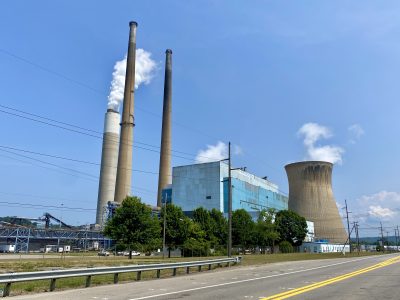
Pleasants Power is a 1,300-megawatt coal-fired merchant power plant that sells its electricity on the wholesale market instead of a traditional power plant that services residential, commercial, and industrial customers directly through a utility. The plant was spun off from Allegheny Energy Supply -- another subsidiary of FirstEnergy -- into FirstEnergy Solutions during its bankruptcy a few years ago. FirstEnergy Solutions became Energy Harbor after emerging from bankruptcy.
The plant was slated to be shut down in 2018. Deactivation of the plant was moved to 2022 but put on hold in 2019 after the Legislature passed a bill in a special session to provide FirstEnergy Solutions a $12.5 million annual break in business and occupation taxes for the plant. Energy Harbor announced last March it would close the plant beginning May 31.