
Legally Blind Wheeling Park High School Grad Gets Lighthouse Guild Scholarship
Trending
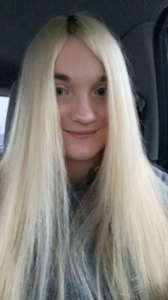
WHEELING -- The future is bright for a recent Wheeling Park High School graduate who is legally blind, after earning a significant scholarship from a national organization.
Haley Nisperly has received one of just 15 $10,000 scholarships awarded across the nation by the Lighthouse Guild in New York City to college students with vision impairment.
The organization bases its scholarships "on strong academic accomplishment and merit to help students who are legally blind make a successful transition to college and graduate school."
Nisperly is set to attend the University of Charleston this fall where she will major in political science. She says she will be the school's first visually impaired student.
Nisperly was always a 4.0 student, but she says she also has "always struggled with depression, severe social anxiety, and a generalized anxiety disorder."
She started her freshman year at WPHS as a traditional classroom student, but then the COVID pandemic hit in 2020 and students were sent to learn at home.
She thrived in the at-home learning setting.
"My sophomore year, my parents and I decided it was best for me to continue remote learning as it was the best option for me due to my mental health and visual impairment," she said.
"For my junior year and senior year, my parents decided that I should still continue remote learning as I was succeeding very well. It has been quite a difficult journey, but everything that I have been through has taught me a lot of life lessons, what I want to do with my life, and helped me to become mentally and emotionally stronger."
In high school, Nisperly struggled with socializing. She thinks that will change when she moves to the University of Charleston. She plans to be involved in such organizations as Young Life, the student activities board, Greek life, and academic clubs.
"The University of Charleston does a lot of volunteering, and that's an interest of mine," Nisperly said. "I will also be doing internships at the (State) Capitol."
Her ultimate goal is to be "an advocate for the visually impaired and blind in government."
"I want to be an instrumental part of reforming our state by advocating for the visually impaired community through new legislation and lobbying to get funds to help other students/adults like myself," she said.
Nisperly hopes to lobby for an additional section to be added to the Free Application for Federal Student Aid (FAFSA) specifically pertaining to students with disabilities.
"People don't realize it ... but visually impaired students need accommodations to learn just like them," she said.
Nisperly is the daughter of Rod and Kim Nisperly of Wheeling. She was born with dominant optic atrophy, though it wasn't diagnosed until 2013 when she was in elementary school.
"I was born with it, but I never knew about it until I was in elementary school and started working with things like colors and shapes, and I couldn't see the board," she added.
The eye condition is hereditary in Nisperly's family. Many of her relatives, including her father and one of her two brothers, live with the condition.
But Nisperly's condition is worse than what they have experienced as her eye condition is gradually deteriorating. In 2020, her vision was measured at 20-200, which, according to the World Health Organization, is classified as severe visual impairment. Today, it is 20-1000, which the WHO classifies as profound visual impairment.
"I am able to see, but not like someone who has 20-20 vision," Nisperly explained. "I can see up close, and only the key features on a person's face."
For the past two years, she has been working with a vision teacher, Michelle Hogan, to help her live more independently with blindness.
"It got me to this point in my life so I can go on to college," she said. "We talked about accommodations, what will work and how I can be a good student."
Nisperly has learned to use screen readers that read back to her what is written on the screen before her. She credits the technology for helping her to prepare for the ACT and SAT college entrance tests.
She also requested to use a screen reader on testing day, but had "to fight for the accommodations" with Hogan's help. In the end, she was permitted to use the device for the testing.
"They also had to give me extra time, because I get eye strain, have to stop, and can't read as fast," Nisperly explained.
Visually impaired people have to work harder to obtain simple things, she said.
"I'm not able to drive, and it is very upsetting," she continued. "It's taken a toll on my independence and mental health. I see others driving, and I just want to get away and I'm not able to do that."