
West Virginia PSC Hears Opposition To Rate Hike Request by Wheeling Power, Appalachian Power
 Steven Allen Adams
 Trending
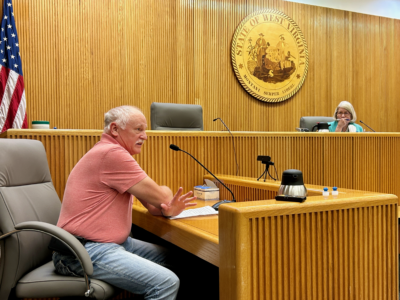
CHARLESTON -- Members of the West Virginia Public Service Commission heard from the public for a third time regarding yet another rate increase request that would cause electric bills to go up.
The PSC held a public hearing Monday evening at their offices in Charleston regarding three of Appalachian Power and Wheeling Power's most recent Expanded Net Energy Costs (ENEC) cases. The PSC held two public hearings in Cabell and Mercer counties two weeks ago.
In the most recent case filed in April, Appalachian Power and Wheeling Power -- both American Electric Power (AEP) subsidiaries serving 462,000 customers in 25 counties in the state -- are seeking a more than $641.7 million rate increase to recover their costs for coal used to power its three electric plants in the state, including the Mitchell Power Plant in Marshall County.
The rate increase request would amount to approximately a $20 per month increase for the average AEP ratepayer in West Virginia, according to PSC Chairwoman Charlotte Lane.
"What we have heard from the people, of course, is they don't want this big increase and they want us to pay attention to the facts and be aware that a lot of people can't afford big rate increases. It's very helpful for us to hear from the public," she said.
The ENEC requests includes $552.9 million for an accumulated under-recovery and $88.8 million in increased projected costs. The companies submitted two plans for the PSC to consider. One would increase rates by $88.8 million and spread the remaining under-recovery costs across three years at an increase of 12% for ratepayers, with the first-year rate increase set at $293.1 million.
The second option is a securitization of the ENEC under-recovery balance with an $88.8 million rate increase effective Sept. 1, resulting in a more than 3% increase in rates. The second option was made possible by House Bill 3308 passed earlier this year. By using the second option, the companies could wipe out approximately $150 million ratepayers are currently paying for costs at the John Amos Power Plant in Putnam County and the Mountaineer Power Plant in Mason County.
"This case in particular is about fuel and really the amount that is built into rates for fuel just doesn't match the amount we were paying for fuel and purchased power through 2021 and 2021," said Phil Moye, director of communications for Appalachian Power. "Price rose dramatically during that time, and the price built into rates didn't really change … the amount we're paying for power is not equal to the amount we're being reimbursed for fuel -- natural gas and coal -- in those rates."
Eleven of the 12 speakers spoke out against the rate increases, citing issues with fixed income for seniors, the state's level of poverty, constant power outages due in part to power line maintenance, and state's access to coal supplies, and the need to transition to renewable energy instead of maintaining aging coal-fired plants.
"You just can't hand out money like popsicles. You can't do that," said Terry Burns. "We should have the cheapest utility rates in the nation, but we don't. You cannot let them continue to get frivolous rate increases."
"My retirement checks have not kept pace with the amount of energy rate increases and other inflationary costs of recent years," said Pamela Nixon. "Give us a break. Enough is enough. Just say no."
One speaker, Alice Pettit, urged representatives of Appalachian Power/Wheeling Power to stand up to the administration of President Joe Biden, which has a goal to curb greenhouse gas emissions by more than 50% of 2005 levels by 2030, which could accelerate the retirement of coal-fired power plants.
"AEP … needs to stand up to the federal government and tell them no, you are not going to keep hurting our fossil fuels," Pettit said. "I'm sick of this. People need to get a brain."
The other two ENEC cases from 2021 and 2022 deal specifically with a report, titled "Independent Technical Prudency Review of the Actions Affecting the Operations of Amos, Mountaineer, and Mitchell Coal Plants." The report was ordered by the PSC in both the 2021 and 2022 ENEC cases and completed in April by Critical Technologies Consulting (CTC).
According to the report, the companies did not meet the PSC's prior orders to increase capacity factors at its three West Virginia-based coal-fired power plants to a level of 69%. The companies also did not set up technical task forces to look at how the power plants could meet the PSC's capacity factors or how the companies would obtain lower-cost coal.
"CTC's opinion is that the Companies did not appear to exercise common senses and prudency in their decisions to fulfill 'their obligation to serve their customers' with economic, safe, resilient and reliable electricity based on the use of the coal plants as established by the Commission," the report stated.
The CTC report determined that Appalachian Power and Wheeling Power could have entered into longer term contracts with coal suppliers to reduce the costs of purchasing the coal, resulting in reductions in the dollar amount of rate increase requests. Lane said the commission would take the report's findings into consideration.
"We will be having an actual hearing on the report where people will be able to defend it or tear it apart and question it," Lane said. "We will look at that report very carefully and we will have a lot of questions ourselves as to what we decide as a result of that report."
The ENEC request is opposed by multiple county commissions, including Ohio, Lincoln, Mercer, Cabell, and Kanawha counties, as well as the city of Princeton. So far, the PSC has approved more than $174 million in ENEC requests for Appalachian Power/Wheeling Power since 2020.
The next PSC public hearing for these three cases will take place Monday, Aug. 21, at 5:30 p.m. on the second floor of the Ohio County Courthouse. An evidentiary hearing with the companies will take place Tuesday, Sept. 5, at 9:30 a.m. at the PSC headquarters in Charleston.