
Concrete Plans Forming in Wheeling for Sidewalk Repair Incentive Program
Trending
WHEELING -- A long- awaited sidewalk repair incentive program is starting to gain traction in Wheeling.
In recent years, some council members have pushed for the development of some type of program to help or encourage property owners throughout the city to fix sidewalks in front of their homes that are in disrepair. It is a massive endeavor, and to complicate matters, state law puts the responsibility of sidewalk maintenance into the hands of the adjacent property owners -- not the municipality.
Members of the Development Committee of Wheeling City Council met recently to discuss a proposal they requested from city staff about the dilemma. During previous meetings, it had been suggested that the city could implement a new incentive program to help property owners obtain low-interest loans to fix damaged or deteriorated portions of their sidewalks.
A successful program utilized by the Friends of Wheeling was suggested as a model for the sidewalk repair effort. Members of the city administration spoke with officials from the Friends of Wheeling, which offers a similar incentive through a revolving loan program. The loan is actually administered by the bank, and owners of historic properties can borrow money at lower interest rates to help repair or renovate portions of their homes.
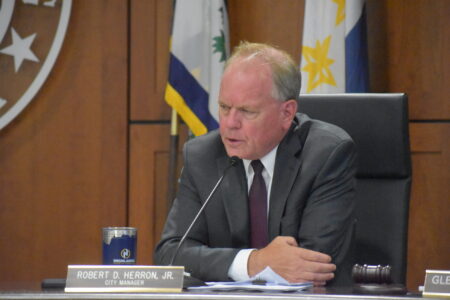
"We've looked into a voluntary sidewalk replacement program where residents could meet qualifications to obtain a low-interest loan to repair portions of damaged sidewalks in front of their property in the public right-of-way," Wheeling City Manager Robert Herron said.
A consensus of city council members indicated that they preferred the proposed revolving loan model for the program.
"I don't know if it's the best program or not, but I think it's a great first step to really give an financial incentive for folks to take more responsibility for their sidewalks, because if you go around town, there are a lot of sidewalks that are in disrepair, and it's expensive to fix for a lot of families," said Wheeling Mayor Glenn Elliott, chairman of the Development Committee. "The city would have a fund, and the fund would be used basically as collateral for the homeowner to borrow against."
Elliott noted that the borrower would still have to meet qualifications for the loan set forth by the financial institution.
"The benefit of having that fund as collateral is that it would get them a lower interest rate and better repayment terms than they would on their own," the mayor said.
"I think we have to do something," Vice Mayor Chad Thalman said. "If this is what city staff has come up with, then I think this is what we go with. Anything we can do to get more sidewalks fixed as cheaply as possible, I think we should do. My goal is for the city to assist property owners in fixing and repairing their sidewalks as efficiently and inexpensively as possible."
Repairing sidewalks throughout the city of Wheeling is a huge undertaking, officials noted. The proposed program would simply be an initial step to provide an incentive for property owners to step up and participate.
Sidewalk studies have been performed in certain neighborhoods in Wheeling in recent years.
"The neighborhoods that were studied were Wheeling Island, Warwood and Woodsdale," Herron said. "There were 231,000 square feet of privately owned sidewalk that were identified as needing to be removed and replaced in the study area."
It would cost millions of dollars to fix all of the damaged or outdated sidewalks just in these neighborhoods, let alone citywide, officials noted.
The range of repair costs -- between $12 to $15 per square foot, based on prices vetted among multiple contractors -- would total between $2,722,000 and $3,465,000, according to estimates. The study also identified "linear footage of trip hazards" that needed to be addressed, resulting in an additional $675,000 in repair costs.
Also, there are 922 sidewalk ramps just in that study area that are not ADA compliant. It's estimated that it would cost about $3,750 to bring each one of those ramps into compliance, for a total of $3,457,000 to replace all of them just in those neighborhoods, Herron noted.
Property owners who participate in the program would only have to borrow a few thousand dollars to address their problem sidewalks, officials said.
"You're looking at probably $3,000 to $5,000 per property," Herron estimated. "You don't replace your whole sidewalk -- you could if you wanted to -- but most people would only replace just the slabs that are determined to be deteriorated and substandard. You'll certainly get a lot more bang for your buck, and that's the goal. I think most residents want to do that -- they typically would not want to replace the entire sidewalk."
Officials also considered making a bulk concrete purchase once a quarter and make it available to those participating in a sidewalk repair program at a lower cost.
"Where does the money come from for the fund?" asked Councilman Dave Palmer, chairman of the Finance Committee of Council. "Are we permitted to take taxpayer funds and tie them up like this in a guarantee program? Somehow it has to come out of the general fund, I would think, because there's no other funding source for it. I just want to make sure that we're not making the services suffer that we're already mandated to provide our citizens by doing this."
Officials suggested that city council would have to decide the amount of money that would be put into a pool and the source of this funding. It was also suggested that the city may be able to avoid fronting the money directly to the bank and instead borrow the money or sign a note with the bank and have it repaid by residents using the revolving loan program for sidewalk repairs.
A pool of $100,000 for the proposed revolving loan fund was suggested.
Some council members questioned why the city does not enforce sidewalk repair throughout the city, as property owners could be hit with violations and have liens placed on their properties.
"The city has to have the bucks behind it to enforce it," Herron said, noting that the city can go in, mow lots of property owners found to be in violation of the high grass ordinance, and then put a lien on those properties. However, the city does not have the funds it would take to go in and repair sidewalks all around town and put liens on properties for those found to be in violation.
Development Committee members agreed to direct city staff to move forward with a proposal to bring to city council for a new sidewalk repair incentive program based on the Friends of Wheeling's revolving loan program. It is expected to appear on the agenda of an upcoming meeting of Wheeling City Council.