
Ohio County Schools Outlines New Literacy Screening Process
 Joselyn King
 Trending
WHEELING -- New state requirements in West Virginia has Ohio County Schools focusing more on identifying students struggling with dyslexia or dyscalculia.
The school district hosted a session Monday night to discuss stipulations of House Bill 3035, "The Third Grade Success Act," passed earlier this year. The bill sets forth requirements for identifying students in pre-kindergarten through third grade with reading problems, and Ohio County administrators explained what support these children will get as they move through the school system.
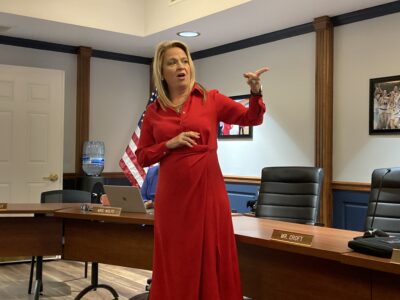
Raquel McLeod, student services director, explained how Ohio County Schools meets the standards for the "Science of Reading" requirements established by HB 3035.
It spells out the five pillars of literacy determined as important by state lawmakers -- phonemic awareness, phonics, fluency, vocabulary and comprehension.
School districts in the state were asked to select a screener testing system from among those approved by the state, and Ohio County Schools chose the "Star Early Literacy" system.
On Monday, board of education members also approved a slate of "student assistant team (SAT)" coordinators and co-coordinators who have been trained to administer the screenings at each school.
The screenings will be administered in grades pre-kindergarten through third grade three times a year, and parents will be notified if their child is in need of reading help, explained Nicole Shepherd, student services director.
School administrators next will explain to them what the scores mean, strategies that can be used at home, and overall plans for improving their abilities, Shepherd said.
There are three different tiers of treatment and curriculum for addressing dyslexia and dyscalculia problems, she continued. If a student fails to make significant improvement in Tier 1 within six to eight weeks, they move on to other curriculum efforts in Tier 2. Later, they could move on to Tier 3 curriculum if they still are not performing better.
An "Individualized Education Program (IEP)" could be created for the student who is in need of extra help, added Leah Stout, special education director.
A parent asked if older students also might be screened for dyslexia and dyscalculia during the year.
Shepherd said the curriculum chosen can be used in the upper grades and middle schools will be receiving Tier 2 and Tier 3 packets that they can use with their students.
The parent then asked about high school students. Shepherd suggested that any parent who suspects their child might have a reading disorder contact their school principal to request their child be screened and work with the school reading coordinator.
"That is just how we started this year ..." McLeod said. "We just hope by being proactive and starting this now at the kindergarten level we will be able to intervene quicker."