
‘Men of Change’ Establish Program To Mentor Youth in Wheeling Area
Trending
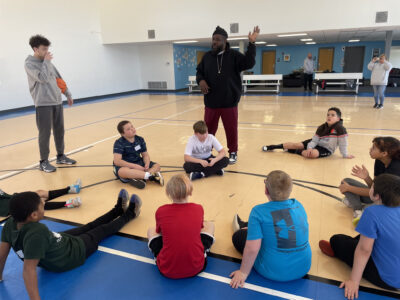
WHEELING -- The Men of Change are striving to empower and inspire marginalized high school students with their new mentorship program, "Change the Narrative."
The program was born after Men of Change Vice President Hayden Cook noticed the lack of Black educators in Ohio County Schools, with Cook being one of the few Black teachers in the school system. This lack of Black educators meant a lack of adult figures for Black students to "look up to and empathize with," explained Men of Change President Joe Sparksman.
The group then began conducting research on the issues that marginalized students, particularly Black males, face in the school system. Sparksman outlined that Black male students have a higher dropout rate once they reach ninth grade, more in and out of school suspensions, lower attendance and lower grades than their white counterparts.
"If you look at any data that comes out of high schools in West Virginia, you will see whether it's attendance or achievement on standardized tests, Black students are going to be at the bottom," said Cook.
A statistic that confirmed for the Men of Change that starting a mentor program would begin to alleviate some of these disparities, said Cook, was that "having one Black teacher in elementary school cuts high school dropout rates for Black students by 39% and raises college aspirations for both sexes by 19%."
After receiving a grant from the Benedum Center to fund the mentorship program, the Men of Change "got their ducks in a row and got the program started," said Men of Change treasurer Ron Scott Jr.
Titling the program "Change the Narrative," Sparksman explained that the Men of Change want to switch the focus from viewing these Black male students as "unsuccessful" because they "lack mentorship." Instead, the program will shine light on the "positive attributes" these students have while providing them the support from someone they can relate to personally.
"There's a view that these young kids in single-parent homes who don't have real male figures in their lives are always going to be at the bottom," said Sparksman. "We want to celebrate the accomplishments and achievements of these Black students versus identifying all the weaknesses and negative stereotypes."
The program will track the "key areas" of the 10 mentees in the program, explained Sparksman, including personal development, academics and attendance. He added that the Men of Change want to not only "get the data" but also "improve upon it" while they track students' GPAs and absences.
The mentors will also check in on students' "performance and behavior in the classroom," noted Sparksman, along with the "positive impact that extracurricular activities have on the mentees."
While the Men of Change approached Ohio County Schools to work with them on the program, Scott said they declined. Despite this, Cook said the group has "other options" to implement the program.
Cook added their main motivation for wanting to partner with high schools in the area was the School Discipline Bill that went into effect this year.
"We wanted to partner with high school freshmen to provide intervention and support for those students who were in danger of being harmed by this bill," said Cook. "Since they would be starting at a new school, it would be the perfect time for them to get off to a fresh start."
Apart from monitoring their progress in high school, Sparksman explained that the mentors will encourage students to think about what they want to do after graduation. In the spring, the group will visit the Atlanta University Center, where four historically black colleges will be within walking distance.
The group also plans to visit other HBCUs, including Howard University, and more "local stuff," according to Scott, such as West Virginia University and the August Wilson African American Cultural Center.
If college is "not in the cards" for the child, Scott explained they will explore other options. If the kid is more interested in working with their hands, Scott said the group will organize meetings with representatives of local labor unions, such as electricians and plumbers, to teach students about opportunities outside of higher education.
As a way to "emphasize that the student decides their future," said Scott, the group will not have one-on-one mentor-to-mentee pairings. Instead, mentees can seek advice and guidance from anyone in the group, as getting kids the "exposure to the options their future holds" is one of the "main goals of the program," said Scott.
"We really just want to talk to them about focusing on what they want to do and what goals they need to set to get there," said Sparksman. "If they're not interested in college, that's fine, but then we want to introduce them to other goals to strive for."
The goal setting for mentees will begin immediately during the mentors' first meeting with the students and parents. Sparksman explained that in the first meeting of the program, mentors will help students "create a calendar" to keep them on task for their goals.
While the mentor and mentee relationships will be the main focus of the program, Sparksman added that parents will also play a role by "buying into Changing the Narrative."
"We're going to be expecting some things from the parents of the kids in this program to help us monitor and track the progress we make with their kids," said Sparksman. "We also want to develop a relationship with school staff like counselors, teachers and principals, so we can get feedback from them on what supports these kids' needs."
By utilizing these different points of contact with the student, Scott said the mentors can get a "full picture of what the kid is dealing with" while also identifying where there may be "a crack or a hole" they can help patch.
"We want to identify the resources available to these kids at school and get them hooked up to those resources to propel them to success," added Sparksman.
Once they begin the program, Scott said the mentors will conduct monthly group meetings on top of "touching base with students and parents weekly." During the group meetings, the mentors will ensure their students are on track with their goals.
On a personal note, Sparksman added that the mentors will also be able to give young Black male students "the talk," meaning they can impart the understanding that the students "will have to deal with things that other outside races or cultures may not have to deal with."
"Black male students have to behave a certain way because they are often treated differently because they're minorities or Black students," said Sparksman. "It's scary for a lot of parents to have that conversation with their kids, and we want to help facilitate those discussions."
Having "the talk" with students goes back to the idea of "changing the narrative" for Scott, as he wants to give black youths the understanding that discrimination is "something they can deal with and overcome."
"We are the examples that there are prejudices and roadblocks you may come across, but they cannot define you," said Scott. "We'll show them these walls are scalable and will not hold them back because we'll show them how they didn't hold us back."
Scott added that he wished he had the type of mentor the program will provide growing up, as he only had two Black teachers in school.
"There was a connection with those two that I valued so much that I always want to be able to recreate for someone else," said Scott. "I always wished that there was someone who could have answered some of the questions I had back then."
As someone who has been both a student and now a teacher in school systems with few Black educators, Cook explained he became an educator because growing up "poor and Black," he often lacked the "certain resources or people to help him along."
"We are often looked down upon by the schools and people within the schools," said Cook. "So that's why I got into education in the first place."
To Sparksman, the program and its goals all tie back to the idea of "changing the narrative" for young black students while also "empowering, uplifting and supporting" those within the community.
"We want to improve not only our community, but also bridge the gaps between different communities," said Sparksman. "Just bringing different people together improves our overall community as we will be able to relate to one another and respect each other's differences."