
Concerns Raised About PEIA Premium Increases at Ohio County Public Hearing
 Eric Ayres
 Trending
TRIADELPHIA -- Public employees in the Northern Panhandle got an opportunity to voice their concerns Monday night about proposed fiscal year 2025 benefit plans before officials from the West Virginia Public Employees Insurance Agency.
Monday evening's session at The Highlands Event Center was the first of several public hearings scheduled to take place throughout the state over the course of the next week. PEIA officials explained the details and projected premium increases outlined in the proposed five-year plan.
For Fiscal Year 2025 -- which includes benefits from July 1, 2024 to June 30, 2025 -- there is a 10.5% premium increase for state fund employees, with no benefit changes; and a 13% premium increase for the local or non-state employer fund with an eligible spouse surcharge implemented with an approximate average cost of $147.
"That's what the state adopted last year for the state fund," said Jason Haught, chief financial officer for the PEIA. "If your spouse on the PEIA plan is eligible for coverage with their employer, they can stay in PEIA, but the policyholder has to pay an additional premium to keep their spouse on the plan."
There are no changes in premium costs or benefits for Medicare retirees in the proposed Fiscal Year 2025 plan. However, there is a 10% premium increase for non-Medicare retirees.
The five-year plan calls for steady increases to premiums through 2028 of anywhere between 9% and 13% each year, depending on the employee category. These proposed increases are on top of the current fiscal year premium increases that saw a 16% increase to local fund premiums, 24.2% increase to employee premiums and 22.4% increase to additional employer premiums.
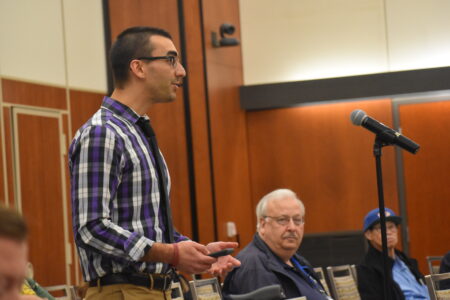
Several public employees from throughout the Northern Panhandle came to speak against the proposed increases Monday night. Workers said they would like to see the state provide more financial backing to making the PEIA fund solvent as opposed to requiring policyholders to absorb the brunt of the increases looming over the course of the next five years.
"It feels like we're going in the wrong direction," said Joshua Gary of the American Federation of Teachers, WV, asserting that promises made by the state Legislature in 2018 to help fund PEIA seemed to have fallen by the wayside. "What we seem to be discussing are ways to cut benefits and raise premiums, which goes completely against what was promised over and over again."
Some speakers noted that their ire about the proposed changes were not directed toward the board but to the West Virginia Legislature.
Teacher Tim Triveri with the Ohio County Education Association indicated that decisions like the proposed increases to PEIA benefits are bringing about tough decisions for young professionals who are looking to establish long-term careers and start a family in the Mountain State.
"I know you don't make the law," Triveri said, noting that he hoped the PEIA officials relayed everyone's thoughts to those who do make the law. "I'm making less money than when I started, which is hard to stomach."
Triveri noted that in the wake of changes made to the benefits last year, take-home pay took a significant hit for his family.
"I consider myself dedicated and highly qualified, but I'm having to question whether or not we're going to be able to stay in West Virginia and continue to teach in West Virginia," he said. "I'm 33 years old, and I'm questioning whether or not I'm going to be able to start a family with the money that I make. I would like to stay in my home state if I can, and give back to the state that gave so much to me, but it's becoming an economic reality that I might have to look for other options."
Chad Francis, representatives of the United Mine Workers of America, WV, said the cost of groceries alone is already piling a significant financial burden on working families, who don't need another hit to their wallets by way of future health care premiums.
"This increase we believe is unnecessary and harmful to our hardworking public employees," Frances said, expressing "strong opposition" on behalf of the UMWA to the proposed increases in premiums that add to their financial burden. "With the cost of living continually rising and the salaries not keeping pace, this premium increase effectively reduces their take-home pay."
Hancock County Commissioner Eron Chek said it's already a challenge to find and retain good employees. In order to attract and keep solid employees in the county, they recently took action to cover 100% of the premiums for their health benefits.
"Meanwhile, we do get more complaints than we used to about the coverage not being as good as it used to be," Chek said, urging the PEIA administration to do anything they can to improve coverage and lower costs for counties and other public agencies.
Dale Lee, president of the West Virginia Education Association, said he planned to speak at the scheduled public hearing tonight in Martinsburg and Thursday night in Morgantown.
"My anger and frustration tonight is not at you -- it's not at the board," Lee said. "It's at the Legislature. In 2018, we said that we would come up with a solution to PEIA. That solution was never to fund it on the backs of the employees."
Lee said that the intention was to see no more than 20% of the necessary increase funded by the employees.
"But in two years with this 2.5% premium increase, we will see premiums increase almost by 35% for employees," Lee said. "It's time for the Legislature to live up to the promise they made in 2018. … We will have to have some skin in the game. But having skin in the game at a 65% premium increase over five years, is far more skin than any of us can afford."