
Paden City’s PCE Levels Within Allowable Limits, EPA Says
 Shelley Hanson
 Trending
PADEN CITY -- A vapor intrusion study conducted in Paden City Schools and at other locations show levels of PCE, aka tetrachloroethylene, detected are below the maximum allowable levels.
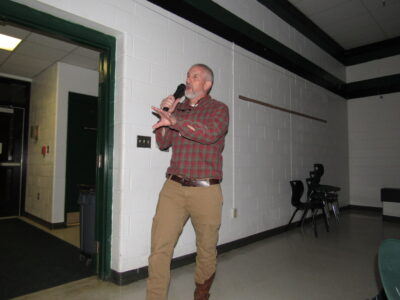
The results of the study conducted by the United States Environmental Protection Agency were revealed during a Paden City Groundwater Superfund Site meeting hosted at Paden City High School's multi-purpose room Tuesday evening.
Officials noted there was one anomaly believed to have been caused by paint and other chemicals inside an art classroom.
The EPA is planning to conduct more vapor intrusion studies starting in January on homes inside the area where it has detected soil samples contaminated with the chemical. People can contact the EPA and sign a consent form for testing. Call Victoria Schantz, remedial project manager, at 215-814-3246 or email her at schantz.victoria@epa.gov.
The origin of the PCE, they said, comes from an old dry cleaning business, Band Box Cleaners, that likely dumped or spilled the chemicals decades ago. The business has been closed for several years.
Augusta Mery, remedial project manager with the U.S. EPA, said soil samples showed the Band Box Cleaners is the "hot spot" for the PCE contamination.
"The PCE hot spot was identified in the northern portion of the former Band Box Cleaners building, about 40 feet below grade near the water table which is about 50 feet below grade," Mery said. "The hot spot is the area EPA will target for remediation."
Testing for PCE in the city's water is ongoing since an electrical outage caused the water treatment plant's air stripper to stop working. A subsequent valve failure led to the city's water system becoming tainted with the chemical.
It took weeks of flushing the system to rid it of the tainted water. During that time residents were told not to drink the water or use it for bathing or cooking.
Since then, testing has been conducted five times a week with results showing the level is still below allowable limits. The air stripper, they said, is doing its job.
Schantz noted the plume of PCE in the city's underground aquifer is "fairly large" with the strongest areas of it appearing under and beside the dry cleaner building.
Officials noted after additional vapor intrusion testing, a feasibility study for remediation likely would start in 2025.
Some residents said they were concerned the process was taking too long. Some wondered if the dry cleaning building and its tainted soil could be removed now instead of waiting. EPA officials said, however, that their process of evaluation had to be completed first.
One resident who said she had children in school said she was concerned about there being any level of vapor intrusion inside the schools and in the water. She wondered if the schools could install additional measures to filter the water.
To receive updates on the superfund activities, visit www.epa.gov/superfund/padencitygroundwater. People can also sign up to receive emails.