
Wheeling Orthodontist Tells Panel of Problems With ‘Do-It-Yourself’ Methods
 Joselyn King
 Trending
WHEELING -- A Wheeling orthodontist asked state lawmakers to help patients who choose not to go to orthodontists for care, but who instead opt for "do-it-yourself" orthodontic measures using clear aligners.
Dr. Dan Joseph told them the patient needs to have at least one examination and X-rays before starting treatment, or major dental issues could result.
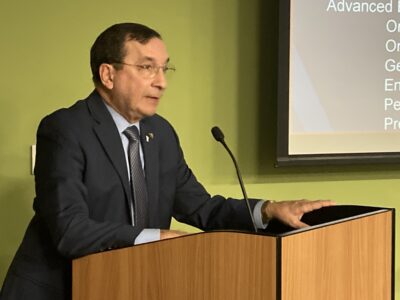
Joseph addressed the West Virginia Legislature Joint Standing Committee on Health as it met at the Health Plan building in downtown Wheeling on Sunday afternoon. Interim sessions for state lawmakers began Sunday in Wheeling, and continue through Tuesday.
"On behalf of the orthodontics patients throughout the state, I'm going to be asking for your help," Joseph told legislators. "There are recent (issues) that have occurred with 'do it yourself' orthodontics, and the use of clear aligners that are shipped from out-of-state providers directly to patients. This is happening without any kind of in-person exam or without any X-rays. ... There is no real diagnosis."
Instead there is an impression of the patient's teeth -- usually those of a child -- taken at home without any consideration of oral health, resulting in a number of serious issues, Joseph continued.
He reports seeing teeth "pushed through the bone" resulting from the lack of professional orthodontic care, as well as other dental problems.
"For me to properly treat a patient, I have to formulate a diagnosis," Joseph explained. "It requires hard and soft tissue examinations, appropriate X-rays and needed measurements. Often, I have to refer the patient back to a dentist before I would even consider doing any orthodontic treatment."
That is why the do-it-yourself treatments "don't always work out," he continued.
"I'm presently treating a lawyer, a wife of a physician and a policeman who basically failed in their treatments by going that route," Joseph said. "Fortunately, unlike some of the others, there was no damage created to them, but they lost their money."
All three attempted to regain what they spent on their at home orthodontics, but were unsuccessful, he added.
Joseph asked the lawmakers to consider legislation requiring those wanting to use clear aligners at home to first have an in-office exam with an orthodontist to assess their oral health. These sessions are typically provided for free by an orthodontist, he said.
"That's our screening to tell whether you are a candidate or not a candidate - that is critical," he said. 'We have to have an in-person exam upfront."
He praised the offering of teledentistry and telemedicine, and said they "have done great things for the citizens of West Virginia and the state."
"What is not great is when you start treatment without a diagnosis, and you cannot diagnose by a photograph or when someone takes an impression of their own teeth and ships it off to somebody. ... It was just a loophole that was left in the law."
Delegate Amy Summers, R-Taylor, chairwoman of the House Health and Human Resources Committee, noted that the loophole was intentional by legislators as there was a lack of dental care providers in many areas of the state.
Hallie Mason, executive director of the West Virginia Dental Association, provided information noting that there were about 865 dental care professionals in the state, with some specializing in the areas of oral maxillofacial surgery, orthodontics, endodontics, periodontics and prosthodontics.
Additionally, a large number of the dentists are over age 65, and younger ones are relocating to other states, Mason added. Her data indicated a net -3.5% loss of dentists in West Virginia with 10 years of experience or less.
The good news is that there are more West Virginians applying to the West Virginia University School of Dentistry, but the challenge is retaining them in the state after they graduate, she told the legislators.
Also addressing the lawmakers was retired Wheeling dentist Dr. Michael Medovic, also a trustee of the American Dental Association.
He said West Virginia was "getting it right" in that about 75% of dental doctors in the state are general practitioners, with the other 25% being specialists.
He and Joseph estimated there are about 50 orthodontists across the state, with about 20 dental providers in each of the other specialized dental areas practicing in West Virginia.
Also speaking before the Joint Standing Committee on Health was Ben Beakes, executive director of the West Virginia Association of Health Plans. He told the lawmakers the number of Medicaid-approved beds available for drug treatment in the state has increased from 648 in July 2019 to 1,610 today. Health plan providers now want to choose which facilities they will reimburse for care based on outcomes and care provided.
Ashley Gibson and Sarah Dougherty of the Wonderschool childcare providers discussed the need for childcare in West Virginia and the programs they provide.
John Antal, director of clinical services for Orchard Park Hospital in Wheeling, and Jacquelyn Knight, hospital CEO, spoke of their recently opened facility that provides inpatient acute psychiatric care to adolescents.
They reported that since opening in late September, they have averaged about five youths a day at the facility, and have had as many as eight at one time. Many of those admitted are considered suicidal or homicidal, and capable of harming themselves or others.
Orchard Park Hospital is located inside the former Robert C. Byrd Child and Adolescent Behavioral Health Center on Eoff Street.