
Xylazine Complicating Ohio Valley’s Fight Against Drug Addiction
Trending
WHEELING -- Last winter when Dr. William Mercer and his fellow Project Hope volunteers were offering health care to the homeless, they noticed skin wounds on some people's extremities that were hard to heal.
In hindsight, Mercer believes those wounds were likely caused by a drug, Xyalzine, being mixed with the usual street drugs such as fentanyl that people were taking locally.
Mercer's thinking was confirmed two weeks ago after testing the urine of a homeless man who overdosed and had a seizure. That man is now hospitalized.
Xylazine has become a growing concern in the Ohio Valley for anyone who may be battling drug addiction, regardless of whether that person is housed. It creates yet another complication for people who are trying to help others get back on their feet.
Xylazine, Mercer said, is a tranquilizer used by veterinarians to make horses sleep during surgery.
The drug is being mixed in by drug dealers to make what they sell to people more potent and addictive. However, it can also be more deadly and comes with severe sores as well, he said.
Mercer noted the local homeless who are also addicted to drugs were unaware of what was being mixed in.
Mercer said Xyalzine is not as responsive to the life saving drug Narcan, which is used by medics and first responders to reverse the effects of opioids when someone is overdosing.
"There's an antidote ... not approved for humans. It's used to wake the horses back up," he said. "They (drug dealers) are taking advantage of people who are addicted. ... It works quicker and lasts longer than fentanyl."
Project Hope has been educating people during the past two weeks about the dangerous drug showing up in the area. Some addicts have reported noticing a difference in what they have taken.
"The lesions we're seeing from it, most are in the extremities, not where the drug is injected. It's a vasoconstrictor; the skin is not getting enough blood," he said. "They break down into ulcers that are difficult to treat."
Mercer said such wounds typically need to be dressed three to four times a day to heal properly. Since the Project Hope volunteers are not available to do this so frequently they created kits for the people to use so they can clean and dress the wounds themselves.
If such wounds are not kept clean they can become infected. And severe infections can lead to amputations, he noted.
Mercer said in addition to warning those dealing with addiction about Xylazine, they are also asking people if they are ready to go into recovery.
"The illegal drug manufacturers are one step ahead of us in figuring out how to sidestep us," he noted.
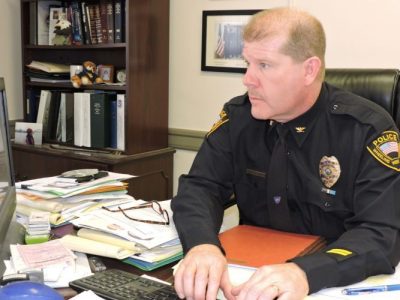
Wheeling Police Department Chief Shawn Schwertfeger said his department is aware of an increase of Xylazine being used by addicts in the region.
"There is no doubt that the greater Wheeling area has seen an increase in the presence of Xylazine, also known as 'Tranq,'" he said. "We work very closely with organizations such as the WV Fusion Center, Appalachian HIDTA, the Wheeling Fire Department among other organizations. Along that vein, information is frequently shared.
"We have received information that recent testing of used needles are exhibiting large increases in the presence of Xylazine and is an emerging threat in the United States per the Office of National Drug Control Policy," Schwertfeger added. "The drug is not an opiate but is often found cut with or mixed with opioids like fentanyl, making it more dangerous.
Those using narcotics aren't actively seeking Xylazine-laced drugs, Schwertfeger said, but it is showing up in seized opioids and are being found in drugs people are looking for.
"Again, working with these other organizations, we continue to monitor overdoses and the threats associated," he said. "Unfortunately, Xylazine has become another inherent risk within those suffering from substance use disorder."