
West Virginia Senate Votes To Keep Controversial Mineral Valuation Formula With Promise To Review It Next Year
 W.Va. Legislative Photography
 Trending
CHARLESTON -- The West Virginia Senate passed a bill keeping in place a controversial valuation formula for taxing oil, natural gas and natural gas liquids, but not before a lawmaker secured a promise from lawmakers to develop a new formula next year.
House Bill 4850 -- removing the sunset clause from the oil, natural gas, and natural gas liquids property tax valuation formula -- passed the Senate in a 28-6 vote Friday, sending the bill to Gov. Jim Justice.
Most senators representing natural gas-producing districts voted against the bill, including Senate Majority Whip Ryan Weld, R-Brooke; and senators Laura Wakim Chapman, R-Ohio; Charles Clements, R-Wetzel; and Mike Caputo, D-Marion.
Other senators voting no included Robert Karnes, R-Randolph; and Mark Maynard, R-Wayne.
Sen. Mike Maroney, R-Marshall, whose home county lost out on $5 million due to the state Tax Division's mistake in implementing the legislation, voted to enshrine the measure.
HB 4850 would remove a July 1, 2025, sunset provision for a formula to determine the value of personal property that produces oil, natural gas and natural gas liquids. The formula has been the center of issues involving the state Tax Division since the passage in 2022 of House Bill 4336 after the West Virginia Supreme Court of Appeals threw out the previous formula in 2019.
Under the current formula, the state Tax Division appraises the value of property producing oil, natural gas, and natural gas liquids using an income-based approach based on what the value of the interest would be if sold at market value. Instead of using a three-year average to value wells, the new formula looks back over only the previous tax year and requires individual wells be valued instead of multiple wells being lumped together.
But the Tax Division has had numerous issues since the end of 2022 with being able to use the formula, including numerous delays in providing valuations to county assessors, miscommunications with taxpayers, a backlog in appeals and at least one lawsuit. This year, state tax officials sent out notices informing oil and natural gas-producing property owners that the appraised values on their property increased, but the notices did not say what the dollar amount appraisal was.
And in what one lawmaker and one county commissioner have called "negligence," the Tax Division informed county assessors in eight counties late last year that a "clerical error" by a third-party vendor in calculating the new formula caused newly producing natural gas wells to be undervalued by approximately $30 million for all eight counties combined. Two counties have already rejected deals with the Tax Division to send out amended assessments.
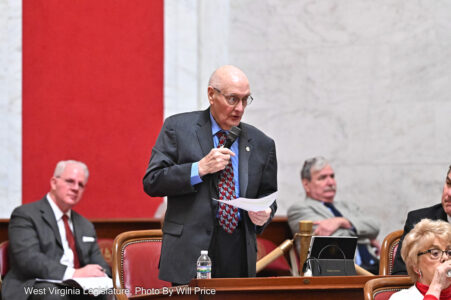
Clements, who supported the creation of the formula in 2022, said he understood the concerns of fellow lawmakers for removing the sunset and ensuring the formula isn't left to expire and put natural gas property tax collections at risk. However, he asked Senate Finance Committee Chairman Eric Tarr, R-Putnam, to commit to addressing the concerns of county assessors and royalty owners about the formula.
"The Tax (Division) made some major errors this year, but these problems I think can be overcome," Clements said. "What I would like to request for you to do as finance chair is to sit down around the table with assessors from counties, with royalty holders, with the Tax (Division), with the people from the industry, and all involved in between now and next year. Come up with a formula that will work."
"I think that the counties need solutions,' Tarr said. "The royalty owners need solutions and, frankly, the state ... I think it's a problem we need to solve and I'm committed to helping you solve that."
Clements said the problem was not the formula itself but the timing of when the formula is used. The formula looks back over the previous tax year, when natural gas prices were higher, resulting in increased production and higher payments to royalty owners. Royalty owners are stuck with higher assessments this year before the assessments begin to reflect the lower natural gas prices and bring those assessments back down potentially next year. Tarr said the lag is closer to two years.
"When the asset is assessed, if gas prices are high, then they're going to have a lot of revenue at that time for getting that royalty from it," Tarr said. "But with a two-year lag ... it doesn't allow for prediction where that price will be in two years. And so if the price is very low, they're going to be paying taxes on when it was very high, but not have that revenue at that time if they hadn't been able to plan for it."
Chapman offered an unsuccessful amendment to HB 4850 Thursday that would have prohibited the appraised value of the royalty interests from exceeding the average actual sales price of similarly situated and like royalty interests. She said royalty owners remain concerned with how the formula is weighted against them.
"My constituents have again ... reached out to me repeatedly about their valuations of their minerals," Chapman said. "I understand the way the wind is blowing in this room. I do think that it's best to wait because there are lawsuits pending."