
When the Water Began Rising, Ohio Valley First Responders Were Ready
 Emma Delk
 Trending
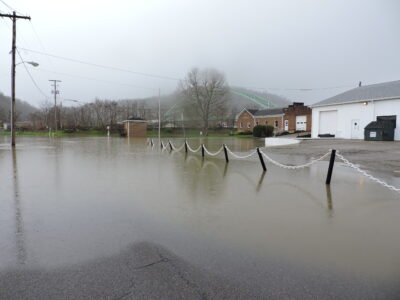
WHEELING -- While reflecting on this week's flooding, emergency service directors for both Ohio and Marshall counties believe first responders were well-prepared to handle the flood and are now well-prepared to begin recovery.
Ohio County EMS Director Lou Vargo found that being ready for the worst of the worst when it came to the flooding allowed first responders to handle the Ohio River cresting at 41.49 feet without a problem.
"It was the highest predicted crest we had seen in the last two decades, so we knew to be prepared for what was to come," said Vargo. "We had over 500 cleanup kits delivered to the House of the Carpenter in preparation to help the whole panhandle."
The preparation of first responders paid off, as Vargo noted no injuries or deaths were reported in Ohio County due to the flooding. He added the Wheeling Fire Department and Wheeling Police Department performed several rescues for stranded residents.
Vargo said that first responders were also well-prepared to handle the flooding due to the steady rainfall instead of a downpour that would have led to flash flooding. He noted Ohio County EMS had swift water rescue teams ready in case people were trapped in moving water that were never activated.
Ohio County EMS will now begin the cleanup process in the area. The first two items on the clean-up agenda are assisting residents whose houses were impacted by the flooding and clearing streets for travel.
On Friday morning, the Wheeling Fire Department began working down their list of residents who need water pumped from their basements. While the WFD tends to residents, Wheeling city crews will take to the streets to get roads cleaned and opened.
On Monday, all attention will go to removing debris from the two areas hit hardest by the flooding - Wheeling Island and South Wheeling.
"We're asking residents if they have any debris that needs to be removed to put it in front of their homes," said Vargo. "On Monday, you'll start seeing dump trucks and other street department vehicles cleaning up."
Cleanup efforts will not stop for Ohio County EMS until the list of residents who need help is empty, noted Vargo. He added that first responders will work 12-hour shifts until cleanup and recovery are completed.
"We're just going to keep going until we're finished," said Vargo. "If it takes two days or four days, we're not going to let the residents down."
Vargo encourages anyone affected by the flooding to contact 304-234-3711 for Ohio County EMS assistance.
Beyond what emergency services are doing to help, local businesses, charitable organizations and churches have also stepped up for cleanup efforts. The House of the Carpenter is handing out 500 flood cleanup kits provided by Ohio County EMS at their building located at 200 South Front Street in Wheeling.
The organization is also coordinating volunteering efforts and donations for flood victims. Vargo encourages anyone who needs assistance or wants to lend a hand to flood victims to contact the House of the Carpenter at 304-233-4640.
For Marshall County EMS Director Tom Hart, communication was key leading up to and during the flooding. He noted that communication between neighboring counties, West Virginia Emergency Management and the National Weather Service was "very good" during the flood.
Hart explained that clear and fast communication between these bodies allowed Marshall County EMS to swiftly "push out information" to areas that would be impacted.
"A lot of our ability to handle these flood situations well comes from past practice and experience," added Hart. "The staff here, local agencies, local municipalities, the county and neighboring counties all work well together, which makes things run a little bit smoother."
Clear communication will continue to be vital in Marshall County clean-up efforts. Local fire departments and Marshall County municipality work crews will coordinate to help pump residents' basements and clear debris from their yards.
"The municipalities will be coordinating cleanups in their areas, and we'll be working with the county in unincorporated areas," explained Hart on Friday.
The clean-up process will be a moving schedule in the county, noted Hart, as cleanup will begin in an area whenever water has receded. He added this means cleanup has already started in some areas, while some will begin cleanup tomorrow and others will not be ready for cleanup until the start of next week.
"It [cleanup] just depends on water levels," said Hart. "People can't clean until the water is receding."
Hart added that debris removal will most likely kick into high gear next week, and will last "over several days, if not a couple of weeks."
Both Vargo and Hart emphasized that another key aspect of handling and then cleaning up after a flood is knowing that every instance of flooding is different. With this information in mind, first responders can modify how they handle flood preparations, response and recovery every time once occurs.
What was the difference this time around in how Ohio County first responders combatted the flood? The ability to use drones to see the extent of the flood and the damage done by it.
"Using drones gives us a better situational awareness of the flooding," explained Vargo. "We can compare the drone photos of the current flood water to the actual river reading at that time, which helps us get a more organic reading of what is happening with the water.
"Every flood, you base what's happening on whether there's more silt of debris at a ford or a river than what there was 20 years ago," Vargo continued. "Some of these flood levels are based on historical data, which can lead to changes in that data over time, so the drones help us stay current with our readings of flood levels today."
This flood was different for Marshall County EMS workers in that the damage was primarily contained in riverfront areas, particularly Benwood and Moundsville.
Hart noted that during flooding in Marshall County in 2004 and 2005, a lot of damage occurred throughout the county due to flooding in creeks and streams at the same time as the Ohio River flooding.
"In 2004 when we had Hurricane Ivan come through the devastation was pretty much countywide because of those creeks and streams flooding," said Hart. "The same was true for flooding we had in 2005.
"The countywide devastation of past floods led to homes and businesses throughout the county being "heavily damaged or destroyed," according to Hart. In comparison to this flood, he noted that while some roadways had to be closed on top of garages and basements in the riverfront areas, the damage was not as pervasive.