
Wheeling City Council Passes Controversial Plan To Spend Opioid Settlement Funds
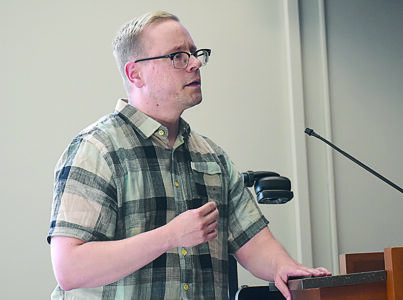 Eric Ayres
 Trending
WHEELING -- Members of Wheeling City Council on Tuesday night agreed to amend a proposed police purchase using opioid settlement money, but a majority of members agreed to move forward with priority proposals from the city police and fire department for use of this funding.
Several citizens signed up to speak during Tuesday night's Wheeling City Council meeting, when two pieces of legislation regarding the city's chunk of the West Virginia opioid settlement came up for a second reading and a final vote. The legislation for various purchases for drug-related first responder equipment totaling $584,000 had previously been tabled after local service agencies urged city leaders to consider using the funds for treatment and preventative measures as opposed to efforts to bolster enforcement and emergency response.
A meeting was held by the Public Safety Committee of Council after the legislation was put on hold, and officials discussed the expenditures further. While city leaders agreed that some of the opioid settlement money should also go to local agencies who work with those in active addiction, they stressed that the state's guidelines for settlement fund usage prioritize expenditures for those on the front lines, such as first responders.
Mayor Glenn Elliott moved to exit the regular order of business Tuesday to allow those who signed up to speak on the topic of the opioid settlement money to do so before members took a final vote on the two ordinances.
Wheeling resident Jasmine Donnell urged council to take a pause on the distribution of these funds in order to create a comprehensive action plan that involves collaboration with local service providers.
"As I appreciate our first responders on the front lines of this epidemic and the work that they put in, I strongly advise our community leaders to develop a proper action plan to combat a further downward spiral," Donnell said.
Speakers provided information contained in a "Roadmap for Opioid Settlement Funds" that was compiled by more than 133 addiction experts and organizations nationwide, citing recommended guidelines for the most effective uses of this one-time pool of money.
"This is a once-in-a-lifetime opportunity, and we lose nothing by waiting," said Vincent DeGeorge, encouraging council to put the legislation on hold. DeGeorge also characterized the city's action as seeming to be one that puts the police and fire department purchases on a fast-track and makes service organizations go through a more lengthy process in order to fight for whatever money is left over.
Zane Miller said he lost two close friends to the opioid epidemic.
"The sad fact is that a police side-by-side -- a golf cart -- would not have saved my friends, but treatment and prevention could have," Miller said, eluding to a line item in the police proposal that has come under the most scrutiny -- the proposed purchase of two off-road utility vehicles or UTVs in order to better access homeless encampments where illegal drug use has been a problem. "If the only tool you have is a hammer, everything looks like a nail."
East Wheeling resident John Russell said he came from a community with a small high school where 12 of his friends died from the opioid epidemic.
"This money is for victims," Russell said. "The police department is not a victim here. By the time the police are called to respond to these drug situations, prevention is long done. We need prevention -- put the money there."
Kenneth Powell III of Woodsdale said it was a matter of ethical obligation.
"This money didn't come out of nowhere. It's not a grant, it's not a donation, it's not a tax windfall -- it's a settlement," Powell said. "It's a settlement for whom? Victims. Victims of a crisis that has been partially caused and exacerbated by out-of-state corporate interests who do not care about the lives of any Appalachian, including West Virginians."
Powell said email chains among corporate executives involved in the opioid lawsuits referred to West Virginians as "pillbillies." He urged council to spend money on nipping the problem in the bud by directing the majority of the settlement funds to be directed to preventative measures.
Before the legislation came up for a vote, Councilman Ty Thorngate delivered a prepared statement and made a motion to amend the ordinance for the police purchase to eliminate the purchase of one of the two UTVs, but keeping everything else -- including the purchase of one UTV, as well as a trailer. The amendment to drop one of the UTV purchases was supported by the majority of council members, with Councilmen Ben Seidler and Dave Palmer opposing it.
"With hundreds of thousands of dollars from opioid settlement funds coming to the city ... I think a united front is crucial," Thorngate said. "We must stop treating this like an us-versus-them scenario."
Thorngate said he did not think it was possible for the city to "police our way" out of the drug addiction problem in the community. He urged service organizations to partner with the city and form a task force to collaborate as a team to decide where portions of the money should be spent to heal the harm caused by the opioid crisis. Officials noted that the city received $726,000 from the state, and another similar allocation is expected in the coming months, in addition to additional settlement funds yet to be distributed from the state level by the West Virginia First Foundation.
"I think it's also important to remember that our first responders do deal with this, just like we do, day in and day out," Thorngate. "So I think it's important that we stop vilifying these men and women who have all been impacted by opioids like the rest of us."
Irresponsible drug companies are the true villains in this scenario, Thongate said.
"I agree with what everyone is saying," Palmer said. "But we're not trying to pit our police and fire agencies against the other people. Let's not do that. Let's all work together."
Councilman Jerry Sklavounakis noted that the police and fire department proposals were in line with the criteria set forth in the opioid settlement guidelines.
"We're not trying to make this an us-versus-them thing," Sklavounakis said. "There are going to be other monies that come through our coffers from the settlement funds that I believe we should use for other things that have been spoken about. Preventative care is something we do need to focus on."
Sklavounakis said there was no reason why the city should not fund the police and fire requests now with the money that is available, noting that the elimination of one UTV is a reasonable compromise, noting that those funds can now be directed toward other uses such as treatment and preventative care for drug addicted citizens.
"I think we've been clear so far that we expect the rest of the allocations from this to go toward programs that are preventative," Seidler added.
Councilwoman Rosemary Ketchum said the city has an ethical obligation to treat those who are most vulnerable.
"I do not support this proposal -- not because I don't believe that enforcement is important or that law enforcement is unnecessary or not an important element of our opioid crisis - but I want there to be a thoughtful and fair process for all funds to be received. In part because I don't want to fund enforcement before we fund treatment and recovery."
Elliott, who has been absent during a number of recent meetings, noted that he had not been involved in some of the discussions about this topic over the past month.
"At the end of the day - when you think about substance abuse, there's a supply side and a demand side, and law enforcement is often focused on the supply side of the equation," Elliott said, noting that as long as there's a demand for something, it's going to find its way into the community. "Looking at these individual proposals, though, for our police and fire department, I think they are reasonable first steps."
Elliott noted that if he agreed to table the matter now, he may not likely be in office to vote on the matter in the future, as his term ends at the end of June. The mayor said he was confident that the four current councilmen who will continue to serve for the next four years will support efforts in the community to impact the demand for opioids.
While council unanimously approved the ordinance for the fire department purchases, Ketchum voted against the police proposal, which still passed by a 6-1 vote.
A first reading of a new ordinance also took place Tuesday night to allocate $150,000 from the opioid settlement fund to an emergency assistant collaborative that included Laughlin Memorial Chapel, the Soup Kitchen of Greater Wheeling, the Ohio County Family Resource Network, The Life Hub, Catholic Charities Neighborhood Center and the Greater Wheeling Coalition for the Homeless.