
Concerns Raised Over Future Tax Revenues, Expenses in West Virginia During Legislative Interims
 W.Va. Legislative Photography
 Trending
CHARLESTON -- Gov. Jim Justice decided against calling a special session this week with lawmakers already in town to pass an additional 5% cut in personal income tax rates, but lawmakers raised concerns about cutting taxes too fast and taking funds from an income tax reserve fund.
Justice said he would call the Legislature into a special session either in August or later in the fall to pass a bill cutting personal income tax rates an additional 5%, which would return an additional $115 million to taxpayers in calendar year 2025 if approved by the Legislature.
That proposed cut would be on top of a 4% personal income tax cut going into effect on Jan 1, 2025, thanks to the state meeting a trigger formula for further reducing personal income tax rates every calendar year. House Bill 2526, passed during the 2023 legislative session, cut personal income tax rates by 21.25%, returning approximately $483 million to taxpayers.
While Republican lawmakers have expressed support for phasing out the personal income tax over time, some have expressed concern about phasing it out too quickly, not factoring in future state expenses and natural growth of tax collections.
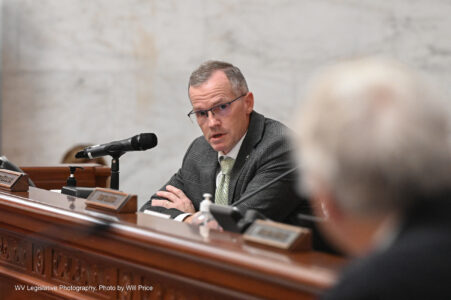
State Senate Finance Committee Chairman Eric Tarr, R-Putnam, asked Department of Revenue Deputy Secretary Mark Muchow about the state's six-year revenue and expenditure forecast and whether revenue officials were factoring in future costs that could affect tax revenues in out-years. Tarr pointed to future expenses, such as the $33 million-per-year cost of the Third Grade Success Act.
"Do you have anything compiled that shows the change in revenue available to the state, both with expenses and revenue for tax cuts that we put into phase-in and expenses we might have that are statutory required?" Tarr asked. "When I see a forecast that is getting really, really close to a drop in what we're realizing in surplus with those changes in revenues in the out-years exceeding $600 million, what I can see in the next couple years ... is expenses go up, revenue goes down, and that nets a $600 million less position than where we presently are."
Muchow said the days of ending fiscal years with record-breaking tax revenue surpluses are likely over.
"It's unusual to have huge revenue surpluses like we've had here in recent years," Muchow said. "There's a lot of factors that generated those huge revenue surpluses, including trying to keep the budget pretty flat and a whole bunch of other things. But over the long run, your revenues are going to be more in line with spending, and you're not going to see every year a $400 million or $500 million surplus."
Lawmakers have also complained about being blindsided by the governor's request for the additional tax cut, with legislative leaders not consulted.
Other lawmakers had questions about tax collections for the first month of the new fiscal year that began in July. According to data from the state Department of Revenue and the Senate Finance Committee, July tax collections were more than $335.3 million for the first month of fiscal year 2025. July collections were more than 1% above the department's revenue estimate for the month and .1% above collections one year ago.
But personal income tax collections for July were down nearly 6% below the $151.8 million estimate, coming in at $142.9 million for the month. July personal income tax collections were also nearly 2% below collections this same time last year. According to the Senate Finance Committee report, more than $7.1 million was used from the personal income tax reserve fund to pay out on July tax refunds, skewing the income tax collection numbers.
According to the report, had the personal income tax reserve funds not been used, actual personal income tax collections would have been $16 million below estimates, with total general revenue collections down by more than $2.2 million below estimates.
Department of Revenue Secretary Larry Pack explained that these funds have come from the Rainy Day Fund due to traditional cash flow issues that occur at the beginning of a new fiscal year. But instead, the state pulled the needed funds from the $400 million personal income tax reserve fund, set up in 2023 by HB 2526 in case of issues arising from future personal income tax rate cuts.
State code allows the governor, by executive order, to borrow from the Rainy Day Fund between the start of the new fiscal year and Oct. 31 to pay the state's bills until tax revenue for the new fiscal year comes in. The funds must be repaid within 90 days. Pack said that $78 million was borrowed from the Rainy Day Fund.
"What was the rationale for pulling it out of two different buckets as opposed to just pulling it out of Rainy Day like we have in the past," asked Del. Paul Espinosa, R-Jefferson.
"It's my understanding with respect to the Rainy Day Fund, there's a limitation on the amount of money that we can pull out," Pack said. "We were just making sure we had plenty of comfort. That's all it was, nothing nefarious. We didn't think it was unusual. The Legislature gave us the ability to do that, but we were just making sure that we had plenty of comfort so we'd be able to pay our bills on time."