
Consultant Recommends Demolition of Former Clay School in East Wheeling
Trending
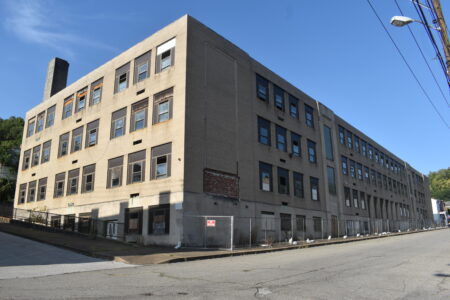
WHEELING - The city of Wheeling’s consultant hired to provide a comprehensive examination of possible options for the future of the former Clay School in East Wheeling this week recommended that the sprawling building be demolished.
Jim Ambrose, president of Tipping Point, recommended that the city consider tearing down the old school building and constructing a scaled-down indoor recreational facility to address the desires of the many community residents who weighed in on the study.
Tipping Point spent several months gathering input from neighborhood stakeholders and crunching numbers to explore the best possible - and most economically feasible - scenarios for the site. Potential uses ranged from various options for redevelopment of the property to demolition.
"Before the city got involved - just to put this into context - there were many attempts to allow private investments to resolve this, and 100% of the time, they weren’t able to do it," Ambrose noted.
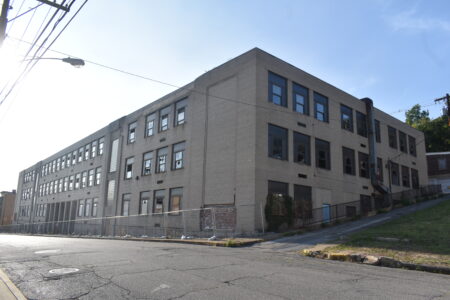
The Clay School first opened more than 80 years ago and operated for decades as part of the city’s public school system before closing its doors in the 1990s. Several attempts by private investors had been made to bring a new life to the sprawling structure along 15th Street, but no ventures to redevelop the property ever took root.
In December of 2021, the city of Wheeling acquired the structure.
Since then, officials have put an emphasis on gathering input from the people in the East Wheeling neighborhood in order to give them a voice in how the city proceeds with utilizing the site. Late last year, the city joined Tipping Point, Wheeling Heritage, the Men of Change and other community stakeholders for a block party in East Wheeling aimed at collaborating, brainstorming and collecting ideas from everyone interested in the Clay School property’s future.
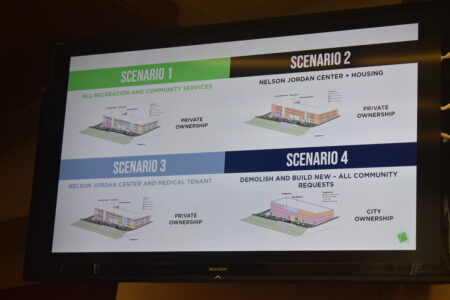
In the study that was completed by Tipping Point, Ambrose said four different development scenarios were explored. They looked at different possibilities involving private investments and ownership, along with their ability to acquire construction financing.
Because of the age of the building, the Clay School could likely be eligible to tap into a number of different redevelopment financing sources, including historic tax credits and other funding.

Jim Ambrose, president of Tipping Point, presents a recommendation to Wheeling City Council this past week on the future of the vacant Clay School property in East Wheeling. (Photo by Eric Ayres)
"There’s a big question amongst the community whether to save or demolish this thing," Ambrose said. "I think what matters is: what provides the highest and best use for the community that is long-term financially sustainable, regardless of what kind of capital is funding it."
Ambrose noted that the results from input regarding the desire to save the Clay School or to demolish it were literally 50-50.
"The community was completely split on whether to save it or demolish it. And we re-affirmed that ... three times," he said.
More than 1,000 community responses were received during the survey, and a recurring theme from community members focused on providing a use that focused on the youth of the community, as well as education, training, recreation and possible housing.
Creating an updated space for the Nelson Jordan Center - the only indoor city-owned recreation center in Wheeling - was also a recurring topic of interest among residents in the study.
The old school building boasts about 75,000 square feet and is "full of environmental hazards," such as asbestos, lead-based paint and mold. There is also water pooling on the flat roof.
Analysis of the different options took into consideration the cost of development and construction, as well as the "gap" between the final costs after any available financial assistance was applied.
Ambrose noted that utilizing the historic character of old buildings often comes with a loss in efficiency. City leaders have noted that although the Clay School is an old building, it does not have a lot of notable architectural characteristics that other historic structures boast.
The first scenario explored in the survey was to repurpose the building with private ownership, providing spaces for recreation and community service. That was estimated to cost just over $23 million, with a public subsidy of around $19 million.
Putting a new Nelson Jordan Center on the ground floor of the building with new housing above would also cost just under $23 million with private ownership and a potential public subsidy of about $18.2 million.
Another private ownership scenario would have a new Nelson Jordan Center on the first floor and medical or wellness facilities above. This would cost $24.5 million with a potential public subsidy of nearly $20.7 million.
The fourth scenario would be to demolish the building and rebuild there to incorporate every community request that was provided. The would cost around $24.2 million to include everything, but could be trimmed down to a workable $13.7 million "based on what is financially feasible for the city to build and maintain."
From an overall construction perspective, it would be cheaper to build new, Ambrose concluded, citing the costs associated with bringing older structures up to today’s community standards.
"I think that the most financially responsible thing for the city to do would be scenario four where you are downsizing and assessing the existing structure of the Nelson Jordan Center," he said.
Ambrose indicated that the ultimate decision still needs to be made by the city and the residents, but he recommended demolition and reconstruction of a scaled-down facility for recreational use.
Jim Ambrose, president of Tipping Point, presents a recommendation to Wheeling City Council this past week on the future of the vacant Clay School property in East Wheeling. (Photo by Eric Ayres)
"Professionally, I would hang my hat on that," he said. "But this is a community decision."
No scenario was explored that put housing in the existing structure while maintaining ownership by the city, even though that revenue-producing situation could soften the blow of the high development costs.
"Cities weren’t built to manage revenue-paying tenants," he said. "That’s why commercial real estate exists."
One of the biggest threats to redeveloping the entire site centered on the lack of space for parking.
"There’s not a really good parking solution, which would potentially deter banks from even investing in it, because if you can’t provide the parking counts needed for what the full occupancy of the building could be, they just don’t think it’s feasible and pass on it," Ambrose said. "Trust me, I know. We’re working with the 1400 Market block."
One piece of good news that emerged during the Clay School survey period was the fact that the city of Wheeling was able to acquire a Brownfields remediation grant from the U.S. Environmental Protection Agency in the amount of around $500,000. A $40,000 planning grant was also received. This U.S. EPA Land Revitalization Technical Assistance grant basically provides a consultant hired by the federal agency to review land and building reuses. The work already completed by Tipping Point will help in this endeavor, and a final report is due in September.
"The site is a really great fit for recreation, and that’s really what the community wants," Ambrose said, adding that Ward 3 Councilwoman Connie Cain has been taking part in the recent meetings with the officials that are taking a "deeper dive" into scenarios that keep the Clay School in the city’s ownership.
Regardless of the direction the city decides to take on the Clay School, the asbestos abatement and remediation will need to take place. A final decision on demolition versus restoration is yet to be made, however, and the next step will be to review the EPA technical assistance final plan next month.
"I'm very excited that we are showing movement in the future of Clay School," Cain said. "Sometime in September, we will see it narrowed down to two visions - one with the building still standing and one with a smaller new building."
The future of the former Clay School in East Wheeling is beginning to take shape, as months worth of work related to community surveys and an exploration of redevelopment options has been completed. (Photo by Eric Ayres)
See the full survey results: