
Vintage Raceboat Documentary Screening This Weekend at Towngate Will Coincide With Regatta
Trending
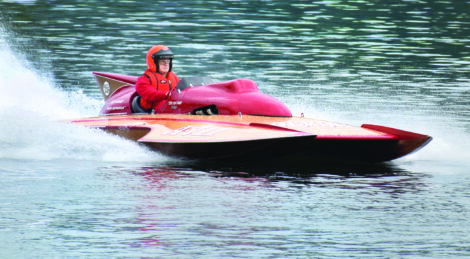
WHEELING -- When Dr. David Kappel watched vintage raceboats zip across the Ohio River at the second-ever Wheeling Vintage Raceboat Regatta, it stirred nostalgia from his childhood, watching those boats race along the river near his hometown of New Martinsville.
Kappel wanted to capture that nostalgia in his documentary, "Vintage Hydroplanes: People, Place and Time." And that documentary will be shown at Towngate Theatre at 7 p.m. Saturday -- following the first day of the 17th regatta at Wheeling's Heritage Port.
Four years of interviews, vintage film collection and editing culminated in the film. Though Kappel discovered his love for inboard hydroplane racing in Wheeling at the regatta, the documentary focuses on his hometown. The film traces 50 years of inboard hydroplane racing in the area, comparing the sport's rise and fall with New Martinsville's trajectory.
"The parallel arcs between the sport and the town make it all come together," Kappel said. "The documentary emphasizes the similarities between the town's growth and the eventual fade that racing went through simultaneously."
The film recounts the sport's history in the town beginning in 1939 while the United States was recovering from World War II and "hitting its stride as a nation," according to Kappel.
Just as industry boomed and the economy thrived after the war, Kappel noted that inboard hydroplane racing thrived in small towns along the Ohio Valley.
"New Martinsville was one of the premiere places to race your boat in the country in the '50s, '60s and '70s," Kappel said. "The reason for that is that the course was long, which allowed boats to reach high speeds. The national championships were often decided down there because you could gain such high speeds."
Though the fast speeds that could be reached in the Ohio Valley drew racers, Kappel said what made them stay was the "hospitality and warmness" of locals in small towns across the valley.
Moving into the late 1980s, Kappel recounted how industry declined in the country as "foreign competition challenged small, family-owned corporations in the U.S." Just as the economy weakened, Kappel noted that inboard hydroplane racing also faced its decline.
The story of the rise and fall of inboard hydroplane racing in the documentary was written and narrated by Gary Kappel, Dave Kappel's cousin and a professor emeritus of history at Bethany College.
"I value his ability to tell history as a story, and what he ended up writing for this documentary was tremendous," Kappel said of his cousin's involvement in the project.
Just as Gary Kappel weaved the narrative of racing to New Martinsville, David Kappel credited Mara Ferris for tying the film's story together through her abilities as a producer. While the history covered in the film ends in 1989 while racing is losing popularity, Kappel noted that the film ends on a "hopeful note" by touching on "the nostalgia piece" of the vintage boats.
Though he believes the sport aspect of inboard hydroplane racing will never return to the popularity levels of its heyday, Kappel hopes the sport will continue to thrive due to nostalgia.
"The racing part of the sport is so expensive that the small-town guys building their boats can't compete and can't keep up with sponsored boats so that part of the sport has dwindled significantly," Kappel said. "I think that competitive racing will fade away, and we touch on the factors that led to that in the film, but I think the vintage aspect will stay and has grown now."
To capture the nostalgia that has kept vintage racing alive today, Kappel described framing old photographs shown in the documentary to capture an "older style." He added much of the archival footage used in the film was acquired through hours spent in the New Martinsville Public Library combing through archival newspaper articles.
Kappel was also granted access to the private film collections of National Power Boat Association members. Additionally, the project filmed and obtained video material from the Hydroplane and Raceboat Museum in Kent, Washington.
Kappel added that the score, composed and arranged by Char Pope, also contributes to the film's nostalgia by "recalling certain musical themes of time past."
"There is a sense of place for all of us who grew up along this river valley," Kappel said. "Many people return to retire in these places because that's where home was, and home is the history that all comes together."
Kappel hopes the old footage and soundtrack will help capture the nostalgic feeling he believes keeps the sport alive today. He noted that though many adolescents today may not be able to experience racing's heyday, they can still acquire the same feeling by seeing the vintage boats race across the waters during local regattas.
"Nostalgia can be passed on by telling these stories," Kappel said. "You can develop a nostalgia even though you didn't live it directly."
The documentary premiered in New Martinsville on July 12. Kappel noted that though the screening had a "biased audience" of boat owners, drivers and New Martinsville residents, the film's response was overwhelmingly positive.
"It really got rave responses, not just because of how it's put together, but also the professional quality of the documentary," Kappel said. "I'm nervous about showing it in Wheeling without the biased audience."
While Wheeling's screening may not have as many New Martinsville residents ready to support the project, Kappel believes the local screening held on Saturday will bring in regatta supporters.
Depending on when the copyright is completed, Kappel also hopes to have the film available for online streaming by the end of the year.
The Wheeling Vintage Raceboat Regatta, presented by WesBanco, will be held Saturday and Sunday at Heritage Port with opening ceremonies beginning each day at 9:45 a.m. The pits will be open throughout the day Friday as the boats arrive in town. Proceeds from the regatta will benefit Easterseals.