
Metal Detectors Have Arrived at Wheeling Park High School
Trending
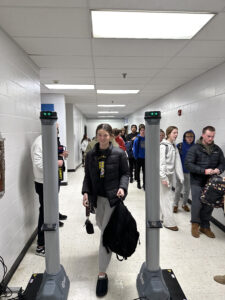
WHEELING -- New metal detectors have arrived at Wheeling Park High School, and they were put into use on Friday.
Assistant Superintendent Rick Jones said the first day of the metal detectors "went well," and that students entering the school were randomly asked to walk through the new detectors. Not every student was asked to go through the security, and that will probably be the method going forward.
"We're not going to do every single kid every single day," he said. "We can't get kids through fast enough. There are too many kids."
Jones noted the best thing that might come from having metal detectors is that they "could deter kids from bringing things in that they shouldn't in the first place."
"A kid may bring in a knife with no intention of ever using it, but they always have it with them or they need it for work. The constant thought of having to walk through metal detectors will deter them from bringing it because they have to think about it," Jones noted.
West Virginia law requires school districts to expel a student who carries specified weapons into the school -- whether intentional or not. Jones said he has had to expel students for that reason, and "it doesn't feel good."
"Hopefully they will see them (the metal detectors) and not bring things in in the first place," he continued. "We have had no issues at Wheeling Park High School, and we don't anticipate any. We just want to be prepared."
Students entering the building Friday were advised metal detectors would be in place, according to Jones.
"We did a call out to let students and parents know," he said. "We didn't want kids to show up and think there was a problem. They were not surprised."
In December, Ohio County Schools purchased two sets of detectors for WPHS at a cost of $48,438 from Lauttamus Communications.
On Thursday afternoon, Ethan Miller, a field representative for manufacturer GXE, provided staff with an overview of how to set up, adjust and use the metal detectors. He explained the sensitivity settings on the metal detectors and how they can be set to discriminate against sounding off on everyday items.
"Phones, wallets, tablets, watches - most water bottles ... those can pass through the transit," Miller said.
What won't be accepted are Stanley-type water bottles. They have lead on the bottom, he continued.
Chromebrooks won't pass through the detector, and neither will three-ring binders depending upon the sensitivity setting.
Miller suggested the detectors not be put on a lower setting to allow the items, but that students instead be instructed to hand their Chromebooks to the side when they enter the school.
Vice Principal Jack Doyle asked if composite bats often used by baseball and softball athletes would set off the device when brought into the school.
Miller said they would, as would musical instruments. Again, he suggested these be handed off to the side by the student when they enter.
Another setting adjusts the detectors to account for surrounding noise, as high levels will set off the detectors.
Miller said the detectors have been used at Florida State University football games where crowd noise reached high levels and settings had to be adjusted.
Miller also went over the set-up of the metal detectors and how they must be placed 30 to 34 inches apart to be operational. Photo sensors on each of the units have to face each other.
The devices can be hooked up to electricity or powered by rechargeable batteries. Jones indicated initial plans are to use batteries and not buy the expensive electrical cords.
Miller also asked staff present where the units would be placed. The initial plans call for the detectors to be used at the back entrance, where students who drive and park enter from the lot, and at the front entrance, Principal Meredith Dailer said.
The session ended with Miller and those participating going to examine the sites.