
Agencies Report to Wheeling City Council on Impact of Opioid Settlement Funds

photo by: Eric Ayres
Claudia McKay, Ohio County Family Resource Network executive director, tells Wheeling City Council how local social service organizations were able to use $150,000 in opioid settlement funds to help families impacted by the crisis.
WHEELING — Officials in the city of Wheeling this past week received an update on how local social service agencies were able to use opioid settlement funds from the city to make a difference in the lives of local families that have been impacted by the opioid crisis.
Claudia McKay, executive director of the Ohio County Family Resource Network, appeared before Wheeling City Council, not at anyone’s request, but for the sake of making sure everyone was aware of how these funds were being utilized.
In June 2024, Wheeling City Council agreed to provide $150,000 from its pool of opioid settlement funds from the state of West Virginia to implement a proposed plan that had been developed through a partnership among Catholic Charities West Virginia, the Ohio County Family Resource Network, Soup Kitchen of Greater Wheeling, Greater Wheeling Coalition for the Homeless, Laughlin Chapel and the Life Hub.
“We want to maintain transparency,” McKay said. “We want to ensure clarity in how the city’s opioid settlement funds were used through our collaborative project and the difference those funds made for residents of the city of Wheeling.”
The city of Wheeling received a significant chunk of money that came in waves through the West Virginia Opioid Settlement distribution. Early in 2024, Wheeling received $726,000 from the state’s initial distribution of opioid settlement money. Additional allocations from the opioid settlement of approximately $650,000 from the state and another $247,000 from the West Virginia First Foundation were subsequently received by the city.
Wheeling officials received harsh criticism from some people in the community about city council’s use of the opioid settlement funds. Some initial allocations directed large chunks of money to the city’s police and fire departments.
More than $584,000 had been initially requested by the city safety forces. Requests included a $432,000 proposal from the fire department for purchases of equipment for first-responders to use in drug-related emergencies, for CPR training equipment, Narcan administering training and other equipment. The police department initially requested $152,438 from the opioid settlement funds for the purchase of a covert camera system, TruNarc handheld field-testing device for suspected narcotics, a new police canine, various related training and the purchase of two UTVs (Utility Terrain Vehicles). The UTV request was met with incessant criticism from some, although council only approved the purchase of one UTV instead of two.
Money from the settlement funds also helped bolster the police department’s Crisis Response Unit, an effort that has been praised for its work in addressing the local effects of the crisis. The unit has been viewed as a “cutting-edge approach” by the police agency in dealing with mental health and substance abuse issues within the community, and other agencies across the state have looked to Wheeling’s program as a model for similar efforts.
McKay noted that social service agencies and nonprofits that work directly with people who have been impacted by the opioid crisis need to be involved, too.
“When the opioid settlement funds first came available in Wheeling, I spoke – several times – about the importance of using those dollars to directly help the people and families who have carried the weight of the opioid crisis in West Virginia,” she said. “The West Virginia First Memorandum of Understanding is clear – these funds exist to repair the harm caused by the epidemic and to support individuals, families and communities still experiencing these effects.”
The approach utilized by local agencies focused on preventative measures – keeping individuals and families harmed by opioid abuse from being harmed by the residual effects of the crisis.
“In that spirit, the Emergency Assistance Collaborative proposed using a portion of the city of Wheeling’s opioid funds to assist city residents impacted by opioid use disorder who were at risk of eviction or utility shutoffs,” McCay noted, thanking city leaders for the opportunity to implement this project and “to demonstrate the impact that providing funds to families has, not only on those individual households, but on the broader community.”
Although the funding was approved by council in June 2024, those funds began to be received the following November, McKay noted. Applications were accepted and processed through Dec. 9 of last year and Dec. 9 of this year.
“We just expended the last of those $150,000 and that’s why I’m here,” McKay told city leaders, noting that the program unfolded over the course of one year.
McKay said for this program, Catholic Charities served as the fiscal manager, overseeing payments, documentation and reporting; the Ohio County Family Resource Network provided technical support throughout, and Youth Services System – with extensive experience in substance use prevention and intervention – provided training for screening, intervention and treatment.
The team worked collaboratively to take applications from households confirmed to be within the city limits. Individuals assisted through the program were either directly or indirectly impacted by the opioid crisis, officials indicated.
A total of 257 households had applications processed, McKay reported. For the total distribution of funds, $81,825 went to rental assistance, while $38,175 went to utility assistance. As was outlined in the original proposal, $30,000 supported fiscal management, administration and reporting.
“Across the 257 households served, the project reached 581 Wheeling residents, including 240 children, 324 adults and 17 seniors,” McKay said. “This assistance helped keep families housed and utilities connected, preventing homelessness and increasing overall family stability.”
Behind every number in the report is a real household and a real person, McKay stressed.
“One family sought help with a utility bill for the first time in their lives,” she said. “Years of supporting their son through opioid addiction and treatment have placed significant financial strain on the household. Utility assistance provided immediate relief and allowed the family to remain stable while continuing to support his recovery.”
In another case, a father who was completing inpatient treatment faced “imminent homelessness,” McKay explained, noting that the situation was putting both his recovery and his family reunification at risk.
“Opioid settlement funds were used to pay a security deposit, allowing him to secure housing, continue outpatient treatment and reunite safely with his children,” she said. “He remains housed and engaged in his recovery today.”
Although the one-year program has come to an end, McKay noted that the agencies were ready and willing to step up to help implement more impactful efforts like these.
“I’m not here to ask for anything tonight, although we’d love to do the project again,” she told city leaders. “I’m encouraging the city to continue supporting collaborative models like this one and to prioritize partnerships with community based organizations that value transparency, shared accountability and coordination.”
Through this effort, the city and the local social service agencies worked collaboratively to turn opioid settlement dollars into a program that truly had a “meaningful, measurable impact for Wheeling families,” McKay said.
“Wheeling’s opioid settlement funds were used to support the people and families who bore the greatest burden of this epidemic,” she said. “This project worked because local organizations shared a common goal: helping Wheeling residents regain stability and move forward, and that’s thanks to the funding awarded by Wheeling City Council.”
City leaders applauded McKay and the agencies for their efforts and for the transparency in keeping the public apprised about how the funds were put to use.
“Thank you so much for your report and for your work,” Mayor Denny Magruder told McKay.
Top Headlines
Agencies Report to Wheeling City Council on Impact of Opioid Settlement Funds
States Face Choice on Whether To Cut Taxes on Tips, Overtime
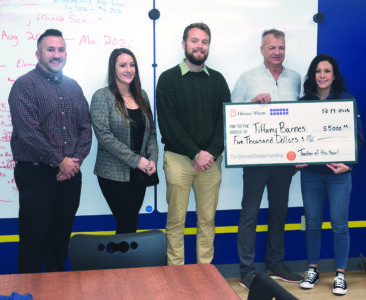
West Virginia Teacher of the Year, Wheeling Middle’s Tiffany Barnes, Receives $5,000

Federal Judge Weighs Trump’s Claim That He’s Immune From Civil Litigation Over Capitol Riot
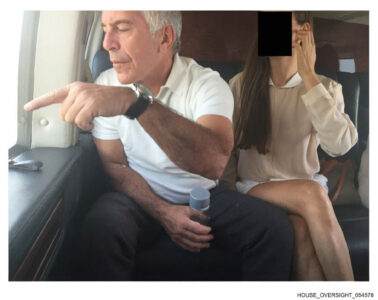
Justice Department Releases Limited Set of Files Related to Epstein Sex Trafficking Probe
Charter School Board Appeals Ruling Requiring Local Referendums to State Supreme Court
CHARLESTON — The West Virginia Professional Charter School Board gave attorneys for two Monongalia County ...