Judge: Creation of Charter Schools Violates West Virginia Constitution
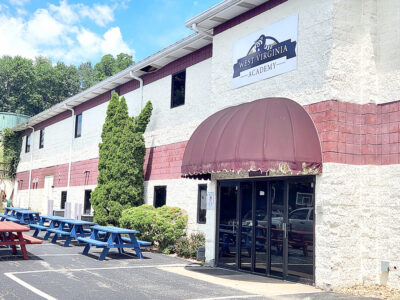
photo by: Ben Conley
West Virginia Academy, the state's first charter school, currently is located in a rented office building behind a bowling alley in Morgantown.
CHARLESTON – Years after the West Virginia Supreme Court of Appeals kicked a decision regarding the legalities of the state’s public charter school pilot program back to a Kanawha County judge, that same judge said current and future charter schools may require voter input.
In a 39-page order released Wednesday, 8th Judicial Circuit Court Judge Jennifer Bailey ruled that the creation of the state’s five brick-and-mortar public charter schools and two statewide virtual charter schools violates the state Constitution. Those schools were authorized by the West Virginia Professional Charter School Board (PCSB)
Bailey found that House Bill 2012, the 2021 bill that amended a 2019 law that created the public charter school pilot program, violates Article 12, Section 10 of the West Virginia Constitution, because charter schools represent “independent free school organizations” that were authorized without the constitutionally mandated consent of a majority of affected county voters.
“There is no question that PCSB charter schools are free school organizations for purposes of section 10 because they are statutorily defined as free, public schools,” Bailey wrote in her ruling. “HB 2012 was designed to make PCSB charter schools as independent as they could possibly be and still be called public schools – that was the whole point, to evade county school board authorization and supervision, as the Court’s factual findings make clear.”
Bailey issued a permanent injunction that immediately prohibits the PCSB from authorizing any new charter schools unless local voters approve them via special election. The court also denied the PCSB’ motions to dismiss. Execution of the judgment and all related proceedings are currently stayed for sixty days to permit the defendants to appeal Bailey’s order.
Although the injunction does not yet halt the operation of currently existing charter schools, the court established a multi-stage plan to enforce compliance, reserving the right to issue further injunctions or mandamus relief if the Legislature fails to act. Such actions could close the current charter school system.
“To be sure, an injunction that halts new or continued charter school operations until the voters consent will temporarily frustrate the school choice objectives of HB 2012,” Bailey wrote. “But there is no right under the West Virginia Constitution to attend a publicly subsidized school of one’s choice.”
West Virginia seven approved public charter schools have a combined enrollment of 4,234 students as of October according to the state Department of Education. According to court documents, the public charter school system employs approximately 100 teachers.
House Bill 206, passed by the Legislature in 2019 and updated in 2021, created the current public charter school pilot project. The pilot program allows for the approval of 10 public charter schools every three years and a limit of two statewide virtual charter schools. State Code allows for the PCSB to authorize new charter schools, though counties can also authorize charter schools or create county-level virtual charter schools, but no county has done so.
There are five physical public charter schools: the West Virginia Academy in Morgantown, The Eastern Panhandle Preparatory Academy in Kearneysville, The Workforce Initiative (WIN) Academy in South Charleston, the Clarksburg Classical Academy, and the Wisdom Academy in Morgantown. There are also two statewide virtual public charter schools: the Virtual Preparatory Academy of West Virginia and the West Virginia Virtual Academy.
While charters are considered public schools the same as a county-administered K-12 school, charters do not receive their state funding at the same level as traditional county public schools. The public charter school pilot program allows 99% of the per-pupil funding from the state school aid funding formula to follow the student to the public charter school.
Sam Brunett and Robert McCloud — both parents and teachers — filed a lawsuit in September 2021 against former governor and now U.S. Senator Jim Justice, R-W.Va., and legislative leaders, asking the court to declare the charter school law unconstitutional and instead allow county residents to vote for proposed charter schools.
In a December 2021 order, Bailey blocked Justice from further implementation of the public charter school program. The state Supreme Court stayed that decision in a February 2022 order. In a June 2023 opinion, the Supreme Court determined that Bailey erred in her 2021 decision, dissolving her preliminary injunction and remanded the case back to Kanawha County for further proceedings.
A request for comment from Adam Kissell, the chairman of the PCSB, was not returned.
Top Headlines
Judge: Creation of Charter Schools Violates West Virginia Constitution
Trump to visit Pennsylvania to highlight efforts to curb inflation as high prices squeeze Americans

OVAC To Add Girls Wrestling Tournament To Ron Mauck Championship
WPHS ‘Festival of Sound’ Concert Celebrates 30 Years
Marshall County Schools Employees Charged With Child Abuse