AARP-WV urges lawmakers to pass legislation protecting consumers from cryptocurrency scams
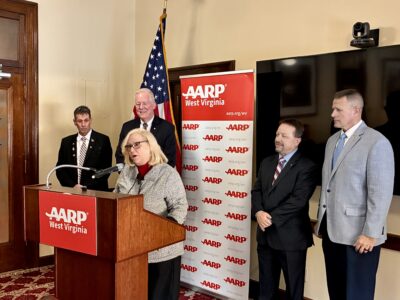
AARP-WV State Director Gaylene Miller called on lawmakers to crack down on the growing trend of cryptocurrency kiosks during a press conference at the State Capitol Building Thursday. Pictured from left are Del. Rick Garcia, D-Marion; Del. Bob Fehrenbacher, R-Wood; Miller; Del. Patrick Lucas, R-Cabell; and Del. Eric Brooks, R-Raleigh. (Photo by Steven Allen Adams
CHARLESTON – With cryptocurrency and real estate scams growing in scope and sophistication, AARP West Virginia is calling on the state Legislature to consider passing legislation to provide protections for consumers and vulnerable populations.
The organization held a press conference Thursday morning to present polling data that West Virginians want to see stronger consumer protections against fraud, including the targeting and regulation of cryptocurrency kiosks and real estate fraud.
“Fraud is no longer just a crime problem. It’s a kitchen table issue threatening the life savings of West Virginia families,” said AARP-WV State Director Gaylene Miller.
Miller said cryptocurrency kiosks, which resemble standard bank ATMs, are used by criminals to trick people into transferring their funds. These machines are commonly located in high-traffic public areas such as grocery stores, gas stations, laundromats and convenience stores. Transactions through cryptocurrency kiosks are often not refundable and include hidden fees.
“Cryptocurrency kiosks are becoming a favorite tool for criminals to steal millions of dollars from older West Virginians,” Miller said. “When I’ve had conversations with folks and I mention these cryptocurrency kiosks, people say ‘I’ve never seen one.’ And I say, ‘Oh, I bet you have. You just didn’t know what you saw.'”
According to AARP-WV, cryptocurrency kiosks are unregulated in many states, including West Virginia. But 24 states have taken some action, with 17 of them passing comprehensive legislation to protect consumers from cryptocurrency kiosks.
According to polling commissioned by AARP-WV commissioned last November with more than 1,000 voters, 42% of West Virginia voters erroneously believe cryptocurrency ATM operators are already required to be licensed by the state. Only 11% correctly identified the lack of licensing requirements.
According to the FBI’s Internet Crime Complaint Center, West Virginians lost more than $7.6 million to cryptocurrency scams in 2024. And according to new national data released by the FBI for 2025, there were more than $333 million in reported losses through cryptocurrency kiosks to scams.
When asked about seven possible regulations, responses ranged from 89% support for placing visible notices on cryptocurrency ATMs that direct consumers where to report fraud to 79% support for licensing cryptocurrency kiosk operators in the state.
“It is critical that the Legislature address this issue this session by bringing some common sense solutions to protect consumers from crypto fraud,” Miller said. ” It’s very concerning to us to see our most vulnerable citizens become targets of these financial crimes.”
Miller also raised concerns about other forms of fraud, including real estate wholesaling, gift card fraud, elder financial abuse and exploitation, consumer protections for broadband utility customers, and deed fraud when criminals forge property documents in order to steal real estate from unsuspecting victims.
“Criminals forge property documents resulting in devastating financial and emotional harm for victims that destabilizes communities and erodes generational wealth,” Miller said. “This is another issue of focus for us this legislative session.”
AARP-WV State President Roger Calhoun said their November poll shows that voters want to support political candidates who fight for fraud protections for seniors and other vulnerable populations.
“West Virginia voters want lawmakers to implement better protections for fraud and scams in the Mountain State, including cryptocurrency, ATM and real estate products,” Calhoun said. According to the poll, 85% of West Virginia voters indicated they are much more likely or somewhat more likely to vote for a candidate in their state who advocates for protecting residents from fraud and scams.
“This poll finds fraud protection isn’t a niche issue. It’s a voter issue across the board,” Calhoun said. “West Virginians want leaders who will take real steps to stop scams, from cryptocurrency ATM fraud to deceptive real estate practices. Candidates who champion stronger consumer protections are more likely to … earn the trust and support of the voters.”
Top Headlines
AARP-WV urges lawmakers to pass legislation protecting consumers from cryptocurrency scams

Host Families For Exchange Being Sought for 2026-27 School Year
Homeland Security shutdown grows more likely as Republicans rebuff Democrats’ ICE demands
Capito: DHS Spending Bill Conflict Needs Settled
U.S. Sen. Shelley Moore Capito said Thursday there are things that Republicans and Democrats can agree on when it ...
Trump administration to launch TrumpRx website for discounted drugs