West Virginia Legislature completes work on 2026 session
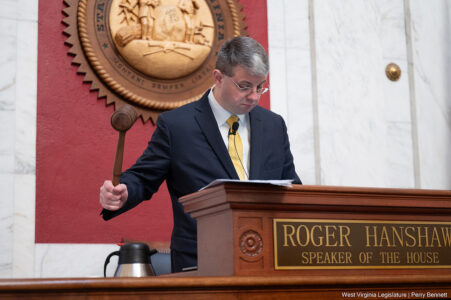
CHARLESTON – The West Virginia Legislature wrapped up work on several priorities Saturday night as the 2026 regular session came to a close, with a tax cut and pay raise making it but a bill to protect public school children whose parents are being investigated for child welfare issues failing in the final hours.
The Legislature gaveled in for its annual 60-day session on Jan. 14, introducing more than 2,700 bills over the last nearly nine weeks. Heading into the final hours of the session, lawmakers passed 152 state Senate bills and 151 House of Delegates bills.
The Legislature complete work on Senate Bill 392, Gov. Patrick Morrisey’s bill amended by lawmakers to cut personal income tax rates by 5% retroactive to Jan. 1, returning $125 million to taxpayers when fully implemented. The House amended the bill Friday to remove a proposed increase in vape and e-cigarette taxes, with the Senate agreeing Saturday with the House amendment.
“We made a firm commitment during my time in the Legislature, in particular the last few years, to lessen the tax burden on our citizens as best we can,” said state Sen. Trenton Barnhart, R-Pleasants. “This 5% tax cut on the personal income tax is another step towards eventually getting to zero, and we’re excited to be able to provide some much-needed tax relief to our citizens.”
State Sen. Mike Oliverio, R-Monongalia, said the 5% cut in personal income tax rates was one of several ways the Legislature has worked to help West Virginians with affordability issues over recent years.
“We’re hearing from our constituents that many are experiencing an affordability crisis with expenses going up and the impact of costs,” Oliverio said. “We passed a … tax reduction a couple of years ago, and today we’ve added to that with an additional 5% reduction in personal income tax.”
“We passed a rebate on personal property tax where we return dollars to citizens who have paid their personal income tax,” Oliverio continued. “We have eliminated the state income tax for our seniors with respect to their Social Security. So now none of our seniors will pay personal income tax on their social security. We are trying today to increase the homestead exemption for our seniors and those that are disabled. We’re trying to address this affordability crisis.”
Morrisey has pressured lawmakers during the session to pass a full 10% cut in personal income tax rates, though his budget only accounted for the loss in revenue from a 5% personal income tax cut. In a statement posted to social media Saturday, Morrisey thanked lawmakers for providing tax relief for West Virginians.
“West Virginians will be able to enjoy some more money in their paychecks very soon,” Morrisey said. “Today, the Legislature passed a 5% income tax reduction. This is a start, but we will accept the win and then begin efforts to lower income taxes even more in the future!”
House Bill 4765, providing an average 3% pay raise for teachers, school service personnel, and employees of the West Virginia State Police, got over the finish line with 10 minutes to spare until midnight after the Senate agreed to recede from an amendment adopted Friday to include locality pay for teachers, school workers, and State Police employees in counties with higher median incomes and costs of living.
A 3% pay raise for other state employees paid through the general revenue budget was included in Senate Bill 250, the finalized budget bill for fiscal year 2027. Morrisey first proposed the 3% pay raise during his State of the State address kicking off the session on Jan. 14.
House Bill 5537, the latest vehicle for Raylee’s Law, died Saturday night after the bill was drowned in debate on multiple amendments meant to water the bill’s provisions.
The bill would prohibit a county board of education from approving a request for home school instruction for an enrolled public school student if there is a pending child abuse or neglect investigation against the child’s parent or guardian.
The legislation, which has been offered for several years by House Minority Whip Shawn Fluharty, is named after named for Raylee Jolynn Browning, who died in 2018 from child abuse form her father who pulled her from public school. Fluharty, who had placed a photo of Raylee outside the House chamber earlier Saturday, was livid at the bill’s failure.
“We sat on it for eight hours … and now all these amendments are popping up and we know damn well why it is,” said Fluharty, D-Ohio. “This is abhorrent behavior. Disgusting government. When you’re done here tonight, after you kill this bill again … go out there and at least have the guts to look at her. Have the guts. I don’t think you do. This is ridiculous.”
While the House rejected all the amendments and passed the bill 94-1 with four absent or not voting, it was too late for the Senate to receive the message after it adjourned sine die. Del. Elliott Pritt, R-Fayette, pleaded with members to not delay passage of the bill.
“If we amend this bill or change it in any way, this bill dies tonight. which I do think is probably the outcome that some in this room want,” Pritt said. “That’s fine, that’s their prerogative, I respect that. But what I can’t respect … is that we have a moment here to do something to protect children that are in harm’s way. That is a fact, and I’m very sorry if that fact is very uncomfortable for some of you to deal with.”
But opponents of Raylee’s law argued that the Senate amendment incorporating Raylee’s law into the bill was poorly drafted.
“I don’t care what time it is. Our job is to write good law. And we need to write good law, and we need to protect kids,” said Del. Adam Burkhammer, R-Lewis. “Let’s do the right thing here. Or we can play political games and think we’re getting some kind of win by passing the bill that’s before you that will not protect one single child. It’s flawed.”
The Senate amended the House message to Senate Bill 890, changing the school calendar from days to hours. The Senate amendment put the bill back to a 900-hour limit that was originally in the bill. The House agreed to the Senate’s amendment Saturday in a 93-3 vote with three members absent
While the bill remains permissive, allowing county school systems to continue to use the traditional 180 calendar, Sen. Oliverio renewed his opposition to the change when the Senate amended the bill earlier Saturday.
“This is the bill that reduces high school attendance by 23 days,” Oliverio said. “The House attempted to make an amendment to our bill to reduce it by 14 days. Either way, I think it’s a step in the wrong direction … Our children need instruction time. They need quality instruction.”
House Bill 5453, which gutted a shift for county school systems to switch from the current seven-step state school aid formula to a new block grant model beginning with the 2029-30 school year, died when the House did not take up the Senate message in the bill before midnight.
The Senate Finance Committee’s strike-and-insert amendment to HB 5453 would have wiped out the proposed block grant funding model in its entirety. Instead of a flat supplemental fund, the amendment integrated special education needs directly into the net enrollment calculation used for the basic foundation program.
The House accepted the Senate’s amendment Saturday night to House Bill 5381, relating to developing a comprehensive energy development policy and plan for the Office of Energy, in a 91-5 with three members absent or not voting
HB 5381 would restructure the state’s Office of Energy with the Department of Commerce, empowering it with the creation of a comprehensive state energy policy that utilizes diverse resources like coal, natural gas, nuclear, and renewables as part of Gov. Morrisey’s 50 by 50 initiative to increase the state’s production of electricity from 16 gigawatts to 50 gigawatts by 2050.
Key provisions in HB 5381 include the incorporation of the Office of Coalfield Community Development and a new mandate to ensure electrical grid stability.
“The purpose of this amendment is to empower the Office of Energy to develop a comprehensive energy development policy, a comprehensive grid stabilization plan, and to test the stability of West Virginia’s energy grid,” explained Senate Majority Whip Ben Queen, R-Harrison. “The office will prepare a comprehensive energy policy and a plan for implementation that embraces coal, natural gas, nuclear energy, hydropower, hydrogen, and geothermal energy.”
The amendment adopted removes the provisions of Senate Bill 420, the West Virginia First Energy Act, which would encourage electric utility companies to reach a 69% operational utilization rate for coal-fired power plants by offering financial incentives tied to cost recovery. The amendment also removes references to renewable energy, such as wind and solar.
“This is a vote about electric rates,” said Del. Evan Hansen, D-Monongalia, who voted not to concur. “This is a vote about whether we as a body, we as a state, are going to not play favorites and pick and choose what type of energy is allowed in our energy plan, but to consider all types of energy … not to presuppose that you know what’s best for the people of West Virginia or what’s going to be cheapest.”
Top Headlines
West Virginia Legislature completes work on 2026 session

Before recent attack, Michigan synagogue had been bolstering its security

Tehran claims the US attacked it from the UAE as Iran war enters its third week
SEC’s Sankey says language in tampering rules is ‘archaic’ and NCAA needs to adjust quickly

Wheeling Park High Speech Team Wins 46th Straight State Championship