
Ohio County School Board Approves $87.8 Million Budget
Trending
WHEELING -- Rising special education costs and lagging local tax collections dominated discussion Tuesday as the Ohio County Board of Education approved its fiscal year 2026-27 budget.
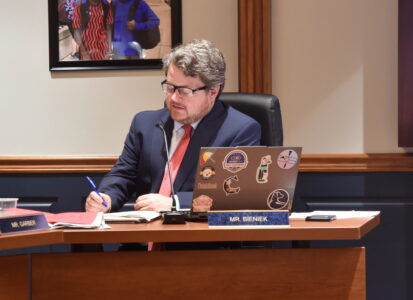
Treasurer Steven Bieniek said the proposed budget totals $87,801,874, an increase of nearly $4 million from the current year.
"The fiscal year (2027) budget is going to be $87,801,874 which compared to the current year's budget is just a $4 million increase - that's $3,945,472," Bieniek said. "Most of this is an increase due to projected increases in cost and revenue from the West Virginia Department of Education for salaries, experience updates, PEIA health insurance premiums, retirement."
Bieniek noted the budget figures are estimates and could change.
Property tax revenue from the district's regular and excess levies increased by about $3.1 million, but state aid dropped by roughly $850,000.
"Really, that's going to net out just a little over $2 million," Bieniek said. "There wasn't a whole lot of wiggle room. There just wasn't. I was thrilled that we were able to hold steady but that's exactly what we were able to do."
He added the West Virginia Department of Education also required counties this year to maintain a 5% reserve fund.
"That was West Virginia Department of Education driven," Bieniek said.
Board President David Croft noted the district's revenue growth still has not recovered from previous declines.
"So we are still significantly down," Croft said. "That's still not a recovery from our dip from the prior year."
"Not even close," Bieniek replied.
Croft pointed to special education spending as one of the largest increases on the expense side of the budget.
"Special education went up significantly," Croft said. "Was that due to the state mandates we are having to deal with?"
Bieniek said the increase was driven partly by mandates and partly by growing needs.
"It's a little bit of state mandates, but just the numbers went up," he said.
Board member Andy Garber said special education costs have become a major financial burden for county school systems statewide.
"The cost of special ed, we are assuming a large responsibility for that," Garber said. "Around $10 million and that's because the costs are exceeding what the state expenditure is to give us."
Garber said he plans to continue advocating for changes to the state's education funding structure through the West Virginia School Board Association.
"One of the things I am pushing for is for us to get more support for special education," Garber said. "Special ed funding is a key part of that."
He also called for revisions to the school aid formula.
"The other issue along the same line is to take a closer look at the school aid formula and instead of a per-pupil basis, we need to look at it on an as-need basis," Garber said.
Transportation expenses also increased by about 10%, Croft noted.
Bieniek said part of that increase is tied to salary and insurance costs, but the district also is attempting to improve its bus replacement schedule.
"We need to get back on a better schedule," Bieniek said.
Board members also discussed concerns over local tax collections during a financial overview presentation for April 2026.
"They are still lagging," Bieniek said of cash receipts.
"This year's revenue compared to last year's revenue -- two dates at the end of April -- we're down roughly $10 million."
Croft asked whether there has been any indication about when the outstanding tax revenue may be collected.
"Being down $10 million, is there any thought from our assessor or the sheriff on the collection of those dollars?" he asked.
Despite the shortfall, Bieniek said conservative budgeting practices and reserve funding have helped stabilize the district's finances.
"I am glad we were conservative before this, because we knew that day was going to come and here we are in the middle of," he said. "I think it's going to be a while before we're squared. I think it's going to be until next year until we really catch up. We are out of the big months now. The next big month isn't going to be until October or November. We'll tread water for a little while and we are able to do that because we were conservative with our reserves."
"The local taxes are what's lagging, everything else seems to be where it needs to be," Croft said. "That's disappointing.”